Loss of ALOX15, which frequently occurs in colorectal tumors, reduces the cancer-preventive benefits of fish oil. An estimated 19 million adults in the United States regularly take fish oil supplements in hopes of improving their health. These popular supplements are rich in omega-3 fatty acids, specifically eicosapentaenoic acid (EPA) and docosahexaenoic acid (DHA), which have […]
RIVERSIDE, Calif. — California’s gubernatorial election is a year away, and the field of primary candidates is still taking shape. But one persistent issue has already emerged as a leading concern: the cost of health care.
At a forum Nov. 7 in the Inland Empire, four Democratic candidates vying to succeed Gov. Gavin Newsom vowed to push back against Republican cuts to health care programs and to improve people’s access to medical care, including mental health services. But while some floated taxes, candidates were light on details about how they would bring down health care costs.
Former U.S. Health and Human Services Secretary Xavier Becerra promised to be California’s next “health care governor,” echoing Newsom’s commitment to lower costs and broaden access when he first got into office. State Superintendent of Public Instruction Tony Thurmond pledged to create a single-payer health care system in which everyone is pooled into one program. Former state Controller Betty Yee said she would “build back better” from federal cuts and create a health care system tailored to California’s diverse communities.
And former Los Angeles Mayor Antonio Villaraigosa vowed to fight to preserve safety net health care pared by the Trump administration and Republicans in Congress, although he acknowledged the challenge given limited state resources.
“I’m not gonna sell you snake oil,” he said. “It is going to be tough to provide that care, but I’m absolutely committed to it.”
Subscribe to KFF Health News’ free Morning Briefing.
The candidates’ assurances come amid recent shifts in state and federal policies that, together with a variety of forces, are driving up the cost of health care and making it harder for people to obtain and maintain coverage. In addition to providers raising prices, other inflationary pressures include an aging population, rising chronic conditions, medical advancements, and new technologies, according to analysts. That’s added to a sense of financial precarity for the millions of Californians struggling with the state’s high cost of living and recent inflation spike.
Although the forum was open to up to six candidates, former U.S. Rep. Katie Porter and entrepreneur Stephen Cloobeck declined to participate, citing scheduling or other factors, according to Jon Koriel, an event spokesperson.
Four Democratic candidates vying to be California governor appeared at a forum on health care on Nov. 7 in Riverside: (from left) former U.S. Health and Human Services Secretary Xavier Becerra, California Superintendent of Public Instruction Tony Thurmond, former Los Angeles Mayor Antonio Villaraigosa, and former state Controller Betty Yee.(Leroy Hamilton)
Health Care Top Concern
A statewide poll commissioned by the California Wellness Foundation ahead of the Health Matters forum found that nearly 80% of likely voters worry about the cost of health care and that 72% think the next governor should prioritize capping out-of-pocket expenses. Access to affordable mental health care and being able to care for aging family members or friends were also top concerns. Perhaps in an early signal, voters last week in Santa Clara County passed a sales tax to help backfill federal cuts to food and health care safety net programs.
California mirrors much of the nation. Exit polls from the Nov. 4 election show 81% of those who voted for Democrat Abigail Spanberger, winner of the Virginia governor’s race, cited health care as the most important issue facing the state. In a national Reuters/Ipsos poll, health care was cited as the top everyday expense Americans want Congress to prioritize. And 65% of voters said an annual health cost increase of $1,000 would have some impact on their 2026 vote, according to a recent KFF poll.
Some Californians interviewed on Nov. 4, the day of the state’s special election, expressed disappointment in Newsom’s unmet promises on health care. Newsom, a Democrat who is mulling a presidential run as he wraps up his second term in January 2027, had campaigned on single-payer health care.
During his tenure he’s steered billions of dollars and engineered rules to help the neediest Californians afford and access health care. The state also expanded state-funded Medicaid coverage, known as Medi-Cal, to all eligible residents in the country without legal status. Medicaid provides free or low-cost health insurance to low-income and disabled people.
But this year, facing rising costs and budget deficits, Newsom and the Democratic-controlled legislature walked back some of that expansion by freezing enrollment for adults without legal status starting in 2026 and implementing premiums. They also resurrected an asset test for older adults and people with disabilities. Meanwhile, health care costs and homelessness remain a huge problem, and many Californians struggle to get basic medical care. And there’s no sign of a single-payer health care system, which Sacramento lawmakers have repeatedly failed to advance amid concerns about cost, including one estimate in 2017 of $400 billion annually.
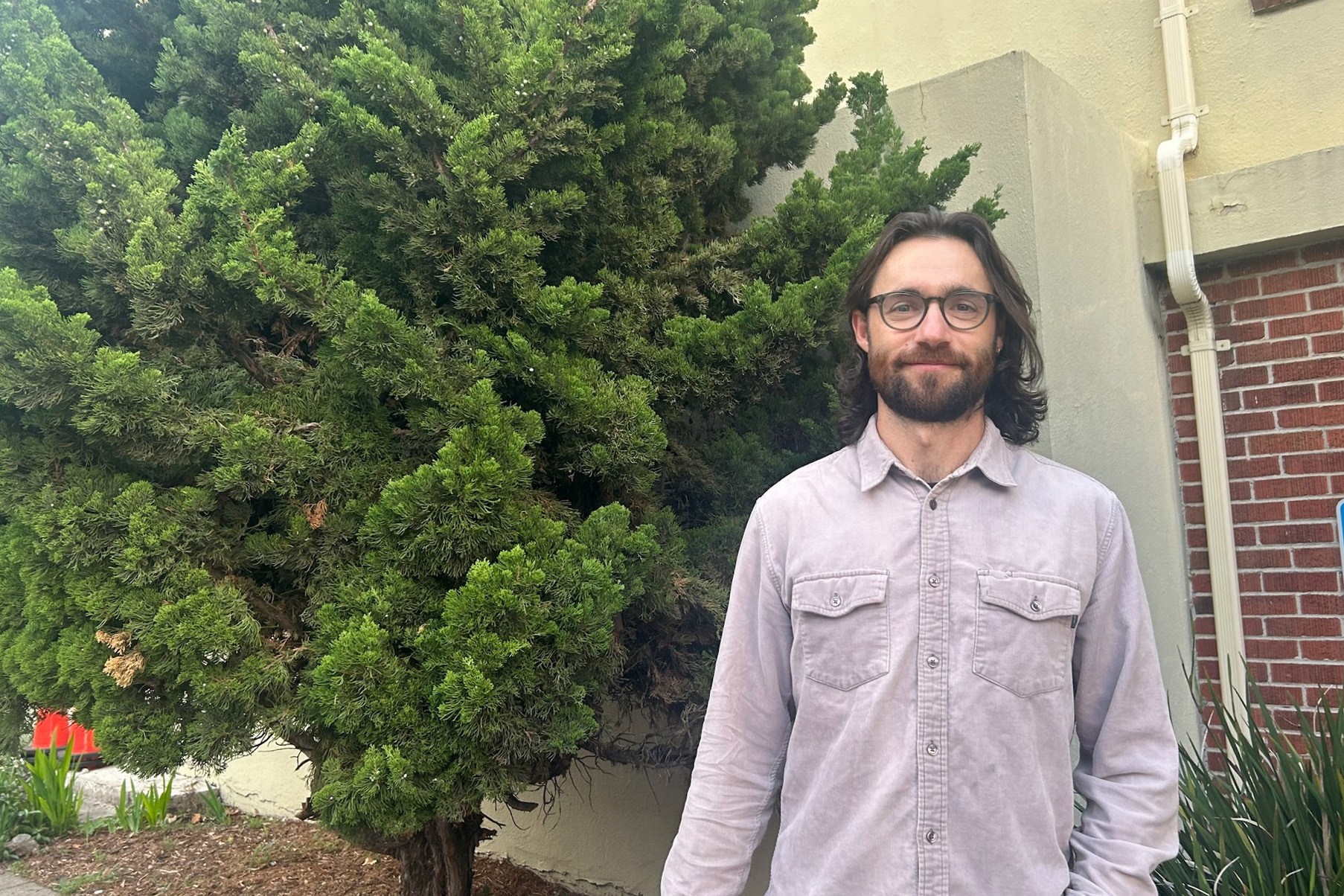
“I remember him coming and speaking to our members and telling them that he was going to fight with them for single payer,” Michael Cusack, a 30-year-old former health care union worker from Oakland, said as he cast his ballot last week. “And I never saw him deliver on that campaign.”
Michael Cusack, a registered Democrat working at a national research lab in Oakland, California, says health care costs are top of mind for him as he weighs his vote next year, both for Congress and the governor’s race.(Christine Mai-Duc/KFF Health News)
Paying for Health Care
Becerra, Thurmond, and Yee said they would be open to raising taxes to pay for health care programs. Villaraigosa sidestepped the tax question, saying his focus would be to “grow the pie” economically. Yee also suggested offering tax credits to help struggling families pay for health care and caregiving expenses.
During the forum’s lightning round, Becerra, Thurmond, and Yee also raised their hands when asked whether they supported single-payer care. Becerra said after the event that he doesn’t believe the state would receive support from the Trump administration for a single-payer system, but he said he would push for universal access to health care.
Indeed, all the candidates appeared mindful of Washington’s power over health care resources, even as they vowed to stand up to President Donald Trump, who has an especially adversarial relationship with Newsom.
“Let’s recognize that the federal government is our largest partner,” Becerra said. “We must work with them. We will not take a knee, but we must work with them.”
Currently, the biggest threats to health care costs and accessibility come from the federal government. Republicans in Congress have refused to give in to Democrats’ demand to extend premium tax subsidies for health insurance plans purchased on Affordable Care Act exchanges, the main issue that drove the government shutdown. Enrollees in Covered California, the state’s health insurance exchange, have received notices that their premiums will increase next year. On average, premiums for ACA plans are expected to double across the nation.
Laura Jones, a small-business owner in Oakland, currently pays the minimum possible for her Covered California plan, but she worries she wouldn’t be able to afford a major medical emergency. She thinks about one of her friends who recently suffered a stroke.
“The hospital bills were just so egregious,” Jones said. “How would I pay for that?”
Meanwhile, an impending $900 billion in federal Medicaid spending reductions under the One Big Beautiful Bill Act and tighter eligibility restrictions are expected to push as many as 3.4 million Californians out of the program. More than a third of Californians are currently enrolled in Medi-Cal.
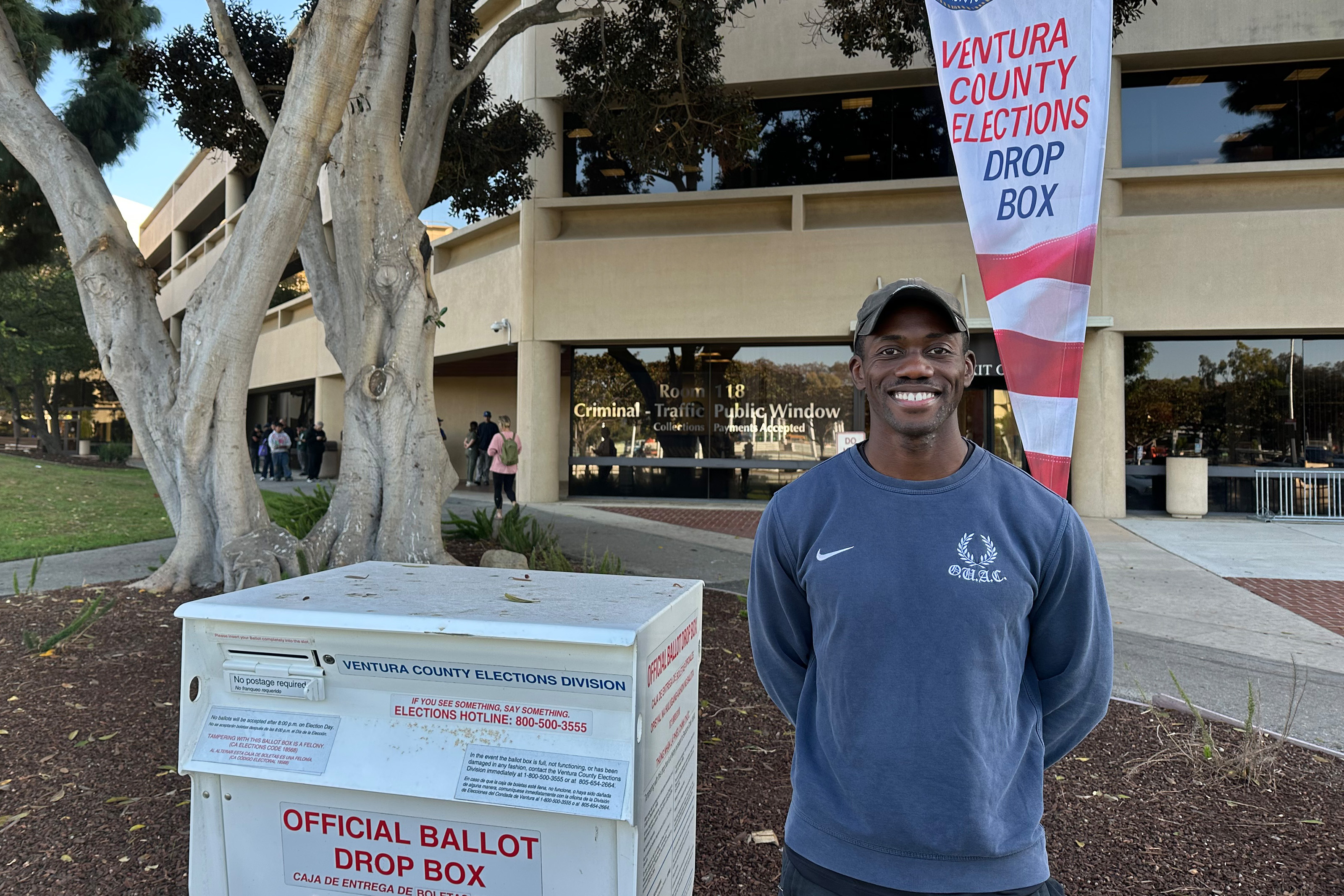
Oseoba Airewele, 29, of Ventura, a registered Democrat who previously worked as a software engineer, said Medi-Cal became a lifeline after he lost insurance through his job and needed mental health and dental care.
“If I were to lose it, I would be very concerned,” he said. “I’d be in a bad place.”
Oseoba Airewele stands next to a ballot box in Ventura, California, where he cast his vote in the Nov. 4 special election. Airewele enrolled in Medi-Cal after being laid off from his job as a software engineer. He says that coverage has been critical.(Claudia Boyd-Barrett/KFF Health News)
People with employer-based health coverage also face steep price hikes. Family premiums for employer-based plans averaged almost $27,000 this year, up 6% from 2024, a new KFF report shows. Workers typically pay almost $7,000 of that, the report found. That doesn’t include other out-of-pocket expenses.
“Even though I have a job, it’s still really expensive to pay for the copays,” said Rheema Calloway, 35, a San Francisco independent.
Primary in June
Among the other Democratic candidates vying for governor in 2026, Porter has said she will make fighting federal cuts to Medicaid and Medicare a top priority, along with expanding and improving health care for all residents. Porter’s campaign suffered a blow after viral videos surfaced of her threatening to walk out of a CBS interview and berating a staff member. Former Assemblyman Ian Calderon has said he would protect access to Medi-Cal. And Cloobeck wants to fast-track housing construction.
Republican candidates include Riverside County Sheriff Chad Bianco and Steve Hilton, a former Fox News contributor and policy adviser to David Cameron when he was Britain’s prime minister. Both have pledged to tackle affordability issues, especially housing costs.
Two other high-profile Democrats — former Vice President Kamala Harris and U.S. Sen. Alex Padilla — have said they won’t run. Rick Caruso, a Republican-turned-Democrat and wealthy Los Angeles businessman, has yet to decide whether to run.
The California primary will be held June 2 and the general election on Nov. 3.
KFF Health News correspondent Christine Mai-Duc and ethnic media editor Ngoc Nguyen contributed to this report.
An experiment at the State University of Campinas found that FGF19, a substance produced in the intestine, acts on specific brain regions to trigger energy burning and heat production, paving the way for the development of new drugs. Recent research on mice has uncovered how a hormone produced in the intestine communicates with the brain […]
Electric cooking, or e-cooking, is the most affordable and sustainable cooking option for Indian households, according to a new report by the Institute for Energy Economics and Financial Analysis (IEEFA), a U.S.-based energy policy think tank.
The report, titled ‘India’s Clean Cooking Strategy: E-Cooking, the Next Frontier’, finds that e-cooking is 37% cheaper than non-subsidised liquefied petroleum gas (LPG), and 14% cheaper than piped natural gas (PNG), making it a compelling alternative in urban areas, where access to electricity is stable.
“Electricity-based cooking means cost savings. Based on the analysis for FY2024-25, using PNG for cooking versus electricity-based devices can be 14% more expensive for households, while non-subsidised LPG can be 37% more expensive. Subsidising LPG for all consumers has made it only marginally more affordable than e-cooking. Only the heavily subsidised LPG pricing for beneficiaries of the Pradhan Mantri Ujjwala Yojana comes out cheaper than e-cooking,” Purva Jain, energy specialist at the IEEFA and the author of the report, said.
Despite near-universal electrification, the uptake of e-cooking remains sluggish. Ms. Jain attributes this to high upfront capital costs, limited device options, and low consumer awareness. “The initial cost of induction cooktops and compatible utensils can be a barrier. We need government support to reduce capital costs and build consumer confidence,” she said.
The report uses Delhi’s electricity tariffs for the financial year 2024-25 to calculate annual cooking costs, assuming a reasonably high usage slab. Ms. Jain explained that while the analysis is Delhi-specific, it can serve as a proxy for other States. “LPG prices are uniform across India, and PNG prices in Delhi are comparable to many geographical areas. Only a few gas agencies have lower prices than Delhi,” she said.
India’s LPG and liquified natural gas (LNG) import bills have increased by 50% over the past six years, reaching ₹2.2 lakh crore in FY2024-25. This accounts for nearly 3% of the country’s total import expenditure, and exposes it to global price volatility and geopolitical risks. While LPG and PNG are cleaner than traditional solid fuels, they remain carbon-intensive and contribute to rising residential emissions. Nearly 40% of Indian households still rely on firewood, dung, and other polluting fuels for cooking.
Ms. Jain believes that shifting urban households to e-cooking could free up LPG and PNG resources for rural areas, where access to clean cooking options remains limited. “Shifting urban areas to e-cooking could be one solution to the problem of limited use of clean cooking fuels in rural areas. By reducing demand for LPG and PNG in urban areas, more of these limited resources could be redirected to rural areas,” she said.
Addressing concerns about grid load, the author noted that India is strengthening its national grid with various actions. Policy interventions, including time-of-day tariffs, and ensuring only energy-efficient devices are available in the market, can help manage peak demand.
Cultural resistance to non-flame cooking is another challenge. Ms. Jain pointed to real-life case studies showing that chapattis can be cooked on induction cooktops with ease. “For households hesitant to give up flame-based cooking, fuel stacking is a practical solution. Start with boiling water or milk, cooking rice — simple steps on a single induction cooktop,” she added.
On large-scale adoption of successful e-cooking demonstration, the report provides examples of institutional adoption, including Anganwadis supported by Energy Efficiency Services Limited under the National Efficient Cooking Programme. Kerala’s Angan-Jyoti scheme integrates e-cooking with solar power and energy-efficient cooling to promote grassroots sustainability.
While the report does not quantify lifecycle emissions, Ms. Jain noted that e-cooking aligns with India’s decarbonisation goals. “With the increasing greening of the electricity grid, relying on e-cooking as the fuel of the future is a good strategy. We should avoid locking expensive resources into fossil-based solutions like PNG,” she added.
Ms. Jain also acknowledged the need for financing options. There’s a brief mention of solutions to manage the relatively higher capital cost of procuring e-cooking devices. EMIs (equated monthly installment) and carbon credit programmes could be explored further, she said.
As India continues its push toward clean energy, the authors of the report believe the time is ripe for a national roadmap. “The report is a small step in advocating the need for a detailed roadmap with timelines. We need to boost consumer and manufacturer confidence,” Ms. Jain said.
E-cooking, Ms. Jain emphasised, is not just an alternative — it is a future-ready solution that offers affordability, safety, and sustainability. “It’s time we reimagine clean cooking in India. Electric cooking is the next frontier,” she said.
Alcohol hijacks the body’s sugar metabolism, producing internal fructose that reinforces addiction and liver damage. Blocking this process may help treat both alcohol use disorder and liver disease. Scientists have discovered a surprising biological link between how the body processes sugar and how it responds to alcohol. The finding points to a possible new treatment […]
The K-visa rolled out by Beijing last month is part of China’s widening effort to catch up with the U.S. in the race for global talent and cutting edge technology. It coincides with uncertainties over the U.S.’s H-1B program under tightened immigrations policies implemented by President Donald Trump.
“(The) K-visa for China (is) an equivalent to the H-1B for the U.S.,” said Srinivasagopalan, who is intrigued by China’s working environment and culture after her father worked at a Chinese university a few years back. “It is a good option for people like me to work abroad.”
The K-visa supplements China’s existing visa schemes including the R-visa for foreign professionals, but with loosened requirements, such as not requiring an applicant to have a job offer before applying.
Stricter U.S. policies toward foreign students and scholars under Trump, including the raising of fees for the H-1B visa for foreign skilled workers to $100,000 for new applicants, are leading some non-American professionals and students to consider going elsewhere.
“Students studying in the U.S. hoped for an (H-1B) visa, but currently this is an issue,” said Bikash Kali Das, an Indian masters student of international relations at Sichuan University in China.
China is striking while the iron is hot.
The ruling Communist Party has made global leadership in advanced technologies a top priority, paying massive government subsidies to support research and development of areas such as artificial intelligence, semiconductors and robotics.
“Beijing perceives the tightening of immigration policies in the U.S. as an opportunity to position itself globally as welcoming foreign talent and investment more broadly,” said Barbara Kelemen, associate director and head of Asia at security intelligence firm Dragonfly.
Unemployment among Chinese graduates remains high, and competition is intense for jobs in scientific and technical fields. But there is a skills gap China’s leadership is eager to fill. For decades, China has been losing top talent to developed countries as many stayed and worked in the U.S. and Europe after they finished studies there.
The brain drain has not fully reversed.
Many Chinese parents still see Western education as advanced and are eager to send their children abroad, said Alfred Wu, an associate professor at the National University of Singapore.
Still, in recent years, a growing number of professionals including AI experts, scientists and engineers have moved to China from the U.S., including Chinese-Americans. Fei Su, a chip architect at Intel, and Ming Zhou, a leading engineer at U.S.-based software firm Altair, were among those who have taken teaching jobs in China this year.
Many skilled workers in India and Southeast Asia have already expressed interest about the K-visa, said Edward Hu, a Shanghai-based immigration director at the consultancy Newland Chase.
With the jobless rate for Chinese aged 16-24 excluding students at nearly 18%, the campaign to attract more foreign professionals is raising questions.
“The current job market is already under fierce competition,” said Zhou Xinying, a 24-year-old postgraduate student in behavioural science at eastern China’s Zhejiang University.
While foreign professionals could help “bring about new technologies” and different international perspectives, Zhou said, “some Chinese young job seekers may feel pressure due to the introduction of the K-visa policy.”
Kyle Huang, a 26-year-old software engineer based in the southern city of Guangzhou, said his peers in the science and technology fields fear the new visa scheme “might threaten local job opportunities”.
A recent commentary published by a state-backed news outlet, the Shanghai Observer, downplayed such concerns, saying that bringing in such foreign professionals will benefit the economy. As China advances in areas such as AI and cutting-edge semiconductors, there is a “gap and mismatch” between qualified jobseekers and the demand for skilled workers, it said.
“The more complex the global environment, the more China will open its arms,” it said.
“Beijing will need to emphasize how select foreign talent can create, not take, local jobs,” said Michael Feller, chief strategist at consultancy Geopolitical Strategy. “But even Washington has shown that this is politically a hard argument to make, despite decades of evidence.”
Recruitment and immigration specialists say foreign workers face various hurdles in China. One is the language barrier. The ruling Communist Party’s internet censorship, known as the “Great Firewall,” is another drawback.
A country of about 1.4 billion, China had only an estimated 711,000 foreign workers residing in the country as of 2023.
The U.S. still leads in research and has the advantage of using English widely. There’s also still a relatively clearer pathway to residency for many, said David Stepat, country director for Singapore at the consultancy Dezan Shira & Associates.
Nikhil Swaminathan, an Indian H1-B visa holder working for a U.S. non-profit organisation after finishing graduate school there, is interested in China’s K-visa but skeptical. “I would’ve considered it. China’s a great place to work in tech, if not for the difficult relationship between India and China,” he said.
Given a choice, many jobseekers still are likely to aim for jobs in leading global companies outside China.
“The U.S. is probably more at risk of losing would-be H-1B applicants to other Western economies, including the UK and European Union, than to China,” said Feller at Geopolitical Strategy.
“The U.S. may be sabotaging itself, but it’s doing so from a far more competitive position in terms of its attractiveness to talent,” Feller said. “China will need to do far more than offer convenient visa pathways to attract the best.”
Intermittent fasting may not boost metabolism without cutting calories, according to new research. A new study from the German Institute of Human Nutrition Potsdam-Rehbruecke (DIfE) and Charité – Universitätsmedizin Berlin challenges common beliefs about intermittent fasting. Researchers found that time-restricted eating (intermittent fasting with no change in total calories) did not produce measurable improvements in […]
A sweeping global study reveals that chronic kidney disease now affects nearly 800 million people and has become one of the world’s top 10 causes of death. A new global analysis reveals that more people than ever are living with reduced kidney function. The number of affected individuals has climbed from 378 million in 1990 […]
The power struggle over Nexperia, a Chinese-owned Dutch semiconductor maker, highlights how technology supply chain vulnerabilities are squeezing auto makers, most notably forcing Honda to halt production at a Mexican factory making its popular HR-V crossover for North American markets. It also exposes how Europe is caught in the middle of the wider geopolitical showdown between Washington and Beijing.
Here’s a look at the dispute:
The turmoil erupted into public view in mid-October, when the Dutch government announced it had invoked a rarely used World War II-era law to take effective control of Nexperia weeks earlier.
The Dutch ministry of economic affairs said it took action because of national security concerns. Officials said they intervened because of “serious governance shortcomings” at Nexperia, asserting control to prevent the loss of crucial tech know-how that could threaten Europe’s economic security.
Nexperia’s Chinese owner Wingtech Technology, a partially state-owned company, is at the heart of the dispute. Amid the boardroom battle, a Dutch court granted the ministry’s request to oust Nexperia’s Chinese CEO Zhang Xuezheng. American officials told the Dutch government he would have to be replaced to avoid trade restrictions, according to a court filing.
Nexperia makes simple semiconductors such as switches and logic chips. The auto industry — one of Nexperia’s biggest markets — uses its chips for numerous functions, such as adaptive LED headlight controllers, electric vehicle battery management systems and anti-lock brakes.
Headquartered in the Dutch city of Nijmegen, Nexperia was spun off from Philips Semiconductors two decades ago. It was eventually purchased by China’s Wingtech Technology in 2018 for $3.6 billion.
Nexperia has wafer fabrication plants in Britain and Germany. It operates an assembly and testing center in China’s southern manufacturing heartland of Guangdong — which accounts for around 70% of its end-product capacity — and similar centers in the Philippines and Malaysia.
The dispute is part of the broader struggle between the U.S. and China over tech supremacy, which has left Europe caught in the middle.
It stems from Washington’s decision late last year to place Wingtech on its “entity list,” which subjects companies to export controls because of national security risks. In late September, the U.S. expanded that list to Wingtech’s subsidiaries, including Nexperia, pressuring allies to follow suit.
After the Dutch government asserted control of Nexperia, Beijing responded soon after, blocking the export of Nexperia chips from its assembly plant in the Chinese city of Dongguan. It blamed the Netherlands for “turmoil and chaos” in the chip supply chain.
There were signs of hope following last month’s high-profile meeting between U.S. President Donald Trump and Chinese leader Xi Jinping, when the White House said Beijing would ease the export ban as part of a U.S.-China trade truce.
Despite Beijing also confirming exports would be allowed to resume, Nexperia’s Chinese unit said headquarters suspended shipments of wafers used to make chips to its Chinese factory, potentially crimping its ability to deliver finished products.
Nexperia’s head office hit back in a statement Wednesday, saying the Chinese unit refused to pay for the wafers and accused it of “ignoring the lawful instructions” from its global management team. The company said it can’t guarantee the quality of any chips delivered from its China plant since October 13.
Modern automobiles rely on so-called discrete chips made by companies like Nexperia, which, unlike more advanced microprocessors, perform a single function. Leaders at big carmakers spelled out their worries in the latest round of earnings calls, saying that finding a replacement for Nexperia at scale in the short term will be difficult.
“While Nexperia makes up only about 5% of the automotive silicon discrete market in term of revenue, its share is much higher in terms of discrete chip volume,” S&P Global Mobility analysts wrote in a recent note.
Nexperia’s parts are widely used across vehicle systems — often dozens to hundreds per vehicle — and carmakers in North America, Japan and South Korea are at risk, they added.
“It’s an industrywide issue. A quick breakthrough is really necessary to avoid fourth quarter production losses for the entire industry,” Ford CEO Jim Farley said.
General Motors CEO Mary Barra warned that production could be hit. The company has “teams working around the clock with our supply chain partners to minimize possible disruptions,” she said.
Nissan CEO Ivan Espinosa told CNBC that the company is setting aside a 25 billion yen ($163 million) provision for supply risks, in part to “absorb” the impact from the Nexperia crisis on production.
Mercedes-Benz is “scurrying around the world to look for alternatives,” CEO Ola Kallenius said. The European Automobile Manufacturers’ Association said members including BMW, Renault, Volkswagen and Volvo have been forced to use their reserve stockpiles of chips and warned of assembly line stoppages if they run out.
The European Union’s trade commissioner, Maros Sefcovic, on Saturday noted “encouraging progress,” writing on X that China’s Commerce Ministry had confirmed “further simplification” of export procedures for Nexperia chips to the EU and global customers.
In Beijing, the Commerce Ministry also said Saturday that it agreed to a Dutch request to send representatives to China for “consultations.”
But it noted that the Netherlands had not taken any concrete actions yet to restore the global semiconductor supply chain since the Dutch government said days earlier it would take “appropriate steps on our part where necessary.”
Economics Affairs Minister Vincent Karremans had said in that statement that “the Netherlands trusts that the supply of chips from China to Europe and the rest of the world will reach Nexperia’s customers over the coming days.”
Honda has received word that Nexperia’s shipments from China have resumed, Executive Vice President Noriya Kaihara told reporters Friday. He said the Japanese automaker expects to resume production during the week of Nov. 21 at its plant in Celaya, Mexico, which can make up to 200,000 vehicles a year.
Electricity costs were a key issue in this week’s elections for governor in New Jersey and Virginia, a data centre hotspot, and in Georgia, where Democrats ousted two Republican incumbents for seats on the state’s utility regulatory commission.
Voters in New Jersey, Virginia, California and New York City all cited economic concerns as the top issue, as Democrats and Republicans gird for a debate over affordability in the intensifying midterm battle to control Congress.
Already, U.S. President Donald Trump is signaling that he’ll focus on affordability next year as he and Republicans try to maintain their slim congressional majorities, while Democrats are blaming Trump for rising household costs.
Front and center may be electricity bills, which in many places are increasing at a rate faster than U.S. inflation on average — although not everywhere.
“There’s a lot of pressure on politicians to talk about affordability, and electricity prices are right now the most clear example of problems of affordability,” said Dan Cassino, a professor of politics and government and pollster at Fairleigh Dickinson University in New Jersey.
Rising electric costs aren’t expected to ease and many Americans could see an increase on their monthly bills in the middle of next year’s campaigns.
Gas and electric utilities are seeking or already secured rate increases of more that $34 billion in the first three quarters of 2025, consumer advocacy organisation PowerLines reported. That was more than double the same period last year.
With some 80 million Americans struggling to pay their utility bills, “it’s a life or death and ‘eat or heat’ type decision that people have to make,” said Charles Hua, PowerLines’ founder.
In Georgia, proposals to build data centres have roiled communities, while a victorious Democrat, Peter Hubbard, accused Republicans on the commission of “rubber-stamping” rate increases by Georgia Power, a subsidiary of power giant Southern Co.
Monthly Georgia Power bills have risen six times over the past two years, now averaging $175 a month for a typical residential customer.
Hubbard’s message seemed to resonate with voters. Rebecca Mekonnen, who lives in the Atlanta suburb of Stone Mountain, said she voted for the Democratic challengers, and wants to see “more affordable pricing. That’s the main thing. It’s running my pocket right now.”
Now, Georgia Power is proposing to spend $15 billion to expand its power generating capacity, primarily to meet demand from data centres, and Hubbard is questioning whether data centres will pay their fair share — or share it with regular ratepayers.
Midterm elections will see congressional battlegrounds in states where fast-rising electric bills or data centre hotspots — or both — are fomenting community uprisings.
That includes California, Georgia, Michigan, Ohio, Pennsylvania and Texas.
Analysts attribute rising electric bills to a combination of forces.
That includes expensive projects to modernise the grid and harden poles, wires and substations against extreme weather and wildfires.
Also playing a role is explosive demand from data centres, bitcoin miners and a drive to revive domestic manufacturing, as well as rising natural gas prices, analysts say.
“The cost of utility service is the new ‘cost of eggs’ concern for a lot of consumers,” said Jennifer Bosco of the National Consumer Law Center.
In some places, data centres are driving a big increase in demand, since a typical AI data centre uses as much electricity as 100,000 homes, according to the International Energy Agency. Some could require more electricity than cities the size of Pittsburgh, Cleveland or New Orleans.
While many states have sought to attract data centres as an economic boon, legislatures and utility commissions were also flooded with proposals to try to protect regular ratepayers from paying to connect data centres to the grid.
Meanwhile, communities that don’t want to live next to one are pushing back.
An Associated Press-NORC Center for Public Affairs Research poll from October found that electricity bills are a “major” source of stress for 36% of U.S. adults.
Now, as falls turns to winter, some states are warning that funding for low-income heating aid is being delayed because of the federal government shutdown.
Still, the impact is still more uneven than other financial stressors like grocery costs, which just over half of U.S. adults said are a “major” source of stress.
And electric rates vary widely by state or utility.
For instance, federal data shows that for-profit utilities have been raising rates far faster than municipally owned utilities or cooperatives.
In the 13-state mid-Atlantic grid from Illinois to New Jersey, analysts say ratepayers are paying billions of dollars for the cost to power data centres — including data centres not even built yet.
Next June, electric bills across that region will absorb billions more dollars in higher wholesale electricity costs designed to lure new power plants to power data centres.
That’s spurred governors from the region — including Pennsylvania’s Josh Shapiro, Illinois’ JB Pritzker and Maryland’s Wes Moore, all Democrats who are running for reelection — to pressure the grid operator PJM Interconnection to contain increases.
Drew Maloney, the CEO of the Edison Electric Institute, a trade association of for-profit electric utilities, suggested that only some states are the drivers of higher average electric bills.
“If you set aside a few sates with higher rates, the rest of the country largely follows inflation on electricity rates,” Maloney said.
Examples of states with faster-rising rates are California, where wildfires are driving grid upgrades, and those in New England, where natural gas is expensive because of strained pipeline capacity.
Still, other states are feeling a pinch.
In Indiana, a growing data centre hotspot, the consumer advocacy group, Citizens Action Coalition, reported this year that residential customers of the state’s for-profit electric utilities were absorbing the most severe rate increases in at least two decades.
Republican Gov. Mike Braun decried the hikes, saying “we can’t take it anymore.”