Home Blog Page 149

Getty shares soar on images deal with Perplexity for AI search

0

Shares of Getty, which serves millions of customers worldwide through its brands and vast image library, soared 50% in early trading following the deal [File]
| Photo Credit: REUTERS

Getty Images and Perplexity signed a global multi-year licensing agreement on Friday, allowing the AI startup to display the photo distributor’s editorial and creative images across its search and discovery tools.

Shares of Getty, which serves millions of customers worldwide through its brands and vast image library, soared 50% in early trading following the deal.

Under the agreement, Perplexity will integrate Getty’s API technology into its AI platform workflows, enabling users to access premium visuals while improving image attribution.

The collaboration is part of a wider trend of digital platforms signing licensing deals with AI content providers to expand content access while respecting intellectual property rights and generating revenue.

Perplexity also plans to include image credits and source links to educate users on the proper legal use of licensed content.

AI firms’ use of copyrighted content has drawn mounting scrutiny and has triggered lawsuits. Getty, which also licenses to platforms like iStock and Unsplash, has previously sued Stability AI over image scraping.

Perplexity also has faced multiple copyright lawsuits from prominent publishers, including Japan’s Nikkei and Asahi Shimbun, and has since introduced a revenue-sharing model, partnering with outlets like TIME, Der Spiegel and others.

The licensing deal follows Getty’s efforts to support AI-driven creativity, enabling users to generate visuals safely using licensed content in generative AI tools.

Source link

Bitcoin breaks October streak with first monthly loss since 2018

0

Despite its October decline, bitcoin is still up more than 16% so far this year [File]
| Photo Credit: REUTERS

Bitcoin on Friday was on track for a monthly loss in October for the first time since 2018, snapping a seven-year streak of gains that had earned the month a lucky reputation among cryptocurrency traders. Bitcoin, the world’s largest cryptocurrency, is set for a nearly 5% decline this month, as the digital asset has struggled in recent weeks amid broader market jitters and muted investor risk appetite.

Cryptocurrencies “came into October, tracking gold, tracking stocks near all-time highs, and then as uncertainty hit people for the first time maybe this year, they didn’t rotate back into bitcoin en masse,” said Adam McCarthy, a senior research analyst at digital market data provider Kaiko.

October saw the largest crypto liquidation in history after U.S. President Donald Trump announced a 100% tariff on Chinese imports and threatened export controls on critical software.

Bitcoin fell as low as $104,782.88 during the October 10-11 period, after setting a fresh record high just days earlier above $126,000.

“That washout on the 10th, it really reminded people that this asset class is very narrow,” said McCarthy. “It’s bitcoin and (ether), and even those can still have 10% drawdowns in 15, 20 minutes.”

A whirlwind October is set to end with spooked investors unsure of the global monetary policy path in the near term, as the U.S. Federal Reserve pushed back against market bets that it would continue to cut rates this year as the government shutdown blocks crucial economic data. Meanwhile, several influential figures have expressed concerns about high valuations in equity markets. JPMorgan Chase CEO Jamie Dimon earlier this month warned of a heightened risk of a significant correction in the U.S. stock market within the next six months to two years.

“Participants remain hesitant as they process what has become the largest liquidation event on record. This caution persists amid ongoing speculation about specific vulnerabilities that may still exist in the system,” said Jake Ostrovskis, head of trading firm Wintermute’s over-the-counter desk.

Despite its October decline, bitcoin is still up more than 16% so far this year. Cryptocurrencies have generally enjoyed a boost this year as Trump has embraced digital assets, which has led to the dismissal of a spate of lawsuits against prominent crypto platforms and a shift by Trump’s financial regulators to create specialised rules to accommodate digital assets.

Source link

Amazon shares soar as AI boom fuels stellar growth in AWS cloud unit

0

At least 23 brokerages lifted their price target on Amazon’s stock following the results [File]
| Photo Credit: REUTERS

Amazon shares surged more than 11% in early trading on Friday after strong growth at its cloud unit and a bullish sales outlook eased fears that the tech giant was falling behind rivals in the AI race.

Revenue at Amazon Web Services, the hub of the company’s recent AI investments, rose 20% in the third quarter. Although Microsoft Azure’s revenue increased by 40% and Google Cloud’s by 34%, AWS’s sheer scale magnifies its growth impact.

Its $33 billion cloud revenue is more than double that of Google’s $15.16 billion.

Wall Street cheered AWS’s comeback, with analysts noting the earnings marked a potential turning point for Amazon.

“There was definitely concern about AWS losing market share to Microsoft Azure and Google Cloud … But now AWS is aboard the train as well and they’re seeing a big revenue increase,” said Jed Ellerbroek, portfolio manager at Argent Capital.

Ellerbroek said investors were expecting an AWS boost in the fourth quarter or early next year. “But it’s already come this quarter,” he said.

Up until Friday’s stock surge, Amazon shares had risen just 1.6% so far this year due to market share worries and a lack of solid AI updates, making the company the worst performer in the “Magnificent Seven” group of tech giants.

Friday’s gains, however, are helping pull Amazon out of that position and overtake Tesla and Apple. The EV company has climbed about 11% this year, including the session’s moves so far, with Apple up roughly 8%.

Amazon CEO Andy Jassy said on Thursday AWS is “growing at a pace we haven’t seen since 2022,” on the back of strong demand for AI and core infrastructure.

In response to the growing demand, Amazon joined other Big Tech companies in projecting an increase in capital expenditures for the coming year.

“Amazon delivered one of the strongest performances of this earnings season, quieting any lingering doubts about its ability to execute at scale,” said eToro market analyst Farhan Badami.

Amazon’s forward 12-month price-to-earnings ratio stands at 29.63, surpassing Alphabet’s 25.98 but trailing Microsoft’s 31.72.

The company’s retail and advertising businesses also delivered robust performances.

“Amazon’s retail results were very good. They’re growing 11% year over year. Name me another big retailer in America growing that fast – they don’t exist,” said Jed Ellerbroek of Argent Capital.

Although a smaller part of Amazon’s overall operations, its advertising segment is growing fast. Sales in the business jumped 24% to $17.7 billion in the quarter, thanks to the company’s efforts to expand ad placements across its Echo devices, grocery carts and sponsored listings.

At least 23 brokerages lifted their price target on Amazon’s stock following the results.

Source link

EU determined to find diplomatic solution with Nexperia, EU tech chief says

0

Virkkunen said the issue underscored the importance of investing in a secure supply chain, stockpiling and diversifying supplies [File]
| Photo Credit: REUTERS

The European Union is determined to find a diplomatic solution with Dutch chipmaker Nexperia amid concerns about a supply squeeze, EU tech chief Henna Virkkunen said on Friday after a virtual meeting with the Chinese-owned company.

“An important meeting this morning with @TeamNexperia, where I reaffirmed our determination to work towards a diplomatic breakthrough. We discussed potential short- and medium-term measures to strengthen the resilience of our supply chain,” she said on X.

Virkkunen said Nexperia has been invited to the Chips Act Task Force, which is collecting information on the potential economic impacts of the supply crunch.

Nexperia, owned by Chinese company Wingtech, has been in the spotlight after the Dutch government took control of it earlier this month.

The move prompted Beijing to block Nexperia products from leaving China, sparking concerns among automakers worldwide.

Nexperia subsequently suspended supplies of wafers to its Chinese assembly plant, according to a letter addressed to its customers seen by Reuters.

Virkkunen said the issue underscored the importance of investing in a secure supply chain, stockpiling and diversifying supplies.

Source link

The great AI buildout shows no sign of slowing

0

A momentous week in the technology sector made it clear there is no sign the boom in building artificial intelligence infrastructure is slowing — despite the bubble talk. Nvidia, whose processors are the AI revolution’s backbone, became the first company to surpass $5 trillion in market value.

Microsoft and OpenAI inked a deal enhancing the ChatGPT maker’s fundraising ability and OpenAI promptly started laying groundwork for an initial public offering that could value the company at $1 trillion. Amazon said it would cut 14,000 corporate jobs, just days before its cloud unit posted its strongest growth in nearly three years.

These developments, along with numerous earnings calls and interviews with executives, make clear that AI has cemented itself as the single biggest catalyst for global corporate investment and the engine of the market rally, even as some question the sustainability of both.

Soaring revenue at Microsoft, Alphabet and other technology giants was expected. But more than 100 non-tech global companies noted data centers on quarterly calls this week, including Honeywell, turbine maker GE Vernova , and heavy equipment maker Caterpillar.

Sales in Caterpillar’s division that supplies data centers jumped 31% in its most recent quarter. “We’re definitely really excited about the prime power opportunity with data centers,” CEO Joseph Creed said this week.

“The AI supply chain now spans power, industrials and cooling technology, and investors are looking at the entire ecosystem rather than just core tech,” said Ayako Yoshioka, portfolio manager at Wealth Enhancement Group.

Goldman Sachs estimates global AI-related infrastructure spending could reach $3 trillion to $4 trillion by 2030. Microsoft, Amazon, Meta and Alphabet are expected to spend roughly $350 billion combined this year.

AI investment is propping up global trade, with about 60% of U.S. data-center capex spent on imported IT equipment, according to Oxford Economics, much of it semiconductors from Taiwan, South Korea and Vietnam.

At least two dozen companies representing more than $21 trillion in combined market value reported quarterly earnings or spoke with Reuters about AI in recent days. Many, including Procter & Gamble and Boliden, noted that the hoped-for productivity gains, though uneven, are beginning to show. “We strongly believe the future contribution of artificial intelligence within R&D, within developing innovation, will steadily increase,” Schindler CEO Paolo Compagna told Reuters, though he said AI’s impact is yet to be seen. The Swiss lift and escalator maker raised its annual margin forecast last week.

Year-over-year revenue growth in the U.S. tech sector is up more than 15%, outpacing all other sectors, according to LSEG data. Apple said it was significantly increasing AI investment and Amazon projected capital spending of $125 billion in 2025.

Since ChatGPT’s debut in 2022, global equity values have climbed 46%, or $46 trillion. One-third of that gain has come from AI-linked companies, according to Bespoke Investment Group.

Analysts warn of a quickening replacement cycle for servers, accelerators and chips as each new generation delivers exponential performance gains. The useful life of AI chips is shrinking to five years or less, forcing companies to “write down assets faster and replace them sooner,” said UBS semiconductor analyst Tim Arcuri. The surge in AI-related spending has widened the gap between investment and returns, with a Reuters analysis showing that sales-to-capex ratios at major tech firms have fallen sharply as outlays on chips and data centers grow faster than revenue. Capital expenditures represent a larger chunk of cash generated by operating activities for some companies, causing some investor concern.

“If progress hasn’t been made toward monetization within three years, the market will start asking hard questions,” said Sumali Sanyal, senior portfolio manager at investment firm Xponance.

Microsoft reported a record $35 billion in capex in its most recent quarter and projected higher spending, prompting Bernstein analyst Mark Moerdler to ask whether the company was spending into a bubble. Microsoft Chief Financial Officer Amy Hood responded that AI-related demand still outpaces Microsoft’s spending.

“I thought we were going to catch up. We are not,” she said. Some companies are financing AI projects with debt. Oracle’s $18 billion bond sale last month was one of the largest ever for a tech company, and it looks set to be surpassed by an up to $30 billion bond sale from Meta Platforms. News of its largest ever bond sale knocked Meta’s shares down 11% on Thursday.

Still, many economists say the AI cycle is far from exhausted. Goldman estimates AI investment is currently less than 1% of U.S. GDP, far below peaks of 2% to 5% seen during the electricity and dot-com booms.

“We are in the early innings … and the pace of AI innovation is the fastest we have seen in decades,” said Nick Evans, portfolio manager at Polar Capital Technology Trust.

Published – November 01, 2025 11:19 am IST

Source link

Are your favourite social platforms being degraded?

0

Not too many years ago, you could watch endless YouTube videos with ease, but now you must sit through unskippable ads to access the content you want—unless you pay. Twitter used to be a space to collect news, engage with verified figures, and discuss world events, but is now teeming with verified scammers. Instagram was once an app to post and admire cute photos, but it now apes TikTok and prioritises scrolling through viral and commercial short videos chosen by an algorithm. Google helped you find articles of repute and academic papers for projects, but now serves up an AI-generated mishmash of content that you will have to further vet.

What caused this degradation across your favourite platforms and apps? One theory that has gained traction is enshittification.

What is enshittification?

In 2022, the Canada-born author, tech journalist, and activist Cory Doctorow coined the term “enshittification.” The now-viral term helped put a name to a change that internet users are noticing: the feeling that many of your digital experiences, transactions, and services are not improving with time, but are actually becoming worse because of their makers’ updates.

Enshittification, according to Doctorow, is a way of naming the process through which internet platforms are being made deliberately worse for customers, by their decision-makers, until they decay completely.

“Here is how platforms die: first, they are good to their users; then they abuse their users to make things better for their business customers; finally, they abuse those business customers to claw back all the value for themselves. Then, they die,” wrote Doctorow in a blog post in 2023.

Enshittification is also used to refer to a range of symptoms that degrade your experience as an internet user or customer. Some examples include the insertion of advertisements, self-preferencing by tech companies, unfair bias in search results, once-free features becoming paid, genuine products being replaced with lower-value dupes, and more.

Doctorow also points out how apps offer massive potential for enshittification, because app users often have less freedom to block ads when compared to users who are accessing the same platform via the web.

Why does enshittification matter?

Last year, in his Marshall McLuhan lecture at the Transmediale festival in Berlin, Doctorow pointed to four factors that could either constrain or enable the enshittification of platforms, based on how strong they are.

These factors were [1] competition, [2] regulation, [3] self-help measures by users, and [4] the unionisation of tech workers. When these four factors are strengthened, according to Doctorow, internet platforms are forced to become better for users. When weakened, however, customers are more vulnerable to being exploited by tech giants.

In other words: when your experience with a shopping app or a streaming platform grows worse, much of this enshittification can be traced back to the dominance of just a few Big Tech players, looser antitrust enforcement by authorities, customers’ diminished capacity to control their digital experiences, and/or the inability of tech workers to say no to exploitative bosses, according to the author.

How have social media companies changed their user experience?

Meta-owned Facebook is an example that Doctorow frequently cites to demonstrate enshittification. Originally meant to serve users and help them stay connected, Facebook users are now “locked in” along with advertisers and publishers, according to him, meaning that content from these latter two groups now take precedence over less profitable posts, such as content from friends and those you are following.

Instagram is yet another example of this enshittification, with advertisements and recommended content now often crowding out updates from those you actually care about—without your consent. Now, with AI-powered accounts joining the fray, human users compete for attention with non-human accounts.

Switching platforms becomes difficult because a large number of people need to depart at once in order for the move to be effective, but it can happen.

“All it takes is one Cambridge Analytica scandal, one whistleblower, one livestreamed mass-shooting, and users bolt for the exits, and then FB discovers that network effects are a double-edged sword,” noted Doctorow in his 2024 speech.

Enshittification can also be seen with X (formerly Twitter) after Elon Musk’s takeover. Once a platform where verified world leaders, journalists, celebrities, and other noteworthy figures could connect with audiences, Twitter under Musk soon made its free blue tick verification a paid feature that could be bought by anyone ranging from neo-Nazis to scam bots in order to boost their presence, degrading the platform experience for everyone. Tweets, once an unchangeable record, can now be edited—if you pay for the privilege.

Dating apps such as Bumble and Hinge have also been accused of becoming “enshittified,” with certain profile selection, profile exposure, profile filters, and viewing features put behind paywalls, in order to encourage subscriptions. For instance, the feature to undo a mistaken “swipe left” gesture that rejects a profile is also a paid privilege on Bumble.

Enshittification could further explain the recent changes made to browsers like Google, which has injected its Generative AI-powered Overviews into the search experience, so that users are first shown a mashup of search results pulled from random sources across the web, with more errors likely to appear. This also preferences Google as opposed to other, more authoritative news sources and/or smaller publishers.

How have streaming and entertainment platforms changed?

Amazon Prime, Netflix, YouTube, and Spotify are all examples of how enshittification can affect even daily activities such as watching your favourite TV show or listening to music.

Rising subscription prices have nudged users to either pay more in order to again access the ad-free content they were enjoying at lower prices, or be forced to watch ads.

YouTube, for example, has degraded its free experience with multiple unskippable ads even as it tried to push more users to opt for its ad-free YouTube Premium subscription service. In addition to this, YouTube has also worked to obstruct the user experience of those who rely on external ad-blocking extensions in order to continue watching videos without forced commercial breaks. The company further announced a ‘Hype’ feature in certain countries that allows users to help boost creators in the YouTube Partner Program (those with 500 to 5,00,000 subscribers) and increase their exposure; this leads to users being shown more fan-promoted content.

Meanwhile, users have taken to social media to complain how the free version of Spotify is close to unusable, with non-paying users unable to even have control over the order in which they listen to their chosen songs. This dissatisfying experience pushes people into a paid subscription or forces them to find an alternative. Doctorow further alleged that Spotify replaces the ambient artists in its most popular playlists with soundalikes who aren’t entitled to royalties.

How have e-commerce platforms changed?

In a 2022 blog post, Doctorow used the case of e-commerce giant Amazon to give an example of enshittification, noting that “Amazon is an enshittified endless scroll of paid results, where winning depends on ad budgets, not quality.”

Doctorow went on to highlight how both sponsored product listings as well as Amazon’s own products often take precedence while a user is searching for items, meaning that they are not necessarily being shown the best products first.

Google, Apple, and Spotify have also been accused of this kind of self-preferencing, where content that is more profitable to the companies is shown first, to the loss of other business rivals.

Meanwhile, the difficulty of cancelling an Amazon Prime account became a legal challenge in itself. Per a U.S. Federal Trade Commission (FTC) lawsuit, Amazon allegedly enrolled millions of customers in Amazon Prime subscriptions without their consent, and also complicated the cancellation process.

The e-commerce giant will have to pay $2.5 billion to settle the case—a slap on the wrist for a company with a market cap of over $2 trillion.

Source link

Going beyond the Earth and to the moon

0

The space race between the U.S. and the Soviet Union had many firsts in space exploration, but is best remembered for the race to the moon. While small rockets sufficed to launch human beings into Earth orbit, taking them to the moon was a different ball game altogether. For this objective, a larger rocket was envisioned by the U.S. to help take them go beyond the Earth and to the moon. The result was the Saturn V rocket, a 363-feet tall rocket that still remains the largest and most powerful rocket brought into operational status.

Unlike their usual practice of test flying each stage of a new rocket before the launch of the full stack, NASA managers decided on an “all-up” approach for the Saturn V rocket. This meant that all three stages of this rocket were to be tested for the first time on a single launch.

A 15-day countdown test

On August 26, 1967, the Apollo 4 Saturn V arrived at Launch Pad 39 A at NASA’s Kennedy Space Center and in the months that followed, the engineers put the full stack through many integrated tests. This included a Countdown Demonstration Test (CDDT), which in itself took more than a couple of weeks.

Scheduled to be a six-day rehearsal of the final countdown, the CDDT began on September 29. Owing to many unexpected problems, which were handled by the team successfully, the CDDT was completed only on October 14. Malfunctioning power-producing fuel cells in the Service Module was one of the biggest problems encountered, and it needed a replacement. The launch date in itself was pushed from November 7 to November 9 owing to additional problems and this meant that the precount activities began on November 4 and the terminal countdown a couple of days thereafter.

 A rear view of the Saturn V on display at Space Center Houston, in NASA Johnson Space Center, Houston, Texas.
| Photo Credit:
Leijurv / Wikimedia Commons

Loudest noise ever

The Saturn V rocket’s five F-1 first stage engines roared to life at 7 a.m. on November 9. Generating 3.4 million kg of thrust, the rocket began its skyward movement a few seconds later. The noise associated with the launch was one of the loudest ever — natural or human-made — according to estimates made by scientists.

In fact, even the press site located several miles away was rattled by the vibrations resulting from the launch. This meant that American broadcaster and veteran journalist Walter Cronkite, usually known for his calmness and poise, had to raise his voice during his coverage to be heard over all the surrounding din.

“The building’s shaking,” he had said as the lead anchor for his channel’s coverage. “This big blast window is shaking. We’re holding it with our hands. Oh, the roar is terrific! Part of our roof has come in here.”

Once Saturn V cleared the launch tower, the flight’s control shifted to Mission Control at the Manned Spacecraft Center, now NASA’s Johnson Space Center in Houston. Here, Flight Director Glynn S. Lunney monitored the flight along with his team of controllers.

Coasting upwards

The firing of the engines of the different stages and the stage separations took place without incident to place Apollo 4 into a near-circular orbit around the Earth. During its two orbits around Earth in the next three hours, mission controllers verified functioning of all systems in preparation for the third stage’s second burn that would take the spacecraft into a highly elliptical orbit around Earth.

This view of the Earth was made through the command pilot's window of the Apollo 4 spacecraft during the November 9th orbital test flight. The picture was taken at an altitude of 9,850 nautical miles, a few seconds from orbital apogee, 5 hours 45 minutes and 1 second from blast-off. The view is looking south-west between Africa and South America. In extreme lower left is the Antarctic ice cap. (Picture should be held vertically with the Earth at the left for proper viewing).

This view of the Earth was made through the command pilot’s window of the Apollo 4 spacecraft during the November 9th orbital test flight. The picture was taken at an altitude of 9,850 nautical miles, a few seconds from orbital apogee, 5 hours 45 minutes and 1 second from blast-off. The view is looking south-west between Africa and South America. In extreme lower left is the Antarctic ice cap. (Picture should be held vertically with the Earth at the left for proper viewing).
| Photo Credit:
THE HINDU ARCHIVES

Coasting upwards, the Apollo spacecraft oriented itself to place maximum thermal stress on its heat shield. Five hours and 46 minutes after its launch, as the spacecraft reached apogee, or high point, 715 high-quality colour images of the Earth were clicked by the onboard camera.

When Apollo 4 began its descent, its nose was pointed towards the Earth before the engine was ignited to increase its velocity to approximate a return from the moon. The Command Module separated from the Service Module and the former encountered the Earth’s upper atmosphere at an altitude of 120 km, while still travelling at over 40,000 kmph. The heat shield absorbed the heat of the reentry reaching a temperature of 2760 degrees Celsius, while still maintaining a cabin temperature that would be comfortable for a crew.

Double-skip reentry

At an altitude of about 55 km, the spacecraft used its aerodynamic lift to briefly head out of the atmosphere, reaching a height of over 70 km before continuing its descent. This double-skip reentry was done to reduce both the deceleration and the heat loads on the spacecraft.

When Apollo 4 reached an altitude of 6.7 km, or 22,000 feet — lesser than the highest mountain peaks on Earth — it deployed its two drogue parachutes to slow and stabilise itself. At 10,000 feet — still over 3 km from the surface and more than three times the tallest building on Earth — Apollo 4 deployed its three main parachutes.

Once Apollo 4 splashed down on the Pacific Ocean — nearly 20 km from its intended target and about 13 km from the prime recovery ship, the U.S.S. Bennington — the capsule remained upright. In all, the Apollo 4 mission had lasted 8 hours, 27 minutes, and 9 seconds.

U.S. Navy frogmen had attached a floatation collar around the spacecraft within 20 minutes of splashdown. It was hoisted aboard the Bennington once the ship pulled alongside and the entire recovery operation lasted around two hours.

The Bennington sailed for Hawaii and arrived at the Pearl Harbour on November 11, where the spacecraft’s systems were shut down and all its hazardous fluids drained. The spacecraft was flown to Long Beach, California on November 15, and it was trucked to a facility in Downey, California for detailed postflight inspections.

The first flight of the Saturn V rocket and the success of the Apollo 4 mission was a timely boost for NASA. It paved the way to achieve President John F. Kennedy’s goal of “landing a man on the moon and returning him safely to the Earth” before the end of that decade.

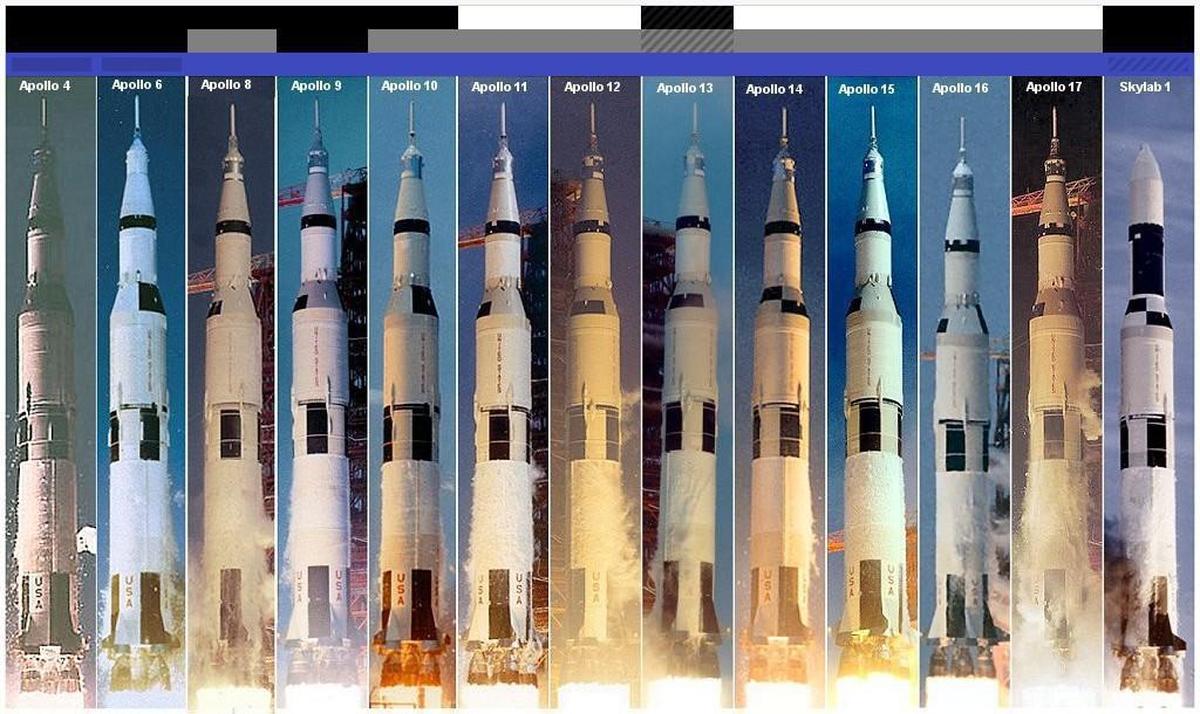
A collage showing all Saturn V launches.  The colour coded bars at the top indicate the destination of each mission:
Earth Orbit = Blue
Lunar Orbit = Grey
Lunar Landing = White

A collage showing all Saturn V launches. The colour coded bars at the top indicate the destination of each mission:
Earth Orbit = Blue
Lunar Orbit = Grey
Lunar Landing = White
| Photo Credit:
Tdadamemd and Reubenbarton / Wikimedia Commons

Lyndon B. Johnson, who was the U.S. President at the time, said of the flight: “The whole world could see the awesome sight of the first launch of what is now the largest rocket ever flown. This launching symbolises the power this nation is harnessing for the peaceful exploration of space.” It wasn’t long before Saturn V helped fulfil humanity’s dream of setting foot on the moon.

Published – November 09, 2025 01:53 am IST

Source link

How is Australia setting standards on training AI? | Explained

0

The story so far: On October 27, Attorney General of Australia Michelle Rowland unequivocally rejected proposals by the country’s own think-tank that sought to grant technology companies unchecked rights to mine copyrighted content for training AI. This decision marks a critical moment in the ongoing global debate between AI firms and copyright holders. Australia’s stance will have an impact on how tech giants mine data to train AI systems in the country.

What is at the heart of the issue?

At the heart of this controversy is the question of whether AI firms should be allowed to use copyrighted material, like books, music, artworks, and journalistic content, to train their AI systems without obtaining explicit permission from the creators.

The issue came to a head after the Productivity Commission, a government-backed independent agency, which takes inputs from industry bodies and big tech firms, suggested an exemption to existing copyright laws to mine text and data. In its report titled ‘Harnessing Data and Digital Technology’, the commission advocated for open access to vast troves of text data and voluntary industry standards in terms of guardrails. The commission argued that easing restrictions could unlock billions of dollars in foreign investment and bolster Australia’s economy.

This prompted immediate and vocal opposition. Authors, artists, trade unions, and media organisations called the proposal a way to get access to original content without paying for it. The commission’s interim report, published in August, further stoked anger by revealing it had not consulted with creatives nor modelled the real impact on Australia’s artistic economy before recommending the change.

How is the government responding?

In response to criticism from creatives, Attorney General Rowland said that “Australian creatives are not only world class, but they are also the lifeblood of Australian culture, and we must ensure the right legal protections are in place.” She emphasised that technology’s advancement must not come at the expense of those who generate the culture AI seeks to emulate or understand. Recognising the economic potential of AI, Ms. Rowland still asserted, “Australian creatives must benefit from these opportunities too.” To chart a way forward, the government has convened a Copyright and AI Reference Group (CAIRG) to consider alternatives. These include the possibility of a new paid licensing framework under the Copyright Act, which replaces the current voluntary system, and fairly compensates creators when their works are used for AI training. The aim is to establish a regime that balances technology-driven innovation with real value exchange so creators can decide how their works are used, and receive payment for the intellectual property.

How has the creative industry responded?

The decision represents more than a win for artists and media agencies as many see it as step in the right direction. Industry bodies see it as an important step in the right direction. For instance, Annabelle Herd, CEO of Australian Recording Industry Association, said in a LinkedIn post that the decision to “rule out a text and data mining exception for AI training of music and other copyright material is a critical step in the right direction. It is a win for creativity and Australian culture and First Nations culture, but it’s also a win for common sense.” She noted that the current copyright licensing structures are the foundation of the creator and digital economies and that IP laws drive innovation.

“Artists deserve the right to decide how their work is used and to share in the value it creates. Protecting that agency is how we safeguard Australia’s creative sovereignty and keep our culture strong,” she asserted. Media executives have widely endorsed the move, underscoring the need to let creators have control over their content. Some see Australia’s position in the broader AI debate as a defender of creator rights in an era of technological upheaval, while other view this as a signal to other democracies grappling with the same issues. Australia’s decision comes at a time when, around the world, tech companies are seeking to negotiate or sidestep copyright laws in pursuit of data to power ever larger, smarter AI models.

Yet the backlash from cultural and media groups highlights a growing unease with the notion that transformative technology should override established rights and undermine creative economies.

Why does this matter now?

As AI becomes increasingly capable of generating content, reproducing styles, and even mimicking unique voices, the line between inspiration and appropriation blurs.

Creators, authors and media organisations fear loss of agency, financial harm, and the cultural dilution that comes with unchecked content mining.

In addition, smaller players and independent artists, those with the least number of resources, are the most exposed to this AI onslaught. For such groups, meaningful copyright protection is synonymous with survival, creative integrity, and fair market participation.

Australia’s ruling is significant not simply for its immediate legal consequences, but for its deeper message that technological advancement must coexist with respect for creators, for culture, and for the economic infrastructure that sustains both.

The government’s next steps on potentially replacing voluntary licensing with a mandatory, paid system could set the standard for ethical AI development, championing genuine value exchange and fostering trust between innovators and the creative sector.

As other democracies wrestle with the question of who benefits from the AI revolution, Australia’s stance should remind them that innovation need not come at the cost of fairness, culture, and human creativity. Australia’s position signals that technology works best when it amplifies human creativity rather than exploit it.

Published – November 02, 2025 03:42 am IST

Source link

IIT Bombay researchers develop GPS-free control scheme for autonomous drone swarms

0

Novel scheme by IIT Bombay researchers to control drones can enable complex formation flying using only camera data, without GPS or inter-drone communication.

A new control scheme developed by Professor Dwaipayan Mukherjee and research scholar Chinmay Garanayak at the Indian Institute of Technology (IIT) Bombay enables unmanned aerial vehicles (UAVs) to fly in coordinated swarms without relying on GPS, inter-drone communication, or centralised control systems. The method uses bearing-only measurements obtained through onboard cameras to determine relative positions and maintain formation.

The researchers applied the scheme to Vertical Take-Off and Landing (VTOL) UAVs, which can lift off without a runway and hover mid-air. These drones are suitable for operations in confined spaces such as surveillance and monitoring. “Autonomy in a swarm is a critical task,” Mr. Mukherjee said. “This means that vehicles in a swarm should be able to decide their ‘actions’ based on variables they can measure with their on-board sensors, instead of having to rely on some global information being fed to them or some human/centralised computer deciding what their action ought to be. This is where our paradigm differs from usual ones,” he added.

The proposed ‘bearing-only’ control scheme allows each drone to use its onboard camera to observe its immediate neighbours and calculate bearing information. “In bearing-only control, the goal is to achieve formation control using only interagent bearing measurements,” Mr. Garanayak said. The system does not require GPS or communication with other drones or a central computer.

Camera-based measurements are less prone to noise than conventional distance sensors, simplifying the drone’s sensor system and reducing battery requirements and overall weight. The scheme is designed to work in areas where GPS is unavailable, or communication could be jammed, making it suitable for stealth-mode operations such as covert military missions.

VTOL drones are underactuated systems, which means they have six degrees of freedom but fewer directly controllable movements. While they can move vertically and rotate around three axes, lateral and forward-backward movements must be indirectly controlled. “Many of the results in the literature do not address the underactuated dynamics of VTOL vehicles and only focus on the kinematic model. This motivated us to consider the fully underactuated model of the VTOL UAV and explore its applicability to formation control,” Mr. Mukherjee said.

Underactuated systems require dynamic models that include position, orientation, velocities, forces, torques, and inertia. Previous attempts to apply bearing-only control to such models often fail due to instability or breakdowns in certain conditions. Mr. Mukherjee and Mr. Garanayak developed a control mechanism that ensures convergence and maintenance of the desired formation, even when drones start from imperfect positions. They have provided rigorous mathematical proof to support the reliability of the system. 

Their work addresses two operational scenarios. In the first, drones maintain formation at constant velocity using bearing and bearing-rate data. In the second, where formation and velocity vary over time, drones incorporate their own velocity measurements in addition to bearing data. The system can handle arbitrary time-varying configurations, allowing drones to navigate narrow passages, reconfigure into single-line formations, and adapt to changing mission requirements. 

The researchers plan to test the control scheme experimentally, using a drone swarm. On the future roadmap, they aim to address collision avoidance with theoretical guarantees. “Most existing algorithms rely on ad hoc collision avoidance schemes that do not come with any theoretical guarantees. Collision avoidance with objects in the environment and among drones is a challenge we are trying to tackle at a theoretical level,” Mr. Mukherjee said. 

Source link

Gray Hair May Be Your Body’s Secret Cancer Defense

0

The study reveals how hair pigment stem cells respond to DNA damage by making fate decisions that can result in either hair graying or the development of melanoma. Throughout life, our cells face continual challenges from both external and internal influences that can harm their DNA. This type of damage is known to play a […]

Source link