Achieving remission from prediabetes dramatically reduces the risk of heart disease and other major cardiovascular events. Lowering blood sugar levels dramatically reduces the risk of serious heart problems in people with prediabetes. Research from King’s College London, published in The Lancet Diabetes & Endocrinology, shows that restoring blood glucose levels to a normal range, effectively […]
Eating to 80% fullness may promote mindful habits, modest calorie reduction, and long-term health benefits. In several regions of Japan known for exceptional longevity, many people follow a principle called hara hachi bu. Rooted in Confucian teaching, it encourages individuals to stop eating when they feel about 80% full rather than continuing until they are […]
The experience of using Google Maps is different in certain locations. While you may get turn-by-turn driving instructions and street-level views with the tap of your finger in several countries, other locations may look blurry and are difficult to navigate by road. A user’s Google Maps experience is often linked to regulations in particular countries that curtail the use of satellite imaging and geographic surveys. This raises a set of questions about security and transparency.
Which countries resist being mapped, and why?
Several countries that have hostile relations with their neighbours or militant groups tend to resist being clearly mapped on Google’s navigation system. They fear that making detailed satellite imagery of their land easily available to users could lead to the targeting of critical infrastructure, or planning for potential attacks.
Countries like India, Israel, and South Korea have, over time, changed their tone on mapping. And these changes date back to a couple of decades earlier.
For instance, in 2007, BBC reported that India had asked Google to lower the level of detail in some Google Earth images, for security reasons. Nearly a decade later, in 2016, India resisted Google’s ask for ground-level photographs for its Street View offering. Street View only returned to the country in 2022. But, in late 2025, Google announced that it was boosting its Maps service with Gemini AI, allowing people to get personalised travel advice and ask questions. The company noted then that it had data for about 35 million places in India.
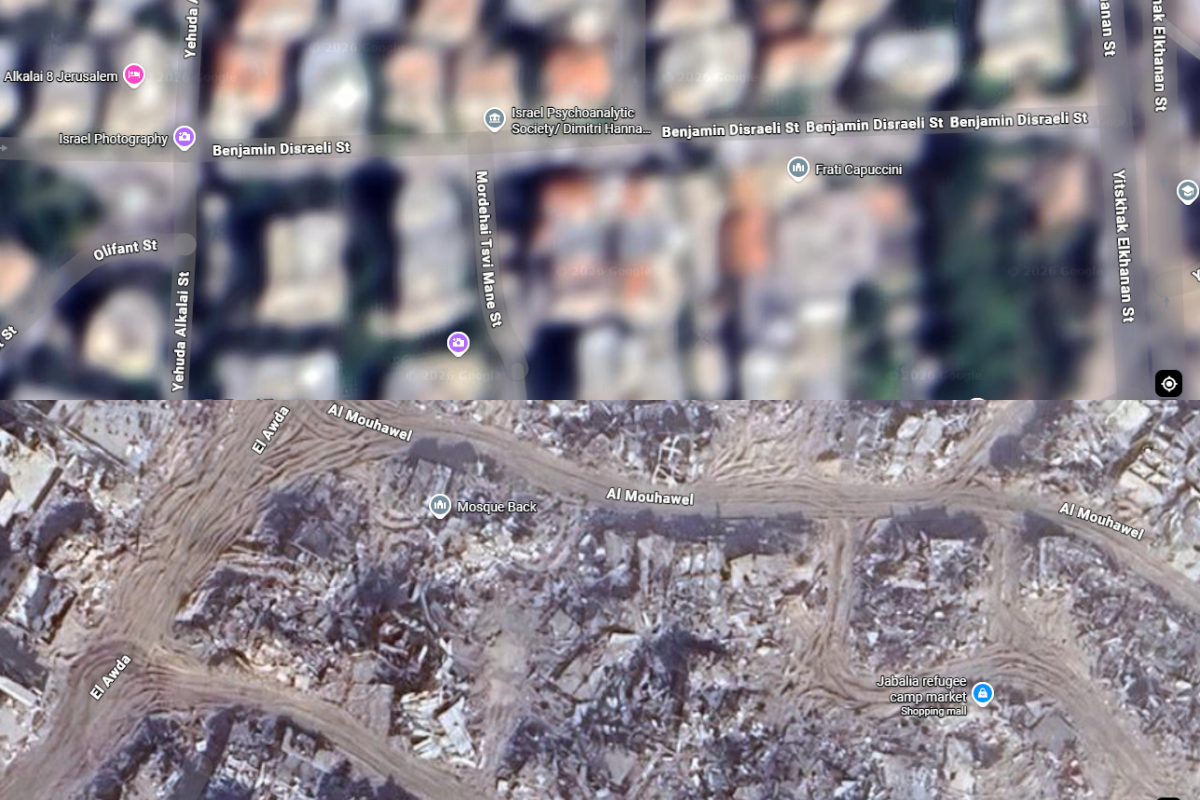
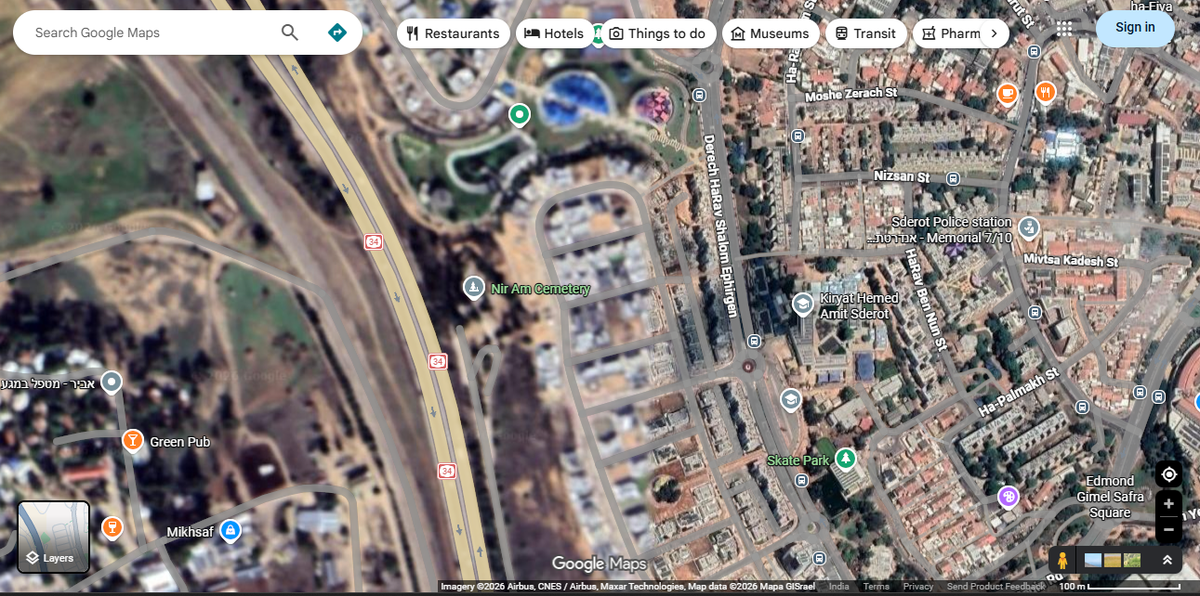
Israel is another country that poses a quandary to Google Maps users. Zoom lightly into multiple parts of Israel and you are likely to be met by extremely blurry houses and out-of-focus manmade structures, or blurred out areas adjoined to far more discernible zones. Near Gaza, however, users can zoom in to clearly see the devastating aftermath of Israel’s military action, such as the detailed rubble of the ruined Jabalia refugee camp market.
Israel’s blurriness in Google Maps was previously due to a U.S. law known as the Kyl-Bingaman Amendment, which restricted the clarity of satellite images that show Israel and areas surrounding it. Enforced in 1997, it stipulated a resolution limit of two metres in Ground Sampling Distance (GSD), which measures how on-screen pixels translate to actual distances on the ground. In other words, a higher GSD value yields a less detailed and more blurry map, because less data is captured.
“The Department has therefore changed the existing resolution limit of 2.0 m GSD to 0.4 m GSD for U.S.-licensed satellite imaging of Israel,” stated the notice. In essence, this meant more detailed data for satellite imagery—and a clearer look at Israel on the map.
Amnon Harari, who was the head of space programmes at Israel’s Defence Ministry, was quoted by Reuters that month as saying that it was “always preferable to be seen blurred, rather than precisely.”
Despite the change in regulations, multiple locations in Israel are still blurred on Google Maps, though not necessarily on other mapping/navigation platforms.
Several other countries have blurred out specific areas or particular landmarks on Google Maps, largely for security reasons, such as Interpol in France. On the other hand, entire patches of central Greenland and Antarctica are also difficult to explore in detail on Google Maps, with reasons for this including their climate.
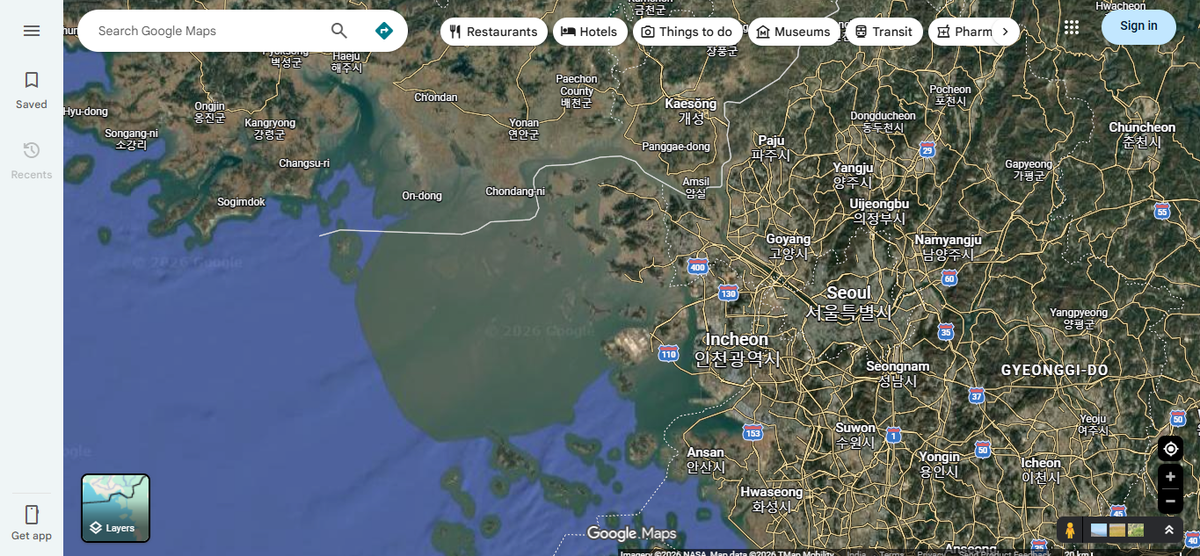
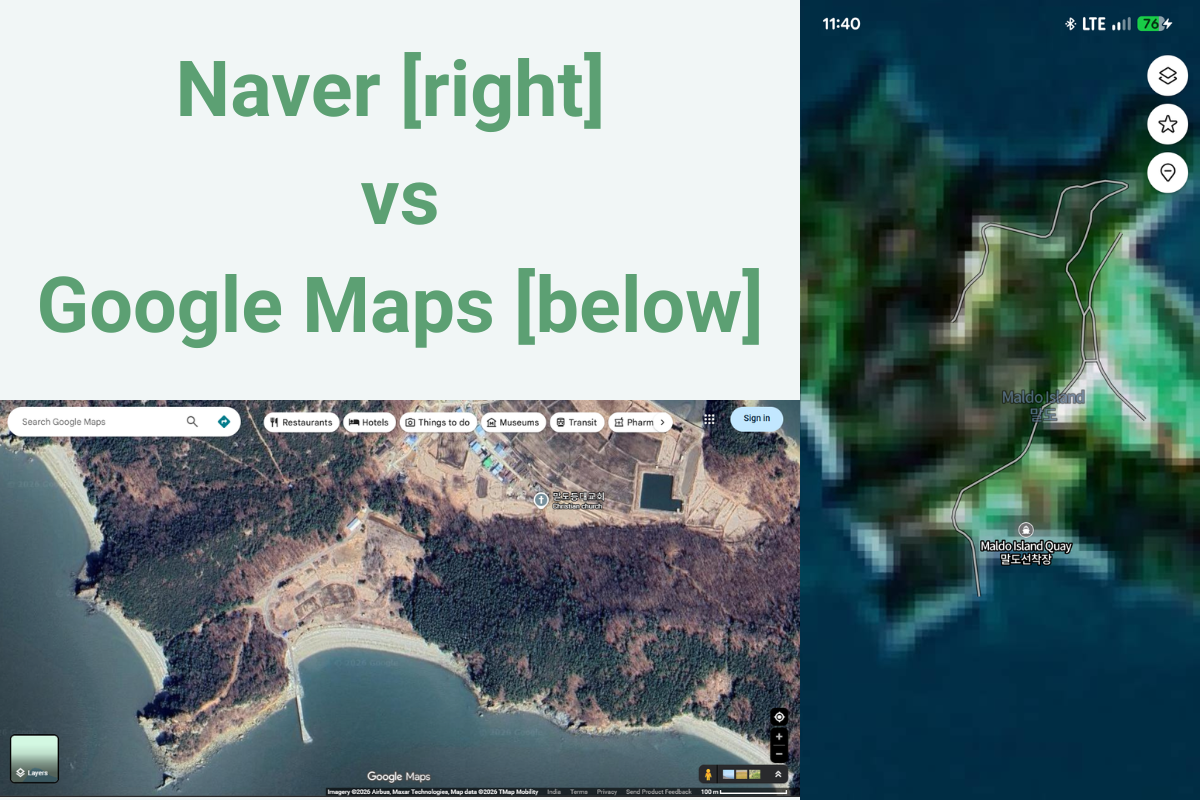
South Korea, meanwhile, has pushed back against Google’s requests for better map data. In a translated statement from last year, the company noted that international tourists faced “great inconvenience upon entering the country,” claiming that the directions function of Google Maps was not available in Korea. Travellers instead use a local offering like Naver, which is restricted to showing South/North Korea, and parts of their neighbouring countries. However, Google claimed that it was only requesting “safe” data, or a “ ‘national basic map’ on a scale of 1:5000.”
Finally, after years of dialogue and negotiations, Google claimed its victory. In late February, it was announced that the internet giant would be allowed to export high-precision map data to servers located overseas.
Google’s Vice President Cris Turner said the company looked forward to bringing a ”fully functioning Google Maps to Korea,” per media statements. However, Korea’s government expects Google to fulfil its security conditions, such as blurring sensitive facilities, and not fully revealing the longitude and latitude coordinates for South Korean territory, reported Reuters. This easing of restrictions was a condition that the Trump administration had reportedly pushed for, per media outlets.
How does greater mapping freedom affect Google and its users?
Google has explained that it uses techniques including photogrammetry to create its satellite-view of Maps, or a process where it puts together (satellite) imagery sourced from external providers. These include state agencies, geological survey organisations and commercial imagery providers, according to a Google blogpost from 2020.
From the company’s perspective, better quality data of popular, frequently visited places — such as South Korea — make navigation easier and safer for those using Google Maps in such locations.
Accurate satellite data also plays a crucial role in journalism and activism; images of Gaza rubble from multiple platforms were used to raise international awareness about Israel’s widespread bombing of civilian homes, even as the country insisted that it was targeting Hamas with precision.
However, some South Korean experts have raised antitrust concerns, noting that Google’s enhanced access to Korea’s map data could make it harder for local companies like Naver to compete and hold their own against an international giant.
As Google continues to juggle the navigational needs of billions of users with the security requests of their governments, the integrity of satellite images on Maps is not just a technology challenge, but an urgent geopolitical issue.
X was fined in December by EU tech regulators for breaching online content rules, the first sanction under a landmark legislation that drew criticism from the U.S. government.
The Bloomberg report quoted European Commission spokesperson Thomas Regnier saying that X submitted remedies in relation to its blue check mark verification feature.
The European Commission and X did not immediately respond to Reuters requests for comment.
Regnier said the commission will assess the proposed remedies, according to the report.
The EU sanction against X had followed a two-year-long investigation under the bloc’s Digital Services Act (DSA), which requires online platforms to do more to tackle illegal and harmful content.
The European Commission in July 2024 had charged X with deceiving users, saying that the blue checkmark does not correspond to industry practices and that anyone can pay to get a “verified” status.
The blue checkmark had previously indicated that an account belonged to a public figure whose identity was verified, but Musk changed it to indicate it belonged to a paid subscriber after acquiring X in 2022.
Musk acquired X, formerly known as Twitter, for $44 billion.
Deep Sankar Dasgupta with daughter Deepanwita Dasgupta, when she was 3 years old. Deepanwita was later diagnosed with subacute sclerosing panencephalitis, or SSPE, a rare but debilitating complication from a prior measles infection.(Anindita Dasgupta)
The first sign came when Deepanwita Dasgupta was 5 and started stumbling more while playing at her home in Bangalore in southern India. The girl was always up to something, so her parents figured extra bumps and bruises were just symptoms of an active childhood. Maybe, they thought, it was ill-fitting shoes.
Relatives described the unicorn-loving child as smart, affectionate, and occasionally rascally. Before she learned the alphabet, she had figured out how to find her favorite show, Blippi, on a phone. She was known to sneak butter from the fridge to enjoy a few finger licks.
But then her limbs started jerking. A spinal tap revealed measles in her cerebrospinal fluid. The virus she probably had as an infant had secretly made its way to her brain. Now 8 years old, Deepanwita is paralyzed, unable to talk.
Measles causes complications — ranging from diarrhea to death — in 3 in 10 infected people, according to the Infectious Diseases Society of America. Some are immediate, while others take weeks or months to appear. The one Deepanwita is experiencing, subacute sclerosing panencephalitis, or SSPE, typically takes years to rear its head.
“People think, ‘Oh, you know, if we get measles, then we’ll be fine, because I know my neighbor had it and they’re fine,’” said Yasmin Khakoo, who leads the national Child Neurology Society but spoke to KFF Health News in her capacity as a New York City doctor with expertise in neurologic conditions.
Measles, though, can be dangerous: A 7-year-old in South Carolina will have to relearn how to walk after enduring one of the more immediate complications, brain swelling. And every so often, the virus plants a ticking time bomb in the nervous system. A person can recover from measles and continue life as usual, no longer contagious and without any identifiable symptoms — sometimes for a decade or more — before problems appear. While some patients end up severely disabled for a while, Khakoo said, the condition is almost always fatal.
Subscribe to KFF Health News’ free Morning Briefing.
Before the advent of widespread and effective vaccines, the complication occurred enough in the U.S. that in the 1960s a doctor created a national registry of SSPE patients. Researchers now estimate about 1 in 10,000 people who get measles will develop SSPE, but the risk is significantly higher for those who contract measles before age 5. Populous nations where the virus is endemic, including India, see cases routinely.
Now, doctors and researchers fear that as vaccination rates drop and measles spreads in the U.S., cases of this debilitating complication will also rise here. Since the start of 2025, the Centers for Disease Control and Prevention has recorded over 3,500 measles cases — more than in the entire preceding decade — mostly people who were unvaccinated. Many were children. Last year, Connecticut doctors diagnosed a 6-year-old with SSPE, and in California, a school-age child who’d had measles as an infant died of it.
“We are likely to see SSPE cases going forward, especially if we don’t get this under control,” said Adam Ratner, a member of the American Academy of Pediatrics’ Committee on Infectious Diseases and author of the book Booster Shots.
Concern about SSPE was great enough that in January, the Child Neurology Society published a video to educate U.S. clinicians about the condition, and doctors who have seen such cases are warning their peers.
“We don’t have a way of knowing who’s going to get it, and we don’t have a way of very effectively treating it,” said Aaron Nelson, a professor of neurology with the New York University Grossman School of Medicine. “The one best thing that we can do, ideally, is to prevent children from having to go through it in the first place.”
The recommended two-dose measles vaccine slashes an exposed person’s risk of getting the contagious virus from 90% to 3% — and thus reduces the chance of SSPE. The vaccines carry small risks of febrile seizure and a bleeding condition, but measles itself has a higher risk of causing both.
Deepanwita Dasgupta and her mother, Anindita Dasgupta, celebrate the child’s 5th birthday in 2022.(Anindita Dasgupta)
Cases in the U.S.
A 2017 study of California children who developed SSPE after a measles outbreak there years ago determined that 1 case is diagnosed for about every 1,400 known cases of measles in children under age 5, and 1 for every 600 infected babies.
The researchers also found that, over the years, doctors had missed some cases among patients who had died with undiagnosed neurologic illness.
The possibility that future cases could go undiagnosed spurred Nava Yeganeh and her colleagues to publish a news release in September when a Los Angeles County child died of SSPE.
“We’ve had very few cases of measles in the last 25 years in this country,” said Yeganeh, who is the medical director with the Vaccine Preventable Disease Control Program at the Los Angeles County public health department and has had two patients with SSPE. “Unfortunately, that’s changing, and so we wanted to make sure that everyone was aware of this long-term complication.”
The California child who died had gotten measles as an infant, Yeganeh said, before the child could receive the vaccine. Measles is highly contagious, so at least 95% of the population must be immune to it to protect vulnerable people — including babies too young to vaccinate and people who are immunocompromised — from infection.
“This is an example of someone who did everything right, wanted to protect their child against this infection, and unfortunately ended up losing their child because we didn’t have herd immunity for them,” Yeganeh said.
Shortly after Yeganeh’s group published the news release in California, Nelson was working to get the word out, too.
He had recently seen a 5-year-old whose family had traveled to the U.S. for medical care after the child started stumbling, jerking, hallucinating about bugs and animals, and having seizures. The child had contracted measles as an infant and had been too young to be vaccinated. Nelson diagnosed the child with SSPE.
“Imagine that: Having a child who is healthy and happy, moving to talking less and less, eventually not able to walk,” Nelson said. “It’s a very sad thing.”
He thought he would encounter the condition only in medical school textbooks, as a relic of the past. Instead, in October he found himself presenting the case at the Child Neurology Society’s national conference and participating in the society’s video about the condition. “I’ve now seen something I shouldn’t have ideally seen ever in my career,” he said.
Warning Signs From India
Globally, the number of measles outbreaks has increased in recent years, and physicians in places including the U.K. and Italy have recently seen clusters of SSPE.
The high human cost of measles’ spread is especially evident in India. While total cases aren’t tracked, about 200 families caring for people with SSPE, including Deepanwita’s, are in a single chat group in the Bangalore area.
In New Delhi, Sheffali Gulati studies SSPE and sees about 10 new patients a year with the condition, what she calls the “delayed echo” of measles outbreaks. The youngest she has seen was 3 years old.
Gulati hasn’t found any treatments that reverse SSPE’s course, only some that slow its progress. She’s found herself counseling parents: It’s catastrophic, it’s not their fault, and they can do nothing but accept it.
Deepanwita’s relatives try to find joy where they can. They think they noticed the girl smiling when her favorite cousin called recently. Anindita Dasgupta, her mother, said Deepanwita moves her hands and feet on her own and sometimes turns her head, especially when her father enters the room. The girl communicates with her parents through her eyes and a few sounds.
But it’s far from where she was in 2022: At a cousin’s birthday, a few months before noticeable symptoms started, Deepanwita started the birthday song and sang the loudest.
At her own 8th-birthday gathering last year, Deepanwita, wearing a pink eyelet dress and a nasal tube, could only blink and move her eyes as she sat propped up before two cakes that she would not be able to eat. She can no longer swallow, so her mom dabbed a bit of icing on her tongue.
Deepanwita and her mother enjoyed baking cookies and cakes together before the young girl was diagnosed with subacute sclerosing panencephalitis, or SSPE, a rare complication from measles. For her 8th birthday in 2025, her mother made a cake and relatives ordered another, though Deepanwita can no longer eat solids and could be given only a taste of the icing on her tongue. (ANINDITA DASGUPTA)
Research That Shouldn’t Be Needed
Roberto Cattaneo, a molecular biologist at the Mayo Clinic in Rochester, Minnesota, has been studying SSPE for years. He recently used postmortem brain tissue to map how the measles virus can spread from the frontal cortex to colonize the entire brain. Still, he said it’s a “black box” what exactly measles is doing in those dormant years between the initial infection and when the symptoms of neurologic damage crop up.
It’s possible the virus replicates in the brain that whole time, undetected, killing off neurons. But with so many neurons in the human brain — 10 times as many as people living on the planet — the brain may find a way to adjust, Cattaneo said, until finally it can’t anymore.
He’s applying for funding to continue research on the disease and possible treatments, though ultimately, he wishes he didn’t have to. The tools to obliterate the condition already exist.
“The problem could be solved with vaccination,” Cattaneo said. The U.S. should have no cases of SSPE, he said. “It’s just painful.”
Media outlets had reported in December that Meta was working on a text AI model code-named Avocado slated for a first-quarter launch [File]
| Photo Credit: REUTERS
Meta has delayed the release of its artificial intelligence model code-named “Avocado” to at least May from this month, the New York Times reported on Thursday, citing three people with knowledge of the matter.
The delayed timeline comes even as the company invests heavily to expand its AI ambitions, including a roadmap for building its own chips. In January, Meta laid out capital spending plans of between $115 billion and $135 billion for the year in the pursuit of “superintelligence” — the horizon where AI will outsmart humans.
Meta’s new model, which the company has been working on for months, has fallen short in performance when compared to the latest offerings from rivals, the report said.
A Meta spokesperson told Reuters: “Our next model will be good, but more importantly, show the rapid trajectory we’re on, and then we’ll steadily push the frontier over the course of the year as we continue to release new models.”
“We’re excited for people to see what we’ve been cooking very soon,” the spokesperson added in an emailed statement.
The leaders of Meta’s AI division have discussed the possibility of temporarily licensing Google’s Gemini to power the company’s AI products, the report added, although no decisions have been reached.
The announcement comes as Tesla suffers a global decline in sales of its cars [File]
| Photo Credit: REUTERS
A subsidiary of Tesla, Elon Musk’s electric vehicle maker, has won approval to supply UK households and businesses with electricity, Britain’s energy regulator said Thursday.
The company applied to become an electricity supplier in Britain in July, a first such move outside the United States by the operation run by tech billionaire Musk.
The regulator Ofgem said Tesla Energy Ventures “has been granted a licence authorising it to supply electricity to domestic and non-domestic consumers in Great Britain”.
A spokesperson added that “protecting consumers and maintaining a secure, fair energy market underpins every licensing decision we make”.
The announcement comes as Tesla suffers a global decline in sales of its cars.
Adobe’s longtime CEO Shantanu Narayen will leave his role once a successor is appointed, the design software maker said [File]
| Photo Credit: REUTERS
Adobe’s longtime CEO Shantanu Narayen will leave his role once a successor is appointed, the design software maker said on Thursday, sending its shares down over 7% in extended trading on renewed worries around its strategy as it grapples with AI disruption.
Narayen’s exit from the role comes after he served as the head of Adobe for 18 years, during which he helped the company’s flagship software such as Photoshop, Illustrator, Premiere Pro and InDesign become household products for creatives across the world.
Narayen will stay on as chair of the board to support the next CEO, the company said. But the announcement of him leaving the helm puts the company in a precarious position as it comes at a time when Adobe is doubling down on AI, striking partnerships and exploring acquisitions to extend its industry lead.
Separately, Adobe reported quarterly financial results, with double-digit growth in total revenue and its customer subscription segments, reflecting resilient spending on its product suite.
Adobe is grappling with a changing software landscape, where artificial intelligence is lowering the barrier to entry for design and its dominant position in the industry is being threatened by newcomers embracing the technology.
“Investors will likely focus on whether incoming leadership maintains a balance between disciplined execution and aggressive AI investment, especially as competition in creative and enterprise AI intensifies,” said Emarketer analyst Grace Harmon.
While Adobe has bet heavily on artificial intelligence to bolster its product suite, “investor skepticism about monetization timing and payoff may have factored into a drop in its share prices,” Harmon said.
Adobe’s shares have fallen around 22% so far this year after declining over 21% in 2025, reflecting investor apprehension over the firm’s AI strategy and outlook.
The company forecast second-quarter revenue between $6.43 billion and $6.48 billion, compared with estimates of $6.43 billion, according to data compiled by LSEG.
It reported first-quarter revenue of $6.40 billion, beating estimates of $6.28 billion.
On an adjusted basis, the company earned $6.06 per share, compared with estimates of $5.87 per share.
Creative and Marketing Professionals subscription revenue came in at $4.39 billion, topping expectations of $4.32 billion.
Representational image of a drone
| Photo Credit: REUTERS
Amazon.com’s drone unit Prime Air is withdrawing from the Commercial Drone Alliance, taking issue with the industry trade group’s opposition to a regulatory proposal for detect-and-avoid systems to prevent drone collisions with crewed aircraft.
In a previously unreported letter seen on Thursday by Reuters, the Amazon unit said the alliance’s positions “on the most consequential safety questions facing the commercial drone industry are incompatible with Prime Air’s core safety tenets.”
Prime Air said in the letter, sent late on Wednesday, that in more than 70,000 drone flights, its detect-and-avoid system performed “successful collision avoidance maneuvers on two potential mid-air collisions with aircraft that could have led to catastrophic safety consequences, including the loss of life.”
The Federal Aviation Administration last year proposed requiring drones to have systems to detect and avoid aircraft that are not broadcasting their position, potentially because of equipment failure. The Commercial Drone Alliance opposed the requirement. The requirement was part of proposed federal rules to speed deployment of drones beyond the visual line of sight of their operators.
The Washington-based trade group said the FAA instead should require aircraft operating below an altitude of 500 feet (152 meters) to be able to broadcast their position through the use of satellite-based technology that lets them automatically broadcast their precise location, speed and other data, or other electronic systems.
The proposed rules have not yet been finalised.
The Commercial Drone Alliance includes Skydio, Zipline, Alphabet’s Wing Aviation, among others.
The group said on Thursday it is sorry to see Prime Air leave but added that its members have conducted millions of safe drone operations “demonstrating that a performance-based framework, rather than prescriptive technology requirements, (enables) safe operations while fostering competition and innovation.”
Prime Air said in its letter that the safe integration of drones into the national airspace is its highest priority.
“This requires rigorous, capability-based standards – including requirements that mandate drone technologies capable of detecting non-cooperative crewed aircraft,” it said in its letter.
The term non-cooperative crewed aircraft refers to planes or helicopters that do not transmit active identification or position signals and do not communicate with air traffic control.
Prime Air said one of the two potential mid-air collisions it cited involved a helicopter that was not broadcasting a safety system known as the Automatic Dependent Surveillance-Broadcast as required, and without Amazon’s detect-and-avoid system “would have led to a catastrophic outcome.”
“The risk of a drone collision with a crewed aircraft is not theoretical,” the company said.
The move comes as militaries across the globe start to use automated systems [File]
| Photo Credit: REUTERS
Ukraine is opening access to its battlefield data for its allies to train drone AI software, the defence minister said on Thursday, as Kyiv seeks to harness the experience it has garnered fending off Russia’s four-year, full-scale invasion.
The move comes as militaries across the globe start to use automated systems which can guide drones to their targets without a pilot, or quickly analyse vast pools of data.
Foreign allies and companies have sought access to Ukraine’s datasets, as these are crucial for training models to recognise patterns, shapes and the behaviour of people and machines on the battlefield.
Defence Minister Mykhailo Fedorov said a platform had been created to safely train AI models without giving away sensitive data, but which nevertheless provides constantly updating datasets and large quantities of photos and video footage.
“Today, Ukraine has a unique array of battlefield data that is unmatched anywhere else in the world,” he wrote on Telegram.
“This includes millions of annotated images collected during tens of thousands of combat flights.”
Fedorov, a tech-savvy ally of President Volodymyr Zelenskiy, said Ukraine would benefit from speeding up the development of AI models which it can then use in its war against Russia.
“We are ready to work with partners on joint analytics, model training, and the creation of new technological solutions,” he said, adding that Ukraine wants to increase the role played by autonomous systems in the war.
When he was appointed in January, Fedorov laid out his plans to conduct a broader data-driven overhaul of Ukraine’s vast defence ministry.
It has sent anti-drone specialists to four Middle Eastern nations this week after they requested Kyiv’s help in downing Iran’s vast barrages of Shahed UAVs.
Separately, top Ukrainian commander Oleksandr Syrskyi said the military had to “increase the pace of development of effective unmanned vehicles” as the war “entered a new phase.”
“With the aim of countering enemy strike drones, platoons of drone interceptors are being created inside detachments of the Ukrainian armed forces,” Syrskyi wrote on Telegram.