Home Blog Page 202

US, UAE arms companies to co-develop AI-powered drones

0

America’s Anduril and the UAE’s state-owned defence conglomerate, EDGE Group, will jointly develop the Omen drone at a new, 50,000 square feet (4,645 square metres) research centre in Abu Dhabi
| Photo Credit: Getty Images/iStockphoto

A U.S. high-tech arms company is to design and produce AI-powered drones in the United Arab Emirates under a joint venture, the two parties said on Thursday (November 13, 2025), strengthening close defence ties.

America’s Anduril and the UAE’s state-owned defence conglomerate, EDGE Group, will jointly develop the Omen drone at a new, 50,000 square feet (4,645 square metres) research centre in Abu Dhabi, a statement said.

The UAE will acquire the first 50 units, officials said. A publicity photo showed the Omen carrying the UAE air force’s insignia.

The lightweight, long-distance, autonomous drone takes off and lands like a helicopter and flies like a plane, allowing it to be deployed from within war zones and disaster areas.

“This is… about disrupting current maritime patrol, special mission aircraft, much bigger systems. That’s what we’re going after,” Anduril senior vice-president Shane Arnott said in a media call.

Omen is intended to be the “first of many” products from the joint venture, which builds on decades of U.S.-UAE defence ties, the statement said.

During President Donald Trump’s visit to Abu Dhabi in May, the U.S. and UAE announced plans for a new defence partnership that would include “joint capability development”.

The UAE, nicknamed “Little Sparta” by former U.S. Defense Secretary James Mattis, has deployed its military to conflicts in Afghanistan, Libya and Yemen.

The oil-rich desert monarchy, which hosts the U.S. air force at its Al Dhafra base, established EDGE in 2019 as part of efforts to develop a domestic defence industry.

EDGE is investing nearly $200 million in Omen, while Anduril has already ploughed $850 million into related technology and development.

The drone, capable of carrying payloads including torpedoes, is expected to reach production by the end of 2028.

As part of the deal, EDGE gains access to Anduril’s Lattice AI system, which allows multiple autonomous aircraft to coordinate and adapt in real time as a “3D command and control center”, the statement said.

Anduril’s founder Palmer Luckey, inventor of the Oculus virtual reality headsets, is a campaign donor to Trump.

Luckey is close to fellow billionaire Peter Thiel, co-founder of software firm Palantir which announced an AI joint venture with the UAE’s Dubai Holding last week.

Anduril’s U.S. government contracts include posting hundreds of autonomous surveillance towers along the U.S.-Mexico frontier, creating a virtual border wall.

Source link

OnePlus 15 launched in India with 165 Hz display and 7,300 mAh battery: Price, features and sale

0

OnePlus 15 launched in India with 165 Hz display and 7,300 mAh battery: Price, features and sale
| Photo Credit: Special Arrangement

OnePlus on Thursday (November 13, 2025) launched its new premium flagship smartphone, OnePlus 15, in India. It succeeds the OnePlus 13 with a new Qualcomm processor while retaining features like Plus Mind.

The OnePlus has a 6.78 inch LTPO 1.5K ProXDR display with an adaptive refresh rate of up to 165 Hz and 1,800 nits of peak brightness.

OnePlus has used a 7,300 mAh battery in the OnePlus 15, accompanied by a 120W charger inside the box. It also supports 50W wireless charging.

OnePlus 15 runs on Snapdragon 8 Elite Gen 5 processor with up to 16 GB RAM and 512 GB storage. It operates on OxygenOS 16 based on Android 16 out of the box.

(For top technology news of the day, subscribe to our tech newsletter Today’s Cache)

OnePlus sports triple 50 MP rear lenses, which consists of a 50 MP main camera, a 50 MP ultrawide sensor and a 50 MP telephoto lens. It gets a 32 MP front camera for selfies.

OnePlus 15 will be available in Infinite Black shade with a frosted glass back and matte finish, along with Sand Storm and Ultra Violet shades.

OnePlus 15 starts at ₹72, 999 for the 12 GB/256 GB variant while the 16 GB/512 GB unit can be purchased at ₹79 999. It will sell starting 8 PM tonight across OnePlus stores, OnePlus website, Amazon and offline retail partners such as OnePlus Experience Stores, Reliance Digital, Croma, Vijay Sales, Bajaj Electronics, and others.

Source link

OnePlus 15 Review: Delivers uncompromised speed, endurance and intelligence

0

Post the design restructuring set by the OnePlus 13s, the company has introduced the OnePlus 15. Along with the design change, the phone features the latest Snapdragon 8 Elite Gen 5 processor, the world’s first 1.5K 165 Hz display and an upgraded battery power over its predecessor. Starting at ₹72, 999, the latest OnePlus is taking on the big leagues, but the persistent question remains, can it intrigue the users? So, let’s have a look and decide.

Design

As already hinted above, the latest OnePlus 15 follows a new design structure, deviating from the usual circular frame at the back. It now has a rectangular frame consisting of the cameras and the LED flash. The phone’s design feels mature, with a refined focus on symmetry and balance. The rear panel now carries the OnePlus logo at the center, lending it a more uniform and confident aesthetic. The mid-frame adopts Micro-Arc Oxidation (MAO) technology, a process inspired by aerospace engineering, creating a ceramic-grade coating that’s tougher than aluminium and even titanium. This ensures the phone not only looks premium but feels incredibly sturdy and smooth to the touch.

In-hand feel has improved drastically over the OnePlus 13. The new OnePlus 15 is slightly shorter and more compact, making it easier to handle while maintaining the same refined footprint. Despite housing a massive battery, the phone weighs just around 215g and maintains a slim 0.82cm profile, offering a balanced and comfortable grip. The uniform curvature of the corners, crafted using the golden ratio, lends visual continuity and ergonomic comfort. The aluminium mid-frame merges seamlessly into the rear panel, while the front side showcases an almost borderless experience. OnePlus has also replaced the traditional Alert Slider with the new Essential Key, which can be customised for multiple functions such as quick launching the camera, activating silent mode, or opening specific apps.

From the front, the OnePlus 15 impresses with uniformly ultra-slim bezels measuring just 1.15mm , the thinnest ever on a OnePlus device. The display stretches edge-to-edge without any chin, offering an immersive look that feels futuristic. The IP66, IP68, IP69, and IP69K certifications make it one of the most durable smartphones available, capable of withstanding dust, submersion, and even high-pressure water jets up to 80°C. This level of durability sets a new benchmark for flagships and makes it far more resilient than any of its competitors.

(For top technology news of the day, subscribe to our tech newsletter Today’s Cache)

Display

The OnePlus 15 boasts a 6.78-inch LTPO 1.5K ProXDR display, combining a 2,772×1,272 resolution with an adaptive refresh rate of up to 165 Hz. It’s the world’s first smartphone to pair this refresh rate with a 1.5K resolution, striking the perfect balance between clarity and power efficiency. For daily users, it translates into an ultra-smooth experience, from fluid app transitions to seamless scrolling. In gaming, the 165 Hz refresh rate and 3,200 Hz touch response rate make every movement instantaneous, ensuring even the most demanding titles like BGMI or Call of Duty respond without delay. The brightness peaks at 1,800 nits, ensuring excellent readability even under harsh sunlight, while the screen can dim to just 0.5 nits at night for comfortable viewing.

Content on the screen looks stunning, with HDR10+ and Dolby Vision support ensures rich contrasts and deep blacks. The TÜV Rheinland Intelligent Eye Care 5.0 certification adds to long-term comfort with intelligent reminders for breaks and reduced blue-light exposure. Compared to the Pixel 10’s Actua OLED, the OnePlus 15 display feels snappier and more vibrant, especially for gaming and HDR playback. While Google’s colour calibration remains superb, OnePlus’ faster refresh and touch latency clearly outclass it, making the 15’s display one of the best in the segment.

OS and AI

Running on OxygenOS 16 based on Android 16, the OnePlus 15 marks a significant leap in software experience. The UI continues to deliver the “fast and smooth” experience OnePlus is known for but with more intelligence integrated throughout the system. The all-new Plus Mind serves as a digital memory hub, with a simple swipe or tap, users can save any content from their screen into Mind Space. Later, the Gemini AI (integrated via Google partnership) cross-references saved content with live data, offering personalised assistance. This integration feels more practical than Pixel 10’s Magic Cue, while Google’s AI leads in contextual understanding, and OnePlus provides a more private, on-device execution that’s equally efficient.

AI-driven tools like AI Portrait Glow and AI Scan refine images and documents in real time, while AI Recorder transcribes meetings, identifies speakers, and provides summaries. The OS introduces Parallel Processing 2.0 for faster multitasking, and the new Predictive Back Gesture adds fluid visual feedback during navigation. Dual App Control allows users to interact with two apps at once, pushing productivity further. Altogether, OxygenOS 16 feels polished, proactive, and human-centered, a major upgrade over OxygenOS 15 on the OnePlus 13.

Performance

Powering the OnePlus 15 is the Qualcomm Snapdragon 8 Elite Gen 5, a powerhouse built on the 4nm process and running at 4.6GHz. Compared to the OnePlus 13’s Snapdragon 8 Elite, this new chip offers up to 20% performance gain and 35% better CPU efficiency. The 16 GB LPDDR5X Ultra+ RAM and 512 GB UFS 4.0 storage on our review unit make multitasking seamless and app launches instantaneous. Paired with the OnePlus CPU Scheduler, the system intelligently distributes processing loads, ensuring no slowdown even under extended use.

In benchmarks, the OnePlus 15 achieved a record-breaking Geekbench score of 3629 (single-core) and 10753 (multi-core), the highest among the flagships I’ve reviewed so far. On Antutu, it scored an impressive 3,586,011 points, reflecting its sheer computational power. Day-to-day usage feels effortless, switching between heavy apps, editing 4K videos, or browsing multiple tabs all happen with buttery smoothness.

Gaming, as expected, is a major highlight. The combination of the 165 Hz display, Adreno 840 GPU, and the dedicated touch-response chip delivers flawless gameplay. Titles like Call of Duty Mobile, BGMI, and F1 Clash ran at their highest frame settings with zero frame drops. The OnePlus 15 maintains consistent 120fps even after prolonged sessions, something the Pixel 10’s Tensor G5 simply can’t replicate. The newly designed 360 Cryo-Velocity Cooling System, featuring a 5731mm² vapor chamber and an aerogel screen cooler, ensures the phone stays cool throughout.

Camera

The upgrades are visible in the camera section too. The OnePlus 15 features a triple 50 MP rear camera setup, the main 50 MP Sony IMX906 sensor, a 50 MP ultra-wide with 116° field of view, and a 50 MP telephoto with 3.5x optical and up to 7x lossless zoom. This configuration is a direct evolution from the OnePlus 13’s system, adding more depth, speed, and computational refinement. The detailing, the ability to maintain texture and sharpness even when zoomed, is exceptional and one of my favorite aspects this year.

OnePlus 15 camera sample
| Photo Credit:
Haider Ali Khan

The new DetailMax Engine works silently behind the scenes, combining multiple exposures to produce crisp 26 MP images that retain stunning depth without over-processing. Unlike the Pixel 10, which sometimes leans toward AI-driven tone adjustments, the OnePlus 15’s AI only refines; it doesn’t alter reality. The photos appear natural, accurately reflecting what the eyes see. Daylight shots show impressive dynamic range, while the Clear Night Engine ensures low-light captures are bright yet noise-free, perfectly balancing highlights and shadows.

OnePlus 15 camera sample

OnePlus 15 camera sample
| Photo Credit:
Haider Ali Khan

Portraits shine with excellent subject separation and pleasing background blur. The continuous optical zoom from 1x to 3.5x in portrait mode offers flexibility without sacrificing clarity. The images carry a natural Hasselblad-inspired colour tone, less saturated than Vivo’s approach but richer than Google’s flat realism.

OnePlus 15 camera sample

OnePlus 15 camera sample
| Photo Credit:
Haider Ali Khan

The 32 MP front camera, with its RGBW pixel array, captures bright, balanced selfies even in dim settings. Autofocus ensures everyone stays sharp, and 4K recording at 60fps makes it great for vloggers. Overall, this is one of the most complete camera setups OnePlus has delivered, not only improved from the OnePlus 13 but easily competing with the Pixel 10 in realism and detail.

Video capabilities have seen a major step up, with 4K 120fps Dolby Vision HDR recording producing cinematic results. Real-time tone mapping keeps skin tones accurate across lighting changes, and the O-Log format with live LUT preview gives creators more control during shooting. Features like Underwater Mode, which allows shooting with volume buttons as shutter controls, add a practical touch for adventurers.

Battery

Battery life is where the OnePlus 15 takes a commanding lead. Housing a massive 7,300 mAh dual-cell Silicon NanoStack battery, it’s one of the largest in any flagship smartphone. Compared to the 6,000 mAh pack in the OnePlus 13, the improvement is substantial. During our testing, the phone comfortably lasted around 40 hours on a single charge.

Charging, too, is blisteringly fast. The 120W SuperVOOC charger tops up the phone in about 39 minutes, while 50W AIRVOOC wireless charging ensures convenient, fast top-ups. The Bypass Charging feature, which powers the phone directly from the outlet during gaming, effectively reduces heat buildup and preserves long-term battery health. Despite its size, the battery maintained consistent performance even under heavy multitasking or gaming.

Verdict

As the question was raised in the beginning, can the OnePlus 15 appease users? The answer is a resounding yes! The OnePlus 15 is a true flagship in every sense, combining raw performance, refined design, and intelligent software into one cohesive experience. It stands tall against rivals like the Pixel 10 by offering a superior display, longer battery life, and noticeably faster performance, all while retaining OnePlus’ hallmark fluidity and finesse.

With its 1.5K 165 Hz display, Snapdragon 8 Elite Gen 5 processor, DetailMax-powered triple 50 MP cameras, and record-setting 7,300 mAh battery, the OnePlus 15 represents refinement in every sense. For users looking to upgrade their daily driver with something that delivers uncompromised speed, endurance and intelligence, the OnePlus 15 is a flagship that truly lives up to its promise of power on, limits off.


Source link

After Decades, Scientists Have Finally Discovered Tylenol’s Secret Mechanism

0

Scientists have discovered that acetaminophen doesn’t only work in the brain, it also blocks pain directly in nerve endings. Researchers at the Hebrew University of Jerusalem have found that acetaminophen doesn’t only act in the brain. Their study reveals that it also blocks pain at its origin by targeting nerve endings in the body. The […]

Source link

Anthropic, Microsoft announce new AI data centre projects as industry’s construction push continues

0

Artificial intelligence company Anthropic announced a $50 billion investment in computing infrastructure on Wednesday that will include new data centres in Texas and New York.

Microsoft also on Wednesday announced a new data centre under construction in Atlanta, Georgia, describing it as connected to another in Wisconsin to form a “massive supercomputer” running on hundreds of thousands of Nvidia chips to power AI technology.

The latest deals show that the tech industry is moving forward on huge spending to build energy-hungry AI infrastructure, despite lingering financial concerns about a bubble, environmental considerations and the political effects of fast-rising electricity bills in the communities where the massive buildings are constructed.

Anthropic, maker of the chatbot Claude, said it is working with London-based Fluidstack to build the new computing facilities to power its AI systems. It didn’t disclose their exact locations or what source of electricity they will need.

Another company, cryptocurrency mining data centre developer TeraWulf, has previously revealed it was working with Fluidstack on Google-backed data centre projects in Texas and New York, on the shore of Lake Ontario. TeraWulf declined comment Wednesday.

A report last month from TD Cowen said that the leading cloud computing providers leased a “staggering” amount of U.S. data centre capacity in the third fiscal quarter of this year, amounting to more than 7.4 gigawatts of energy, more than all of last year combined.

Oracle was securing the most capacity during that time, much of it supporting AI workloads for Anthropic’s chief rival OpenAI, maker of ChatGPT. Google was second and Fluidstack came in third, ahead of Meta, Amazon, CoreWeave and Microsoft.

Anthropic said its projects will create about 800 permanent jobs and 2,400 construction jobs. It said in a statement that the “scale of this investment is necessary to meet the growing demand for Claude from hundreds of thousands of businesses while keeping our research at the frontier.”

Microsoft has branded its two-story Atlanta data centre as Fairwater 2 and said it will be connected across a “high-speed network” with the original Fairwater complex being built south of Milwaukee, Wisconsin. The company said the facility’s densely packed Nvidia chips will help power Microsoft’s own AI technology, along with OpenAI’s and other AI developers.

Microsoft was, until earlier this year, OpenAI’s exclusive cloud computing provider before the two companies amended their partnership. OpenAI has since announced more than $1 trillion in infrastructure obligations, much of it tied to its Stargate project with partners Oracle and SoftBank. Microsoft, in turn, spent nearly $35 billion in the July-September quarter on capital expenditures to support its AI and cloud demand, nearly half of that on computer chips.

Anthropic has made its own computing partnerships with Amazon and, more recently, Google.

The tech industry’s big spending on computing infrastructure for AI startups that aren’t yet profitable has fueled concerns about an AI investment bubble.

Investors have closely watched a series of circular deals over recent months between AI developers and the companies building the costly chips and data centres needed to power their AI products. Anthropic said it will continue to “prioritize cost-effective, capital-efficient approaches” to scaling up its business.

OpenAI had to backtrack last week after its chief financial officer, Sarah Friar, made comments at a tech conference suggesting the U.S. government could help in financing chips needed for data centres. The White House’s top AI official, David Sacks, responded on social media platform X that there “will be no federal bailout for AI” and if one of the leading companies fails, “others will take its place,” though he also added he didn’t think “anyone was actually asking for a bailout.”

OpenAI CEO Sam Altman later confirmed in a lengthy statement that “we do not have or want government guarantees” for the company’s data centres and also sought to address concerns about whether it will be able to pay for all the infrastructure it has signed up for.

“We are looking at commitments of about $1.4 trillion over the next 8 years,” Altman wrote. “Obviously this requires continued revenue growth, and each doubling is a lot of work! But we are feeling good about our prospects there.”

Published – November 13, 2025 08:49 am IST

Source link

Ex-Twitter CEO Parag Agrawal’s AI search startup Parallel raises $100 million 

0

Parag Agrawal, ex CEO of Twitter, pictured above [File]
| Photo Credit: REUTERS

AI startup Parallel Web Systems, founded by former Twitter CEO Parag Agrawal, has raised $100 million to build web search infrastructure for artificial intelligence agents and fund deals with online content owners, Agrawal said in an interview.

The Series A round, which values the company at $740 million, was co-led by venture firms Kleiner Perkins and Index Ventures, with participation from other existing backers including Khosla Ventures.

Parallel aims to address what it sees as a fundamental shift in internet use, as AI agents increasingly become the web’s primary users. The company builds application programming interfaces (APIs) that let AI systems search the live web for up-to-date information to complete tasks.

Agrawal said its enterprise customers use Parallel to power AI agents that write software code, analyse customer data for sales teams and assess risk for insurance underwriting, areas where high-quality web data, alongside internal systems, is critical.

“How many jobs are there where we could turn off web access and ask you to do the same job fully?” Agrawal told Reuters. “You can’t deprive an M&A lawyer from not being able to use the web, so why would you deprive their agents?” He said he believed the startup’s technology was superior to built-in web search functions offered by AI-model providers.

Unlike traditional search engines that rank links for humans to click, Parallel’s system returns optimised content, or “tokens,” designed to feed directly into an AI model’s context window. The company says this approach improves accuracy, reduces “hallucinations”, or false information, and cuts operational costs for customers.

Agrawal said the new capital will allow Parallel to “go all in” on product development and customer acquisition. Some of the funds will also go toward tackling the challenge of web content increasingly being locked behind paywalls and login barriers to prevent AI web scraping, as web owners from publishers to social media platforms see traffic decline as the rise of AI chatbots changes how people access information.

Agrawal said Parallel plans to develop an “open market mechanism,” a new economic model to incentivise publishers to keep content accessible to AI systems, though he did not provide details. Founded two years ago, Parallel first launched its products in August 2025. The company previously raised $30 million in January 2024.

Source link

‘They Don’t Return Home’: Cities Across US Fail To Curb Traffic Deaths

0

LOS ANGELES — Kris Edwards waited at home with friends for his wife, Erika “Tilly” Edwards, to go out to dinner, but she never made it back to the house they had purchased only four days earlier. Around 9 p.m. on June 29, a hit-and-run driver killed Tilly as she walked to her car after a fundraiser performance in Hollywood.

“I’ve just got to figure out how to keep living. And the hard part with that is not knowing why,” Edwards said of his wife’s death.

Despite local, state, and federal safety campaigns, such as the global Vision Zero initiative to eliminate traffic fatalities, such deaths are up 20% in the U.S. from a decade ago, from 32,744 in 2014 to an estimated 39,345 in 2024, according to data from the Department of Transportation’s National Highway Traffic Safety Administration. Although traffic deaths have declined since peaking at 43,230 in 2021, the number of deaths remains higher than a decade ago.

Since the covid-19 pandemic, the Pew Research Center found, Americans’ driving habits have worsened across multiple measures, from reckless driving to drunk driving, which road safety advocates call a public health failure. They say technology could dramatically reduce traffic deaths, but proposals often run up against industry resistance, and the Trump administration is focusing on driverless cars to both innovate and improve public safety.

“Every day, 20 people go out for a walk, and they don’t return home,” said Adam Snider, a spokesperson for the Governors Highway Safety Association, which represents state road safety offices.

Kris Edwards and his cat, Rex, in the garden of the home he bought with his wife, Erika “Tilly” Edwards, only four days before her death.(Chaseedaw Giles/KFF Health News)

American roads have become more dangerous than violent crimes in some cities: Los Angeles, San Francisco, and Houston are among the major cities that now report more traffic fatalities than homicides. In 2024, the Los Angeles Police Department reported an estimated 268 homicides and 302 traffic deaths, the second consecutive year that the number of people killed in collisions exceeded the number of homicide victims, according to Crosstown LA, a nonprofit community news outlet.

San Francisco reported more than 40 traffic deaths and 35 homicides in 2024. In Houston, approximately 345 people died in crashes and 322 from homicide.

“Simply put, the United States is in the middle of a road safety emergency,” David Harkey, president of the Insurance Institute for Highway Safety, testified during a House Energy and Commerce subcommittee hearing this summer. Harkey said that, out of 29 high-income countries, America ranks at the bottom in road safety. “This spike is not — I repeat, is not — a global trend. The U.S. is an outlier.”

In January 2017, then-Mayor Eric Garcetti joined 13 other L.A. city leaders in pledging to implement the Vision Zero action plan and eliminate traffic deaths in the city by 2025.

Instead, deaths have increased.

An audit released in April that was commissioned by the city’s administrative officer found that the level of enthusiasm for the program at City Hall has diminished and that it suffered because of “the pandemic, conflicts of personality, lack of total buy-in for implementation, disagreements over how the program should be administered , and scaling issues.” The report also cited competing interests among city departments and inconsistent investment in the city’s most dangerous traffic corridors.

Mayor Karen Bass’ office did not immediately respond to requests for comment.

A photo of Erika
A hit-and-run driver killed Erika “Tilly” Edwards as she walked to her car after a fundraiser performance in Los Angeles’ Hollywood neighborhood in June. Despite safety campaigns, U.S. traffic deaths are up 20% from a decade ago, according to the Department of Transportation.(Chaseedaw Giles/KFF Health News)

Last year, California state Sen. Scott Wiener proposed a bill that would have required new cars sold in the state to include “intelligent speed assistance,” software that could prevent vehicles from exceeding the speed limit by more than 10 mph. But the bill was watered down following pushback from the auto industry and opposition from some legislators who called it government overreach. It was ultimately vetoed by Democratic Gov. Gavin Newsom, who said a state mandate would disrupt ongoing federal safety assessments.

Meanwhile, the Alliance for Automotive Innovation, an influential automotive lobby, this year sued the federal government over an automatic emergency braking rule adopted during the Biden administration. The lawsuit is pending in federal court while the Department of Transportation completes a review. Even before Donald Trump was sworn in for his second term, the alliance appealed to the president-elect in a letter to support consumer choice.

Under Trump, Transportation Secretary Sean Duffy is prioritizing the development of autonomous vehicles by proposing sweeping regulatory changes to test and deploy driverless cars. “Federal Motor Vehicle Safety Standards were written for vehicles with human drivers and need to be updated for autonomous vehicles,” NHTSA Chief Counsel Peter Simshauser said in September in announcing the modernization effort, which includes repealing some safety rules. “Removing these requirements will reduce costs and enhance safety.”

Some Democratic lawmakers, however, have criticized the administration’s repeal of safety rules as misguided since new rules can be implemented without undoing existing safeguards. NHTSA officials did not respond to requests for comment about Democrats’ concerns.

Advocates worry that without continued adoption of road safety regulations for conventional vehicles, factors such as excessive speed and human error will continue to drive fatalities despite the push for driverless cars.

“We need to continue to have strong collaboration from the federal, state, local sectors, public sector, private sector, the everyday public,” Snider, of the Governors Highway Safety Association, said. “We need everyday drivers to get involved.”

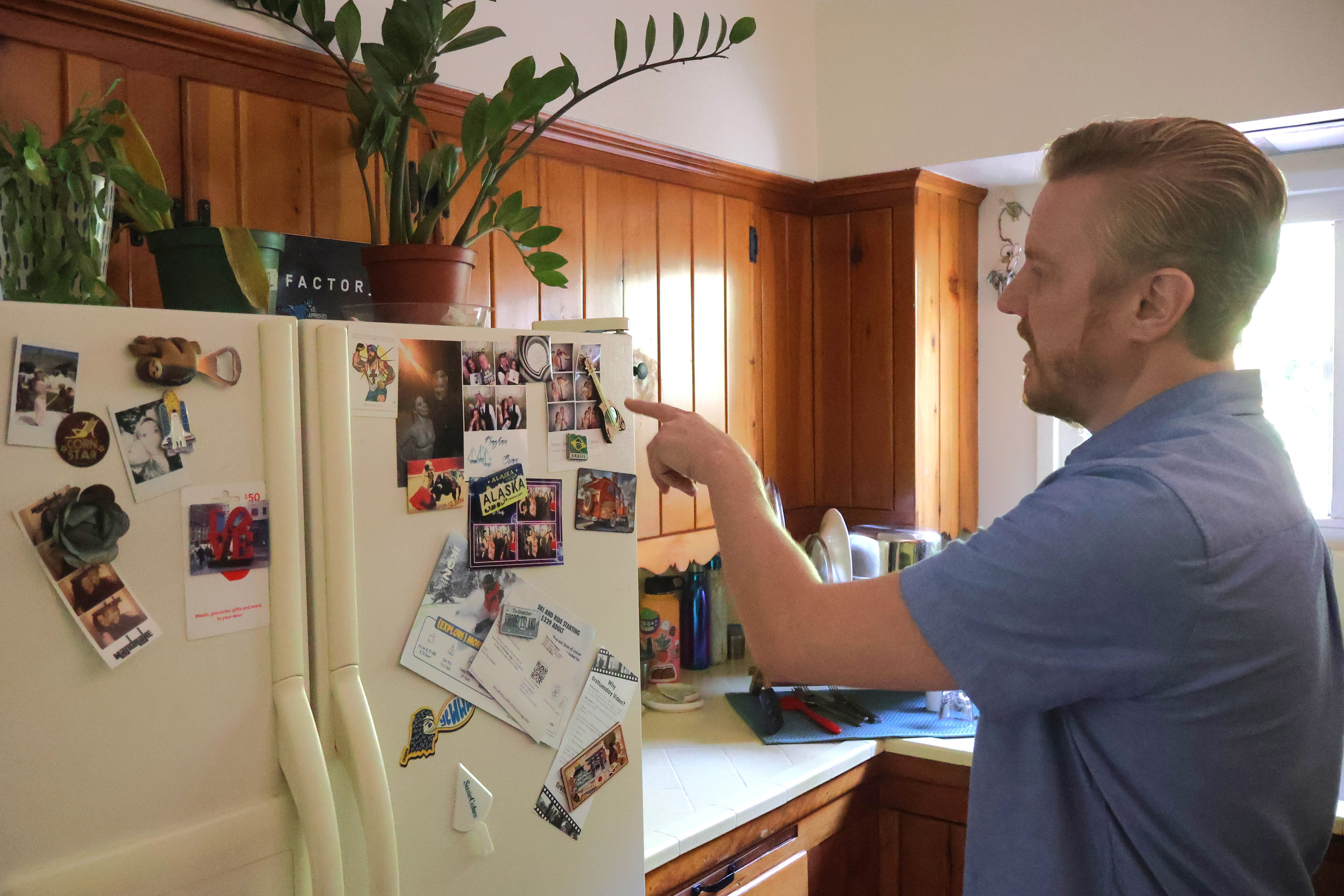
A photo of Kris Edwards pointing to photos on his fridge.
Kris Edwards points to photos of his wife, Erika “Tilly” Edwards. Traffic deaths across the U.S. are higher than they were a decade ago. (Chaseedaw Giles/KFF Health News)

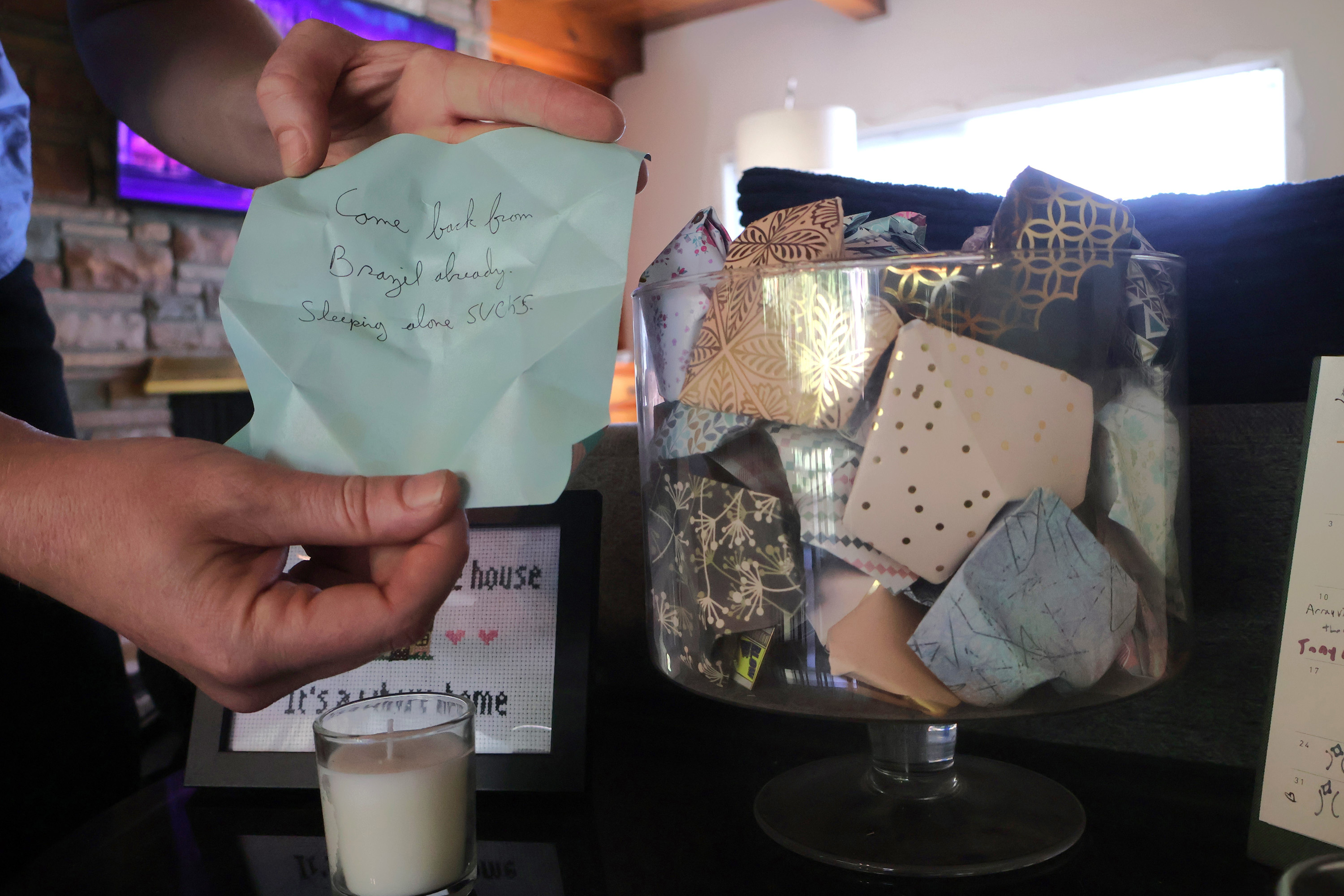
A photo of an unfolded origami heart with a note from Erika
Kris Edwards holds a note from a jar of origami hearts, a Valentine’s Day gift from his wife, Erika “Tilly” Edwards, after the couple got engaged seven years ago. He has yet to open all the hearts, which contain memories, poems, movies, and quotes. Instead, he is saving some for when he needs them. (Chaseedaw Giles/KFF Health News)

It took nearly a month for police to track down the driver of a Mercedes-Benz G-Wagen allegedly involved in Tilly’s death. Authorities have charged Davontay Robins with vehicular manslaughter with gross negligence, felony hit-and-run driving, and driving with a suspended license due to a previous DUI. He has pleaded not guilty to all charges and is out on bail.

Kris Edwards now tends to the couple’s backyard garden by himself. Since his wife’s death, he has experienced sleep deprivation, fatigue, and trouble eating, and he relies on a cane to walk. His doctors attribute his ailments to the brain’s response to grief.

“I’m not alone,” he said. “But I am lonely, in this big, empty house without my partner.”

Edwards hopes for justice for his wife, though he said he’s unsure if prosecutors will get a conviction. He wants her death to mean something: safer streets, slower driving, and for pedestrians to be cautious when getting in and out of cars parked on busy streets.

“I want my wife’s death to be a warning to others who get too comfortable and let their guard down even for a moment,” he said. “That moment is all it takes.”

A photo of a husband and wife on a refrigerator magnet.
An engagement photo of Kris Edwards and his wife, Erika “Tilly” Edwards, who was killed by a hit-and-run driver in June.(Chaseedaw Giles/KFF Health News)


Source link

OpenAI fights order in U.S. to turn over millions of ChatGPT conversations

0

The news outlets argued that the logs were necessary to determine whether ChatGPT reproduced their copyrighted content [File]
| Photo Credit: AP

OpenAI asked a federal judge in New York on Wednesday to reverse an order that required it to turn over 20 million anonymised ChatGPT chat logs amid a copyright infringement lawsuit by the New York Times and other news outlets, saying it would expose users’ private conversations. The artificial intelligence company argued that turning over the logs would disclose confidential user information and that “99.99%” of the transcripts have nothing to do with the copyright infringement allegations in the case.

“To be clear: anyone in the world who has used ChatGPT in the past three years must now face the possibility that their personal conversations will be handed over to The Times to sift through at will in a speculative fishing expedition,” the company said in a court filing.

The news outlets argued that the logs were necessary to determine whether ChatGPT reproduced their copyrighted content and to rebut OpenAI’s assertion that they “hacked” the chatbot’s responses to manufacture evidence. The lawsuit claims OpenAI misused their articles to train ChatGPT to respond to user prompts.

Magistrate Judge Ona Wang said in her order to produce the chats that users’ privacy would be protected by the company’s “exhaustive de-identification” and other safeguards. OpenAI has a Friday deadline to produce the transcripts.

OpenAI Chief Information Security Officer Dane Stuckey said in a blog post on Wednesday that sharing the logs would violate privacy and security protections and “force us to turn over tens of millions of highly personal conversations from people who have no connection to the Times’ baseless lawsuit.”

A New York Times spokesperson said OpenAI’s blog post “purposely misleads its users and omits the facts.”

“No ChatGPT user’s privacy is at risk,” the spokesperson said. “The court ordered OpenAI to provide a sample of chats, anonymized by OpenAI itself, under a legal protective order.”

The OpenAI case is one of many pending lawsuits against tech companies over the alleged misuse of copyrighted work to train AI systems.

Source link

China’s Baidu unveils new AI processors, supercomputing products

0

The company said at its annual Baidu World technology conference that the M100, an inference-focused chip, is set to be launched in early 2026 [File]
| Photo Credit: REUTERS

Baidu unveiled two new semiconductors for artificial intelligence on Thursday, saying the products can provide Chinese companies with powerful, low-cost and domestically controlled computing power.

Escalating tensions between the United States and China have led to restrictions on exports of advanced U.S. AI chips to Chinese firms, prompting many to develop their own processors or seek domestic alternatives.

The company said at its annual Baidu World technology conference that the M100, an inference-focused chip, is set to be launched in early 2026. The M300, capable of both training and inference, is slated for early 2027.

Training builds AI models by learning patterns from large datasets, while inference uses those models to make predictions and process user requests.

Baidu, which has been developing proprietary chips since 2011, also announced two so-called supernode products. Such products leverage advanced networking capabilities, linking multiple chips and seeking to compensate for limitations in individual chip performance.

Huawei has deployed a similar product called CloudMatrix 384, comprising 384 of its Ascend 910C chips, which industry observers consider more powerful than Nvidia’s GB200 NVL72, one of the U.S. chipmaker’s most advanced system-level products. Huawei also announced in September it would launch more powerful supernode products in coming years.

Baidu’s Tianchi 256, which will be comprised of 256 of its P800 chips, will be available in the first half of next year. Another more souped-up version using 512 of those chips will be launched in the second half.

The company also unveiled a new version of its Ernie large language model, which it said excels not only at text processing, but also image and video analysis.

Source link

Singapore to trial tokenised bills, bring in stablecoin laws, central bank chief says

0

A CBDC, or central bank digital currency, is a digital form of central bank money [File]
| Photo Credit: REUTERS

Singapore’s central bank will hold trials to issue tokenised MAS bills next year and bring in laws to regulate stablecoins as it presses forward with plans to build a scalable and secure tokenised financial ecosystem, the bank’s top official said on Thursday.

“Tokenisation has lifted off the ground. But have asset-backed tokens achieved escape velocity? Not yet,” said Chia Der Jiun, Managing Director of the Monetary Authority of Singapore (MAS), a keynote address at the Singapore FinTech Festival.

He said MAS has been working on the details of its stablecoin regulatory regime and will prepare draft legislation, with the emphasis on “sound reserve backing and redemption reliability.”

MAS is also supporting trials under the BLOOM initiative, which explores the use of tokenised bank liabilities and regulated stablecoins for settlement, he added.

“In the CBDC space, I am pleased to announce that the three Singapore banks, DBS, OCBC, and UOB, have successfully conducted interbank overnight lending transactions using the first live trial issuance of Singapore dollar wholesale CBDC,” he said.

A CBDC, or central bank digital currency, is a digital form of central bank money.

MAS will expand trials to include tokenised MAS bills settled with CBDC, he added.

Chia said a regulatory guide on tokenised capital markets products will be published this week, and MAS is working with international counterparts to align standards and support adoption.

On Thursday, MAS also announced agreements to work with other central banks on cross-border transactions and digital assets.

It said it would collaborate with the Bank of England and the Bank of Thailand to conduct experiments that could enable real-time foreign exchange transactions that are fast, secure and interoperable across different systems.

The central bank also signed a memorandum of understanding with Deutsche Bundesbank to collaborate on cross-border digital asset settlement.

The partnership is built on an initiative designed to enhance the liquidity and efficiency of financial markets through asset tokenisation, it said.

Source link