Home Blog Page 207

Remembering V. Rajaraman, a tireless evangelist of computer education in India

0

V. Rajaraman
| Photo Credit: V. Rajaraman

Among the few sectors of science and technology in which India has done remarkably well is software programming and services. Computer programming that started in a small way in academic institutions in the 1960s developed into a formidable industry within a few decades. This became possible due to the rapid spread of programming skills, even before full-fledged graduate and postgraduate courses in computer science were introduced.

These efforts were pioneered at IIT-Kanpur under Vaidyeswaran Rajaraman (1933-2025). His contributions to this field are so immense that there’s hardly any computer programmer who has not read a textbook penned by him. He was awarded the Padma Bhushan in 1998 in recognition of this efforts. He passed away on November 8.

Prof. Rajaraman began his career at a time when computers had to be designed, fabricated, and programmed for specific purposes. As a young student of electrical communication engineering at the Indian Institute of Science, Bengaluru, in the mid-1950s, he happened to work on a project to design an analogue computer led by Vincent C. Rideout, a visiting professor from the University of Wisconsin. Rideout had brought with him components, sub-assemblies, and operational amplifiers to fabricate the computer, which was later named the ‘Philbrick-Rideout Electronic Differential Analyser’, or PREDA. After Rideout left, Prof. Rajaraman took charge of this machine, added new features, and made it useful for researchers at the institute.

He then went to pursue a master’s degree at the Massachusetts Institute of Technology and a doctorate from Wisconsin, after which he returned to India and joined the newly established IIT-Kanpur. The total number of faculty members then was just seven. One of the first courses that Prof. Rajaraman taught was on carpentry. When an IBM mainframe arrived in July 1964, it became the nucleus of the computer centre.

Since academic courses in computer science had yet to begin, the IBM machine was used to train programmers from other research centres and industry. Prof. Rajaraman conducted 10-day intensive courses in Fortran, a programming language developed in the 1950s. The course helped the computer centre forge links with industry. Prof. Rajaraman undertook consulting assignments for Tata Consultancy Services (TCS), which had just started its operations. Most postgraduates from IIT-Kanpur joined TCS and subsequently another start-up, HCL Tech. Many of the undergraduate and postgraduate students of Prof. Rajaraman later became CEOs and founders of software firms in the decades that followed.

While conducting short-term courses and teaching regular students, Prof. Rajaraman found there were no books available for them. He put together his notes on Fortran programming and got them printed as a booklet in 1968. It was sold in the campus bookstore for ₹5. It became so popular that outsiders would come to the campus to buy it. This prompted Prof. Rajaraman to approach publishers so that a book could be printed. Academic publishers, however, were not too keen because the subject was not a part of any course.

Prentice Hall eventually agreed and was surprised when 3,000 copies of the book were sold in the first year. Prof. Rajaraman had put in a precondition: that the price of the book should be lower than the cost of photocopying it. Therefore, the book was published on low-quality paper and priced at ₹15. Then, Prof. Rajaraman wrote books on numerical techniques, digital logic, and other subjects. All the books became bestsellers, selling in the lakhs over the years and making Prof. Rajaraman a household name in the programming community.

After successfully running the M. Tech programme in computer science, Prof. Rajaraman lobbied for a BTech in computer science. The IIT-Kanpur governing authorities grudgingly introduced the course with only 20 seats in 1979. As the IIT law had no provision for a department of computer science, the course was run in the electrical engineering department until the law could be amended. Gradually, other IITs and universities started independent departments of computer science and engineering. In the 1980s, when software exports were becoming an industry, Prof. Rajaraman, as the head of the computer manpower committee, made far-reaching recommendations that resulted in new courses, such as the three-year Master of Computer Applications. In 1982, Prof. Rajaraman returned to IISc, where he headed the Supercomputer Education and Research Centre until 1994.

Prof. Rajaraman actively participated in all the eras of the computer age in India, from analogue machines to supercomputers. Despite his long contributions as a teacher, policymaker, industry consultant, and author, however, he also shunned the limelight and continued his pursuits even after he turned 90. His latest book was published in June 2024.

Dinesh C. Sharma is a journalist based in New Delhi, and author of The Outsourcer: The Story of India’s IT Revolution.

Source link

Scientists Finally Figure Out How to Get CBD to the Brain for Pain Relief

0

A new study reveals a breakthrough method for getting CBD into the brain, easing nerve pain in mice without side effects. Using CBD-infused oils or lotions might seem like a simple, low-risk way to ease pain, yet scientists still have much to learn about how CBD affects the nervous system. In the past ten years, […]

Source link

What happens when public knowledge is created on private infrastructure?

0

Over the past year, a considerable amount of recognition for machine learning (ML) has gone to researchers working in or alongside large technology firms, even as recent advances in artificial intelligence (AI) have been financed and built on corporate infrastructure.

In 2024, the Nobel Foundation awarded the physics prize to John Hopfield and Geoffrey Hinton for contributions that enabled learning with artificial neural networks, and the chemistry prize to Demis Hassabis and John Jumper for protein structure prediction (alongside David Baker’s computational design). Mr. Hassabis and Mr. Jumper were employed at Google DeepMind at the time of the award; Mr. Hinton had spent a decade at Google before departing in 2023. These affiliations don’t erase the laureates’ academic histories but they do indicate where prize-level research is now being performed.

This change rests on material conditions as well as ideas. State-of-the-art models depend on large computing clusters, curated data, and engineering teams. Google’s programme to develop tensor-processing units (TPU) for its data centres shows how fixed capital can become a scientific input rather than only an information technology cost. Microsoft’s multiyear financing and Azure supercomputers for OpenAI reflect the same political economy from a different angle.

Case for public access

Any research with public provenance should return to the public domain. In this context, public money has supported early theoretical work, academic posts, fellowships, shared datasets, publishing infrastructure, and often the researchers themselves. In parallel, the points at which the value became excludable lay increasingly downstream: with respect to computing resources (shortened as compute), this includes rights to data and code, the ability to deploy models at scale, and decisions to release or withhold weights. This helps explain why recent Nobel laureates have been situated in corporate laboratories and why frontier systems are predominantly trained on private cloud systems.

In the 20th century, firms such as Bell Labs and IBM hosted prize-winning basic research. However, much of the knowledge then moved through reproducible publications and open benchmarks. Today, reproducing the work of Mr. Jumper, for example, can require large compute budgets and specialised operations expertise. As a result the concern isn’t only that corporations receive prizes but that the path from a public insight to a working system is infrastructure and contracts controlled by a few firms.

The involvement of public funds should thus create concrete obligations at points where technology becomes enclosed for private control. If an academic laboratory accepts a public grant, the deliverables should include the artefacts that make the work usable, including the training code, evaluation suites, and weights in the AI models to be released under open licences. If a public agency buys cloud credits or commissions model development, procurement should require that the benchmarks and improvements flow back to the commons rather than become locked into a vendor.

Remove bottlenecks

The argument isn’t that corporate laboratories can’t do fundamental science; they clearly can. The claim is that public policy should reduce the structural advantages of private control. Consider the release of Google DeepMind’s AlphaFold 2, which, together with its code and public access to predictions, allowed researchers beyond the originating lab to run the system on (reasonably) standard hardware, retrieve large numbers of precomputed structures, and integrate their results into routine workflows. All this work was supported by public institutions that were willing to host and maintain the resources.

Where the corporate stack is indispensable, such as when training frontier models (with billions or trillions of parameters), claims about ‘responsible release’ often ironically translate to a closed release. Instead, a more consistent position should be to link risk management to a structured model of openness — perhaps one that includes staged releases, access to weights, open penetration testing tools, and a clear separation between safety rationales and business models — rather than allow private entities to resort to blanket secrecy in the name of safety.

The same logic applies to compute: that is, if computing resources become a scientific bottleneck, they should be treated as a public utility. National and regional compute commons should allocate resources for free or at-cost to academic groups, nonprofits, and small firms, and qualify them on open deliverables and safety practices. The ultimate goal is to restore the ability of public institutions to reproduce, test, and extend leading ML work without having to seek corporate permission. Without such a commons, however, publicly funded ideas will continue to be turned into working systems on private clouds and returned to the public as expensive information products.

Indeed, while it’s tempting to treat the entities employing the laureates and funding pipelines as separate issues, one symbolic and the other structural, they’re connected by the computing resources. The fact that the Nobel laureates worked at Google DeepMind reflects where teams with ML scientists, domain experts, data, and compute now operate. Likewise, the fact that the most visible systems of the past two years were trained on Microsoft Azure under a financing agreement explains who could attempt such training. Both facts reflect underlying resource concentrations.

Beyond industry vs academia

Public agencies’ response should be direct — by, say, tying funding to openness in grants and procurement and requiring detailed funding disclosures and compute-cost accounting in research papers. Where full openness would create unacceptable risks, agencies can use equity or royalties to fund compute and data commons that support the wider ecosystem. For corporate laboratories, on the other hand, their credibility should rest on measurable contributions to the commons.

Journalists and the publics should also move beyond an ‘industry versus academia’ framing.

The relevant questions are who sets the research agenda, who controls infrastructure, who can reproduce results, and who benefits from deploying the resulting AI models. Interpreting the 2024 Nobel Prizes as industry victories alone would miss the point that the knowledge base is cumulative and relies on public inputs, while the capacity to operationalise that knowledge is clustered. Articulating this pattern allows us to recognise scientific merit while demanding reforms that ensure public inputs produce public returns — in code, data, weights, benchmarks, and access to compute.

To be sure, the central conclusion isn’t resentment about corporate salaries but responding to the fact that breakthroughs are increasingly occurring at the intersection of public knowledge and private infrastructure. The policy programme should be to reunite the layers where public and private enterprises diverge — artefacts, datasets, and compute — and to bake this expectation into contracts and norms that govern research.

In these conditions, future awards can be celebrated with corresponding public benefit because the outputs that make the science usable will be returned to the public.

Published – November 11, 2025 06:45 am IST

Source link

New Study Links Specific Gut Bacteria to Common Heart Disease

0

New research from Seoul scientists reveals how gut microbes may influence the development of coronary artery disease, the world’s leading killer. Nearly 20 million people lose their lives each year to cardiovascular diseases, which remain the top cause of death worldwide. While genetics and lifestyle factors influence how these conditions develop and how severe they […]

Source link

Why Your Daily Fish Oil Supplement Might Not Work As Well As You Think

0

Loss of ALOX15, which frequently occurs in colorectal tumors, reduces the cancer-preventive benefits of fish oil. An estimated 19 million adults in the United States regularly take fish oil supplements in hopes of improving their health. These popular supplements are rich in omega-3 fatty acids, specifically eicosapentaenoic acid (EPA) and docosahexaenoic acid (DHA), which have […]

Source link

Health Care Costs Jump to the Fore as Candidates Jockey To Be California Governor

0

RIVERSIDE, Calif. — California’s gubernatorial election is a year away, and the field of primary candidates is still taking shape. But one persistent issue has already emerged as a leading concern: the cost of health care.

At a forum Nov. 7 in the Inland Empire, four Democratic candidates vying to succeed Gov. Gavin Newsom vowed to push back against Republican cuts to health care programs and to improve people’s access to medical care, including mental health services. But while some floated taxes, candidates were light on details about how they would bring down health care costs.

Former U.S. Health and Human Services Secretary Xavier Becerra promised to be California’s next “health care governor,” echoing Newsom’s commitment to lower costs and broaden access when he first got into office. State Superintendent of Public Instruction Tony Thurmond pledged to create a single-payer health care system in which everyone is pooled into one program. Former state Controller Betty Yee said she would “build back better” from federal cuts and create a health care system tailored to California’s diverse communities.

And former Los Angeles Mayor Antonio Villaraigosa vowed to fight to preserve safety net health care pared by the Trump administration and Republicans in Congress, although he acknowledged the challenge given limited state resources.

“I’m not gonna sell you snake oil,” he said. “It is going to be tough to provide that care, but I’m absolutely committed to it.”

The candidates’ assurances come amid recent shifts in state and federal policies that, together with a variety of forces, are driving up the cost of health care and making it harder for people to obtain and maintain coverage. In addition to providers raising prices, other inflationary pressures include an aging population, rising chronic conditions, medical advancements, and new technologies, according to analysts. That’s added to a sense of financial precarity for the millions of Californians struggling with the state’s high cost of living and recent inflation spike.

Although the forum was open to up to six candidates, former U.S. Rep. Katie Porter and entrepreneur Stephen Cloobeck declined to participate, citing scheduling or other factors, according to Jon Koriel, an event spokesperson.

Four Democratic candidates vying to be California governor appeared at a forum on health care on Nov. 7 in Riverside: (from left) former U.S. Health and Human Services Secretary Xavier Becerra, California Superintendent of Public Instruction Tony Thurmond, former Los Angeles Mayor Antonio Villaraigosa, and former state Controller Betty Yee.(Leroy Hamilton)

Health Care Top Concern

A statewide poll commissioned by the California Wellness Foundation ahead of the Health Matters forum found that nearly 80% of likely voters worry about the cost of health care and that 72% think the next governor should prioritize capping out-of-pocket expenses. Access to affordable mental health care and being able to care for aging family members or friends were also top concerns. Perhaps in an early signal, voters last week in Santa Clara County passed a sales tax to help backfill federal cuts to food and health care safety net programs.

California mirrors much of the nation. Exit polls from the Nov. 4 election show 81% of those who voted for Democrat Abigail Spanberger, winner of the Virginia governor’s race, cited health care as the most important issue facing the state. In a national Reuters/Ipsos poll, health care was cited as the top everyday expense Americans want Congress to prioritize. And 65% of voters said an annual health cost increase of $1,000 would have some impact on their 2026 vote, according to a recent KFF poll.

Some Californians interviewed on Nov. 4, the day of the state’s special election, expressed disappointment in Newsom’s unmet promises on health care. Newsom, a Democrat who is mulling a presidential run as he wraps up his second term in January 2027, had campaigned on single-payer health care.

During his tenure he’s steered billions of dollars and engineered rules to help the neediest Californians afford and access health care. The state also expanded state-funded Medicaid coverage, known as Medi-Cal, to all eligible residents in the country without legal status. Medicaid provides free or low-cost health insurance to low-income and disabled people.

But this year, facing rising costs and budget deficits, Newsom and the Democratic-controlled legislature walked back some of that expansion by freezing enrollment for adults without legal status starting in 2026 and implementing premiums. They also resurrected an asset test for older adults and people with disabilities. Meanwhile, health care costs and homelessness remain a huge problem, and many Californians struggle to get basic medical care. And there’s no sign of a single-payer health care system, which Sacramento lawmakers have repeatedly failed to advance amid concerns about cost, including one estimate in 2017 of $400 billion annually.

“I remember him coming and speaking to our members and telling them that he was going to fight with them for single payer,” Michael Cusack, a 30-year-old former health care union worker from Oakland, said as he cast his ballot last week. “And I never saw him deliver on that campaign.”

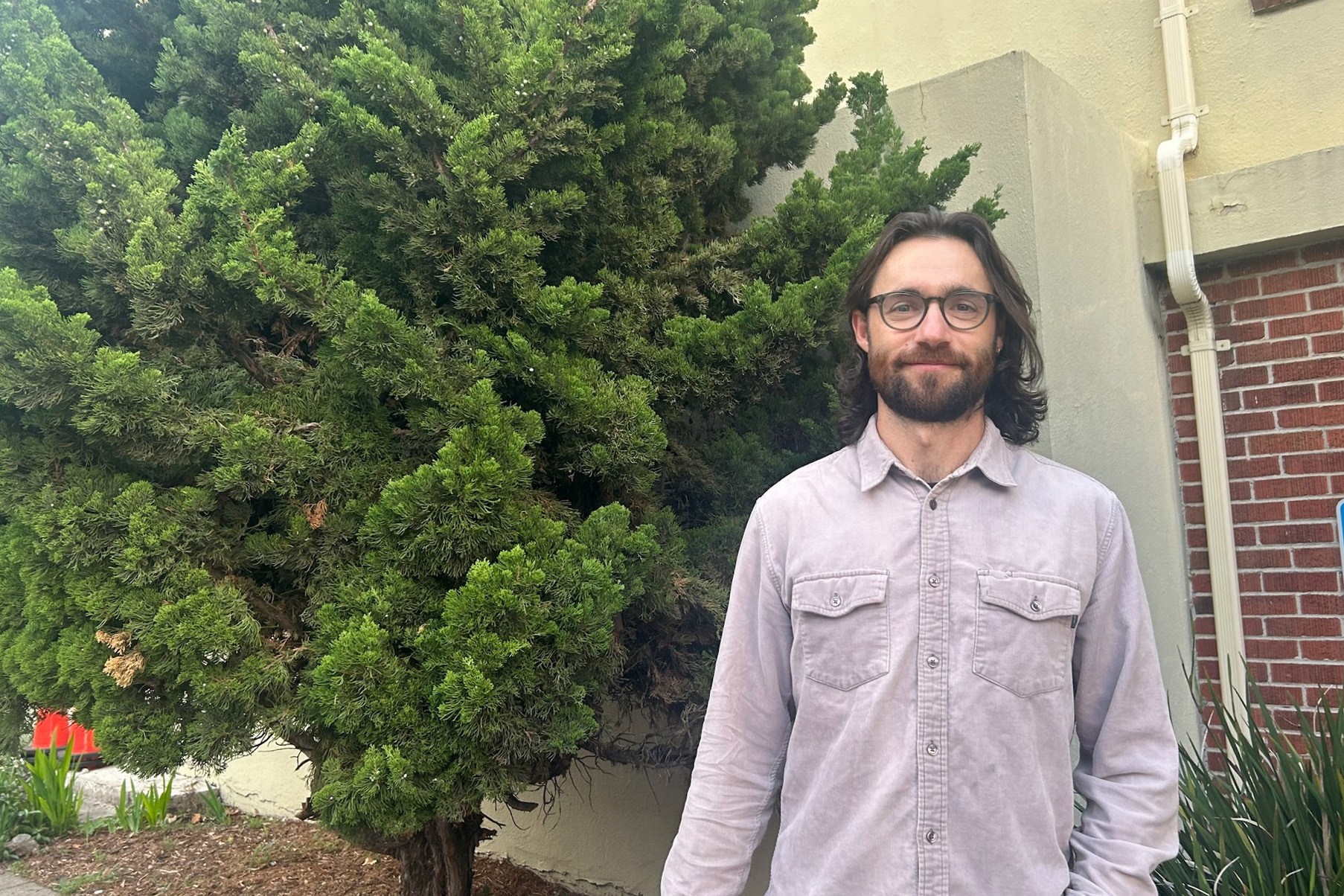
A portrait of a man smiling beside a tree.
Michael Cusack, a registered Democrat working at a national research lab in Oakland, California, says health care costs are top of mind for him as he weighs his vote next year, both for Congress and the governor’s race.(Christine Mai-Duc/KFF Health News)

Paying for Health Care

Becerra, Thurmond, and Yee said they would be open to raising taxes to pay for health care programs. Villaraigosa sidestepped the tax question, saying his focus would be to “grow the pie” economically. Yee also suggested offering tax credits to help struggling families pay for health care and caregiving expenses.

During the forum’s lightning round, Becerra, Thurmond, and Yee also raised their hands when asked whether they supported single-payer care. Becerra said after the event that he doesn’t believe the state would receive support from the Trump administration for a single-payer system, but he said he would push for universal access to health care.

Indeed, all the candidates appeared mindful of Washington’s power over health care resources, even as they vowed to stand up to President Donald Trump, who has an especially adversarial relationship with Newsom.

“Let’s recognize that the federal government is our largest partner,” Becerra said. “We must work with them. We will not take a knee, but we must work with them.”

Currently, the biggest threats to health care costs and accessibility come from the federal government. Republicans in Congress have refused to give in to Democrats’ demand to extend premium tax subsidies for health insurance plans purchased on Affordable Care Act exchanges, the main issue that drove the government shutdown. Enrollees in Covered California, the state’s health insurance exchange, have received notices that their premiums will increase next year. On average, premiums for ACA plans are expected to double across the nation.

Laura Jones, a small-business owner in Oakland, currently pays the minimum possible for her Covered California plan, but she worries she wouldn’t be able to afford a major medical emergency. She thinks about one of her friends who recently suffered a stroke.

“The hospital bills were just so egregious,” Jones said. “How would I pay for that?”

Meanwhile, an impending $900 billion in federal Medicaid spending reductions under the One Big Beautiful Bill Act and tighter eligibility restrictions are expected to push as many as 3.4 million Californians out of the program. More than a third of Californians are currently enrolled in Medi-Cal.

Oseoba Airewele, 29, of Ventura, a registered Democrat who previously worked as a software engineer, said Medi-Cal became a lifeline after he lost insurance through his job and needed mental health and dental care.

“If I were to lose it, I would be very concerned,” he said. “I’d be in a bad place.”

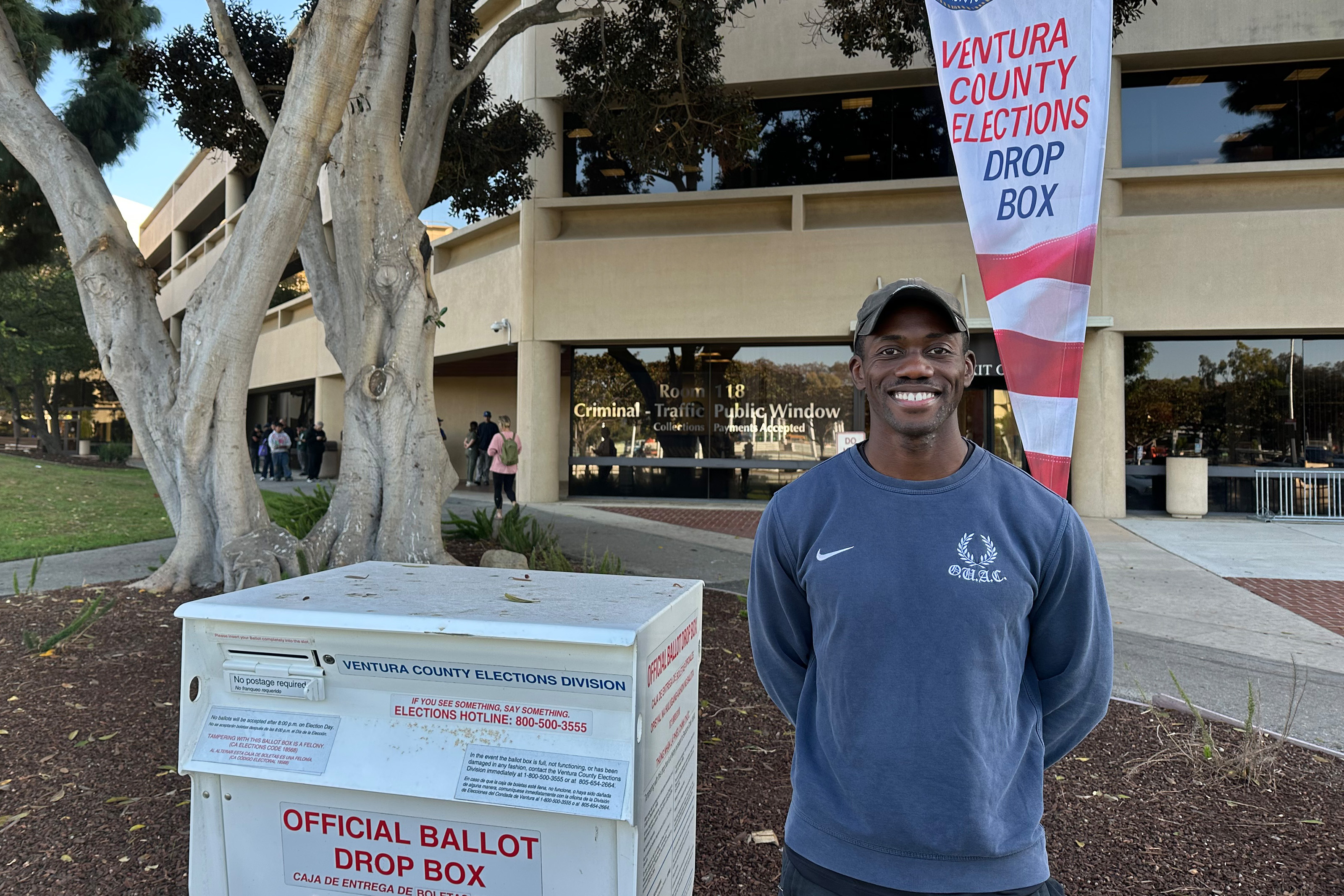
A photo of a man smiling beside a ballot box.
Oseoba Airewele stands next to a ballot box in Ventura, California, where he cast his vote in the Nov. 4 special election. Airewele enrolled in Medi-Cal after being laid off from his job as a software engineer. He says that coverage has been critical.(Claudia Boyd-Barrett/KFF Health News)

People with employer-based health coverage also face steep price hikes. Family premiums for employer-based plans averaged almost $27,000 this year, up 6% from 2024, a new KFF report shows. Workers typically pay almost $7,000 of that, the report found. That doesn’t include other out-of-pocket expenses.

“Even though I have a job, it’s still really expensive to pay for the copays,” said Rheema Calloway, 35, a San Francisco independent.

Primary in June

Among the other Democratic candidates vying for governor in 2026, Porter has said she will make fighting federal cuts to Medicaid and Medicare a top priority, along with expanding and improving health care for all residents. Porter’s campaign suffered a blow after viral videos surfaced of her threatening to walk out of a CBS interview and berating a staff member. Former Assemblyman Ian Calderon has said he would protect access to Medi-Cal. And Cloobeck wants to fast-track housing construction.

Republican candidates include Riverside County Sheriff Chad Bianco and Steve Hilton, a former Fox News contributor and policy adviser to David Cameron when he was Britain’s prime minister. Both have pledged to tackle affordability issues, especially housing costs.

Two other high-profile Democrats — former Vice President Kamala Harris and U.S. Sen. Alex Padilla — have said they won’t run. Rick Caruso, a Republican-turned-Democrat and wealthy Los Angeles businessman, has yet to decide whether to run.

The California primary will be held June 2 and the general election on Nov. 3.

KFF Health News correspondent Christine Mai-Duc and ethnic media editor Ngoc Nguyen contributed to this report.

Source link

The Next Ozempic? Scientists Discover Gut Hormone That Tells Brain to Burn Fat

0

An experiment at the State University of Campinas found that FGF19, a substance produced in the intestine, acts on specific brain regions to trigger energy burning and heat production, paving the way for the development of new drugs. Recent research on mice has uncovered how a hormone produced in the intestine communicates with the brain […]

Source link

Electric cooking could power India’s clean energy future: IEEFA study

0

Electric cooking, or e-cooking, is the most affordable and sustainable cooking option for Indian households, according to a new report by the Institute for Energy Economics and Financial Analysis (IEEFA), a U.S.-based energy policy think tank.

The report, titled ‘India’s Clean Cooking Strategy: E-Cooking, the Next Frontier’, finds that e-cooking is 37% cheaper than non-subsidised liquefied petroleum gas (LPG), and 14% cheaper than piped natural gas (PNG), making it a compelling alternative in urban areas, where access to electricity is stable.  

“Electricity-based cooking means cost savings. Based on the analysis for FY2024-25, using PNG for cooking versus electricity-based devices can be 14% more expensive for households, while non-subsidised LPG can be 37% more expensive. Subsidising LPG for all consumers has made it only marginally more affordable than e-cooking. Only the heavily subsidised LPG pricing for beneficiaries of the Pradhan Mantri Ujjwala Yojana comes out cheaper than e-cooking,” Purva Jain, energy specialist at the IEEFA and the author of the report, said.

Despite near-universal electrification, the uptake of e-cooking remains sluggish. Ms. Jain attributes this to high upfront capital costs, limited device options, and low consumer awareness. “The initial cost of induction cooktops and compatible utensils can be a barrier. We need government support to reduce capital costs and build consumer confidence,” she said.

The report uses Delhi’s electricity tariffs for the financial year 2024-25 to calculate annual cooking costs, assuming a reasonably high usage slab. Ms. Jain explained that while the analysis is Delhi-specific, it can serve as a proxy for other States. “LPG prices are uniform across India, and PNG prices in Delhi are comparable to many geographical areas. Only a few gas agencies have lower prices than Delhi,” she said.

India’s LPG and liquified natural gas (LNG) import bills have increased by 50% over the past six years, reaching ₹2.2 lakh crore in FY2024-25. This accounts for nearly 3% of the country’s total import expenditure, and exposes it to global price volatility and geopolitical risks. While LPG and PNG are cleaner than traditional solid fuels, they remain carbon-intensive and contribute to rising residential emissions. Nearly 40% of Indian households still rely on firewood, dung, and other polluting fuels for cooking. 

Ms. Jain believes that shifting urban households to e-cooking could free up LPG and PNG resources for rural areas, where access to clean cooking options remains limited. “Shifting urban areas to e-cooking could be one solution to the problem of limited use of clean cooking fuels in rural areas. By reducing demand for LPG and PNG in urban areas, more of these limited resources could be redirected to rural areas,” she said.

Addressing concerns about grid load, the author noted that India is strengthening its national grid with various actions. Policy interventions, including time-of-day tariffs, and ensuring only energy-efficient devices are available in the market, can help manage peak demand.  

Cultural resistance to non-flame cooking is another challenge. Ms. Jain pointed to real-life case studies showing that chapattis can be cooked on induction cooktops with ease. “For households hesitant to give up flame-based cooking, fuel stacking is a practical solution. Start with boiling water or milk, cooking rice — simple steps on a single induction cooktop,” she added.  

On large-scale adoption of successful e-cooking demonstration, the report provides examples of institutional adoption, including Anganwadis supported by Energy Efficiency Services Limited under the National Efficient Cooking Programme. Kerala’s Angan-Jyoti scheme integrates e-cooking with solar power and energy-efficient cooling to promote grassroots sustainability.

While the report does not quantify lifecycle emissions, Ms. Jain noted that e-cooking aligns with India’s decarbonisation goals. “With the increasing greening of the electricity grid, relying on e-cooking as the fuel of the future is a good strategy. We should avoid locking expensive resources into fossil-based solutions like PNG,” she added.

Ms. Jain also acknowledged the need for financing options. There’s a brief mention of solutions to manage the relatively higher capital cost of procuring e-cooking devices. EMIs (equated monthly installment) and carbon credit programmes could be explored further, she said.  

As India continues its push toward clean energy, the authors of the report believe the time is ripe for a national roadmap. “The report is a small step in advocating the need for a detailed roadmap with timelines. We need to boost consumer and manufacturer confidence,” Ms. Jain said.    

E-cooking, Ms. Jain emphasised, is not just an alternative — it is a future-ready solution that offers affordability, safety, and sustainability. “It’s time we reimagine clean cooking in India. Electric cooking is the next frontier,” she said. 

Published – November 10, 2025 05:04 pm IST

Source link

The Sugar Pathway That Links Alcohol Addiction and Liver Damage

0

Alcohol hijacks the body’s sugar metabolism, producing internal fructose that reinforces addiction and liver damage. Blocking this process may help treat both alcohol use disorder and liver disease. Scientists have discovered a surprising biological link between how the body processes sugar and how it responds to alcohol. The finding points to a possible new treatment […]

Source link

China creates a new visa, competing with the U.S. in wooing global tech talent

0

Vaishnavi Srinivasagopalan, a skilled Indian IT professional who has worked in both India and the U.S., has been looking for work in China. Beijing’s new K-visa program targeting science and technology workers could turn that dream into a reality.

The K-visa rolled out by Beijing last month is part of China’s widening effort to catch up with the U.S. in the race for global talent and cutting edge technology. It coincides with uncertainties over the U.S.’s H-1B program under tightened immigrations policies implemented by President Donald Trump.

“(The) K-visa for China (is) an equivalent to the H-1B for the U.S.,” said Srinivasagopalan, who is intrigued by China’s working environment and culture after her father worked at a Chinese university a few years back. “It is a good option for people like me to work abroad.”

The K-visa supplements China’s existing visa schemes including the R-visa for foreign professionals, but with loosened requirements, such as not requiring an applicant to have a job offer before applying.

Stricter U.S. policies toward foreign students and scholars under Trump, including the raising of fees for the H-1B visa for foreign skilled workers to $100,000 for new applicants, are leading some non-American professionals and students to consider going elsewhere.

“Students studying in the U.S. hoped for an (H-1B) visa, but currently this is an issue,” said Bikash Kali Das, an Indian masters student of international relations at Sichuan University in China.

China is striking while the iron is hot.

The ruling Communist Party has made global leadership in advanced technologies a top priority, paying massive government subsidies to support research and development of areas such as artificial intelligence, semiconductors and robotics.

“Beijing perceives the tightening of immigration policies in the U.S. as an opportunity to position itself globally as welcoming foreign talent and investment more broadly,” said Barbara Kelemen, associate director and head of Asia at security intelligence firm Dragonfly.

Unemployment among Chinese graduates remains high, and competition is intense for jobs in scientific and technical fields. But there is a skills gap China’s leadership is eager to fill. For decades, China has been losing top talent to developed countries as many stayed and worked in the U.S. and Europe after they finished studies there.

The brain drain has not fully reversed.

Many Chinese parents still see Western education as advanced and are eager to send their children abroad, said Alfred Wu, an associate professor at the National University of Singapore.

Still, in recent years, a growing number of professionals including AI experts, scientists and engineers have moved to China from the U.S., including Chinese-Americans. Fei Su, a chip architect at Intel, and Ming Zhou, a leading engineer at U.S.-based software firm Altair, were among those who have taken teaching jobs in China this year.

Many skilled workers in India and Southeast Asia have already expressed interest about the K-visa, said Edward Hu, a Shanghai-based immigration director at the consultancy Newland Chase.

With the jobless rate for Chinese aged 16-24 excluding students at nearly 18%, the campaign to attract more foreign professionals is raising questions.

“The current job market is already under fierce competition,” said Zhou Xinying, a 24-year-old postgraduate student in behavioural science at eastern China’s Zhejiang University.

While foreign professionals could help “bring about new technologies” and different international perspectives, Zhou said, “some Chinese young job seekers may feel pressure due to the introduction of the K-visa policy.”

Kyle Huang, a 26-year-old software engineer based in the southern city of Guangzhou, said his peers in the science and technology fields fear the new visa scheme “might threaten local job opportunities”.

A recent commentary published by a state-backed news outlet, the Shanghai Observer, downplayed such concerns, saying that bringing in such foreign professionals will benefit the economy. As China advances in areas such as AI and cutting-edge semiconductors, there is a “gap and mismatch” between qualified jobseekers and the demand for skilled workers, it said.

“The more complex the global environment, the more China will open its arms,” it said.

“Beijing will need to emphasize how select foreign talent can create, not take, local jobs,” said Michael Feller, chief strategist at consultancy Geopolitical Strategy. “But even Washington has shown that this is politically a hard argument to make, despite decades of evidence.”

Recruitment and immigration specialists say foreign workers face various hurdles in China. One is the language barrier. The ruling Communist Party’s internet censorship, known as the “Great Firewall,” is another drawback.

A country of about 1.4 billion, China had only an estimated 711,000 foreign workers residing in the country as of 2023.

The U.S. still leads in research and has the advantage of using English widely. There’s also still a relatively clearer pathway to residency for many, said David Stepat, country director for Singapore at the consultancy Dezan Shira & Associates.

Nikhil Swaminathan, an Indian H1-B visa holder working for a U.S. non-profit organisation after finishing graduate school there, is interested in China’s K-visa but skeptical. “I would’ve considered it. China’s a great place to work in tech, if not for the difficult relationship between India and China,” he said.

Given a choice, many jobseekers still are likely to aim for jobs in leading global companies outside China.

“The U.S. is probably more at risk of losing would-be H-1B applicants to other Western economies, including the UK and European Union, than to China,” said Feller at Geopolitical Strategy.

“The U.S. may be sabotaging itself, but it’s doing so from a far more competitive position in terms of its attractiveness to talent,” Feller said. “China will need to do far more than offer convenient visa pathways to attract the best.”

Published – November 10, 2025 01:34 pm IST

Source link