Netflix is the world’s largest streaming service with over 280 million subscribers globally [File]
| Photo Credit: REUTERS
Streaming giant Netflix has made a mostly cash offer to buy TV and film group Warner Bros Discovery as the storied yet debt-laden Hollywood studio presses on with a sale that could remake the U.S. media landscape, a report said Monday.
According to Bloomberg, Netflix joined Paramount Skydance and Comcast, the owner of NBCUniversal, in a second round of an auction that was being negotiated throughout the U.S. Thanksgiving holiday.
The parent company of HBO, CNN and the Warner Bros film studio officially put itself up for sale in October after receiving multiple unsolicited offers, setting aside a planned split into two separate entities, one focused on streaming and studios, the other on traditional cable networks.
Warner Bros Discovery was originally targeted by Paramount, recently acquired by the billionaire tech family of Oracle founder Larry Ellison, one of the world’s richest men.
His son David Ellison, a movie producer, is the Paramount CEO and had made three consecutive offers for the entertainment group before Warner Bros Discovery CEO David Zaslav launched the official sale process.
Netflix, the world’s largest streaming service with over 280 million subscribers globally, is working on a bridge loan totaling tens of billions of dollars to finance its potential acquisition, according to sources cited by Bloomberg.
The deal would bulk up Netflix’s already considerable content production capabilities and secure premium assets like HBO and Warner Bros studios.
It would also likely face close scrutiny by antitrust authorities in the United States and potentially in other major markets.
Australia currently has no specific AI laws [File]
| Photo Credit: REUTERS
Australia on Tuesday unveiled a roadmap to ramp up the adoption of artificial intelligence across its economy but said it would rely on existing laws to manage emerging risks, stepping back from earlier plans for tougher rules on high-risk scenarios.
Australia currently has no specific AI laws though the centre-left Labor government last year signalled it would introduce voluntary guidelines amid concerns over privacy, safety and transparency.
In its National AI Plan released on Tuesday, Labor said it would focus on luring investment in advanced data centres, building AI skills to support and protect jobs, and ensuring public safety as AI becomes more integrated into daily life.
Agencies and regulators will remain responsible for identifying and managing potential AI-related harms within their sectors, it said.
The roadmap comes after the government last month said it would set up an AI Safety Institute in 2026 to help authorities monitor emerging risks and respond to threats.
Global regulators have increasingly raised concerns about misinformation associated with generative AI tools such as Microsoft-backed OpenAI’s ChatGPT and Google’s Gemini, as their use becomes widespread.
Federal Industry Minister Tim Ayres said the AI roadmap aims to ensure Australians can benefit from new technology while maintaining a balance between innovation and risk management.
“As the technology continues to evolve, we will continue to refine and strengthen this plan to seize new opportunities and act decisively to keep Australians safe,” Ayres said.
But Australian Catholic University Associate Professor Niusha Shafiabady said there were critical gaps in the government’s updated AI roadmap.
“The plan is ambitious in unlocking data and boosting productivity, but it leaves critical gaps in accountability, sovereignty, sustainability, and democratic oversight,” Shafiabady said.
“Without addressing these unexplored areas, Australia risks building an AI economy that is efficient but not equitable or trusted.”
Elon Musk is Chief Executive Officer and Product Architect at Tesla, and founder, Chief Executive Officer, and Chief Engineer at Space X, and is the founder of xAI, a firm which owns X (formerly Twitter).
| Photo Credit: KENT NISHIMURA
“I think America has benefited immensely from talented Indians that have come to America,” Elon Musk, American entrepreneur, said in a conversation with Nikhil Kamath, Bengaluru-based entrepreneur and co-founder of Zerodha.
But when asked why the climate around US immigration appears to have shifted for Indians, Musk responded, “It was basically a total free-for-all with no border controls… Unless you’ve got border controls, you’re not a country.”
Mr. Musk, who is Chief Executive Officer and Product Architect at Tesla and founder, Chief Executive Officer, and Chief Engineer at Space X, further said, “This (the immigration system) produced massive amounts of illegal immigration under the Biden administration,” and even a ‘negative selection effect’ where poorly designed incentives attracted the wrong kind of inflow. “And this created a perception in the U.S. that the country’s jobs were being taken by talented people from other countries,” he added.
“There has been some misuse of the H1B programme. Some of the outsourcing companies have kind of gamed the system,’’ he stated while speaking in a podcast by People by WTF. He told Mr. Kamath that ‘it was important to fix those abuses’.
“We need to stop the gaming of the system… but I’m certainly not in the school of thought that we should shut down the H1B programme,’’ said Mr. Musk who is also the founder of xAI, a firm which owns X (formerly Twitter).
Responding to another question of Mr. Kamath on what percentage of the internet is spent on X (Twitter) and is there a number to it, Mr. Musk said, “We have, like about 600 million monthly users. It can get up to 800 million or a billion if there’s some major event in the world.” He added, “It would be great to bring together what people say in many different languages, automatically translated, so you have the collective consciousness not just of people in a particular language group, but every language group.”
Mr Kamath had a two-hour chat with the U.S. business magnate on a wide range of topics, including X (Twitter), AI, the future of content, money energy, Starlink, friendship, tariffs, children, DOGE, immigration, philanthropy, and even whether live events are the world’s next big asset class.
Alejandro Santillan-Garcia teme perder la ayuda que le permite comprar comida.
El residente de Austin, de 20 años, calificó el año pasado para recibir beneficios federales de alimentos porque salió del sistema de cuidado temporal (foster care, en inglés) de Texas, al que ingresó cuando era bebé.
El Programa de Asistencia Nutricional Suplementaria —conocido como SNAP, por sus siglas en inglés, o cupones de alimentos— ayuda a alimentar a 42 millones de personas con bajos ingresos en el país. Ahora, debido a cambios incluidos en la ley que los republicanos llaman One Big Beautiful Bill Act, Santillan-Garcia pronto podría tener que demostrar a las autoridades que está trabajando para conservar este beneficio.
Contó que perdió su último empleo por faltar al trabajo para ir al doctor para tratarse infecciones estomacales recurrentes. No tiene auto y ha solicitado empleo en supermercados, Walmart, Dollar General, “en cualquier lugar que se te ocurra” al que pueda llegar caminando o en bicicleta.
“Ningún trabajo me ha contratado”.
Según la nueva ley federal de presupuesto, más personas deben demostrar que están trabajando, haciendo voluntariado o estudiando para ser elegibles para SNAP.
Quienes no entreguen la documentación a tiempo corren el riesgo de perder la ayuda alimentaria por hasta tres años.
Al principio, se instruyó a los estados que comenzaran a contar “faltas” de los participantes a partir del 1 de noviembre, el mismo día en que millones de personas vieron suspenderse sus beneficios de SNAP por la negativa de la administración de Donald Trump a financiar el programa durante el cierre del gobierno.
Sin embargo, autoridades federales dieron marcha atrás a mitad de ese mes y dieron a los estados hasta diciembre para aplicar las nuevas reglas.
La ley también limita aún más cuándo los estados y condados con alto desempleo pueden eximir a los beneficiarios de estos requisitos. Pero una batalla legal sobre esa disposición ha generado que los plazos para cumplir con las nuevas normas varíen según el lugar donde vive la persona, incluso dentro del mismo estado en algunos casos.
El Departamento de Agricultura de Estados Unidos (USDA, por sus siglas en inglés) no respondió a una lista detallada de preguntas sobre cómo se implementarán las nuevas reglas de SNAP, y la Casa Blanca tampoco respondió a un pedido de comentarios sobre si estas reglas podrían dejar fuera del programa a personas que dependen de él.
La ley sí extendió exenciones para muchos integrantes de pueblos nativos americanos.
Aun así, los estados deben cumplir con las nuevas reglas o enfrentar sanciones que podrían obligarlos a cubrir una parte mayor del costo del programa, que el año pasado fue de aproximadamente $100.000 millones.
El presidente Trump firmó esta enorme ley presupuestaria, junto con los nuevos requisitos de SNAP, el 4 de julio. Según Chloe Green, subdirectora de la Asociación Estadounidense de Servicios Humanos Públicos (American Public Human Services Association), que asesora a los estados en programas federales, los estados inicialmente estimaron que necesitarían al menos 12 meses para aplicar cambios de tal magnitud.
Según la ley, las personas “capaces de trabajar” que están sujetas a requisitos laborales pueden perder el acceso a los beneficios por tres años si pasan tres meses sin presentar documentación que demuestra sus horas trabajadas.
Dependiendo de cuándo los estados apliquen las reglas, muchas personas podrían comenzar a ser excluidas del programa a principios del próximo año, dijo Lauren Bauer, investigadora en estudios económicos del centro de análisis Brookings Institution. Se espera que los cambios dejen al menos a 2,4 millones de personas fuera de SNAP durante la próxima década, según la Oficina de Presupuesto del Congreso.
“Es muy difícil trabajar si tienes hambre”, sentenció Bauer.
Muchos adultos beneficiarios de SNAP menores de 55 años ya tenían que cumplir con requisitos de trabajo antes de que se promulgara la ley presupuestaria.
Ahora, por primera vez, los que tengan entre 55 y 64 años, y los padres cuyos hijos tengan 14 años o más deben documentar al menos 80 horas mensuales de trabajo o de otras actividades válidas.
La nueva ley también elimina exenciones que desde 2023 se aplicaban a veteranos, personas sin vivienda y jóvenes que salieron del sistema de cuidado temporal, como Santillan-Garcia.
Debido a las nuevas reglas incluidas en la ley de presupuesto One Big Beautiful Bill, para conservar sus beneficios alimentarios, Santillan-Garcia pronto podría tener que demostrar a los funcionarios que está trabajando. Ha aplicado a decenas de puestos, hasta ahora sin suerte.(Callie Richmond for KFF Health News)
Políticos republicanos han dicho que estas nuevas reglas forman parte de un esfuerzo más amplio para eliminar el despilfarro, el fraude y el abuso en los programas de asistencia pública.
La secretaria de Agricultura, Brooke Rollins, dijo en noviembre que, además de aplicar la ley, requerirá que millones de personas vuelvan a solicitar los beneficios para reducir el fraude, aunque no dio más detalles. En una entrevista con Newsmax, Rollins afirmó que quiere asegurarse de que los beneficios de SNAP lleguen solo a quienes son “vulnerables” y “no pueden sobrevivir sin ellos”.
Green explicó que los estados están obligados a notificar a las personas que estarán sujetas a cambios en sus beneficios antes de que se los corten. Algunos estados han anunciado los cambios en sus sitios web o por correo, pero muchos no están dando suficiente tiempo para que los beneficiarios se pongan al día.
Defensores contra el hambre temen que los cambios, y la confusión que generan, aumenten el número de personas que enfrentan inseguridad alimentaria. Este año, los bancos de alimentos han reportado cifras récord de personas en busca de ayuda.
Incluso cuando cumplen con los requisitos laborales, muchas personas enfrentan dificultades para subir documentos y hacer que los estados procesen sus beneficios a través de sistemas saturados.
En una encuesta del Urban Institute, alrededor de 1 de cada 8 adultos dijo haber perdido los beneficios alimentarios por problemas al entregar la documentación. Algunos fueron dados de baja por errores del estado o por falta de personal.
Pat Scott, trabajadora comunitaria del Centro de Asistencia de Recursos Beaverhead, en la zona rural de Dillon, en Montana, es la única persona en al menos una hora de distancia conduciendo que ayuda a la población a acceder a asistencia pública, incluidos adultos mayores sin transporte confiable. Pero el centro solo abre una vez por semana, y Scott afirma que ha visto a personas perder la cobertura por problemas con el portal estatal en internet.
Jon Ebelt, vocero del Departamento de Salud de Montana, dijo que el estado trabaja continuamente para mejorar sus programas. Agregó que, si bien algunas reglas han cambiado, ya existe un sistema para reportar el cumplimiento de los requisitos laborales.
En Missoula, Montana, Jill Bonny, directora del albergue Poverello Center, explicó que sus clientes sin techo ya enfrentan grandes desafíos para solicitar ayuda: con frecuencia pierden sus documentos en medio del reto diario de cargar con todas sus pertenencias.
Bonny dijo que también le preocupa que los cambios federales puedan llevar a más personas mayores a quedarse sin hogar si pierden los beneficios de SNAP y tienen que elegir entre pagar la renta o comprar comida.
En Estados Unidos, las personas de 50 años o más son el grupo con mayor crecimiento dentro de la población sin vivienda, según datos federales.
Sharon Cornu, directora ejecutiva del St. Mary’s Center, una organización que apoya a adultos mayores sin hogar en Oakland, California, afirmó que las nuevas reglas están generando desconfianza. “Esto no es normal. No estamos jugando con las reglas de siempre”, dijo Cornu sobre los cambios federales. “Es una medida punitiva y malintencionada”.
A principios de noviembre, un juez federal en Rhode Island ordenó al gobierno de Trump entregar los pagos completos de SNAP durante el cierre del gobierno, que terminó el 12 de noviembre.
Ese mismo juez intentó frenar algunos de los nuevos requisitos laborales. Ordenó al gobierno respetar los acuerdos existentes que eximen del requisito de trabajo a ciertas personas en algunos estados y condados hasta que finalicen dichos acuerdos. En total, 28 estados y el Distrito de Columbia tenían estas exenciones, con fechas de finalización distintas.
Para complicar aún más la situación, algunos estados, como Nuevo México, tienen exenciones que hacen que personas en diferentes condados deban cumplir las reglas en distintos momentos.
Green explicó que si los estados no documentan adecuadamente el estatus laboral de los beneficiarios de SNAP, se les forzará a pagar después. Según la nueva ley, por primera vez los estados deben cubrir una parte del costo de los alimentos, y el monto dependerá de qué tan bien calculen los beneficios.
Durante el cierredel gobierno, cuando nadie recibió beneficios de SNAP, Santillan-Garcia y su novia dependieron de tarjetas de regalo de supermercados que les dio una organización sin fines de lucro para alimentar al bebé de su novia. Para comer ellos, recurrieron a un banco de alimentos, aunque muchos productos, como los lácteos, le hacen daño a Santillan-Garcia.
Le preocupa que en febrero vuelva a estar en la misma situación cuando tenga que renovar sus beneficios —ya sin la exención para jóvenes que salieron del sistema de cuidado temporal—. Las autoridades de Texas aún no le informan qué deberá hacer para seguir recibiendo SNAP.
Santillan-Garcia dijo que reza para que, si no logra encontrar trabajo, pueda encontrar otra forma de seguir cumpliendo los requisitos y mantener sus beneficios.
“Probablemente me los van a quitar”, dijo.
Lo que debes saber
Los cambios en SNAP eliminaron las exenciones a los requisitos laborales para:
Personas de entre 55 y 64 años
Cuidadores de menores de 14 años en adelante
Veteranos
Personas sin vivienda
Jóvenes de hasta 24 años que salieron del sistema de cuidado temporal
Qué deben hacer los beneficiarios de SNAP
Consultar con organizaciones de asistencia pública para saber cuándo entran en vigencia las nuevas reglas en su región. Es posible que las revisen al momento de recertificar, pero podrían pedirle cumplir con los requisitos laborales mensuales mucho antes.
Informar a su estado si está a cargo de un menor de 14 años que vive en su hogar; está embarazada; estudia al menos medio tiempo; asiste a un programa de tratamiento de alcohol o drogas; tiene una condición física o mental que le impide trabajar; es una persona indígena; o cuida a un miembro del hogar incapacitado. Si cumple con alguno de estos criterios, podría seguir estando exento.
Flipping their gender setting to “male” and even posting photos with fake mustaches, a growing number of women on LinkedIn have posed a provocative challenge to what they allege is an algorithmic bias on the platform.
Last month, female users began claiming that adopting a male identity had dramatically boosted their visibility on the professional networking site, setting off a chain reaction.
Women adopted male aliases, Simone became Simon, swapped their pronouns for he/him, and even deployed AI to rewrite old posts with testosterone-laden jargon to cultivate what they describe as an attention-grabbing alpha persona.
To add a dash of humor, some women uploaded profile photos of themselves sporting stick-on mustaches.
The result?
Many women said their reach and engagement on LinkedIn soared, with once-quiet comment sections suddenly buzzing with activity.
“I changed my pronouns and accidentally broke my own LinkedIn engagement records,” wrote London-based entrepreneur and investor Jo Dalton, adding that the change boosted her reach by 244 percent.
“So here I am, in a stick-on moustache, purely in the interest of science to see if I can trick the algorithm into thinking I am a man.”
When a female AFP reporter changed her settings to male, LinkedIn’s analytics data showed the reach of multiple posts spiked compared to a week earlier.
The posts cumulatively garnered thousands more impressions compared to the previous week.
Malin Frithiofsson, chief executive of the Sweden-based Daya Ventures, said the LinkedIn experiment reflected “gendered discrepancies” that professional women have felt for years.
“We’re at a point where women are changing their LinkedIn gender to male, swapping their names and profile photos, even asking AI to rewrite their bios as ‘if a man wrote them,'” Frithiofsson said.
“And their reach skyrockets.”
LinkedIn rejected accusations of in-built sexism.
“Our algorithms do not use gender as a ranking signal, and changing gender on your profile does not affect how your content appears in search or feed,” a LinkedIn spokesperson told AFP.
However, women who saw their engagement spike are now calling for greater transparency about how the algorithm. largely opaque, like those of other platforms, works to elevate some profiles and posts while downgrading others.
“I don’t believe there’s a line of code in LinkedIn’s tech stack that says ‘if female < promote less,'" Frithiofsson wrote in a post on the site.
“Do I believe gendered bias can emerge through data inputs, reinforcement loops, and cultural norms around what a ‘professional voice’ sounds like? Yes. Absolutely.”
LinkedIn’s Sakshi Jain said in a blog post that the site’s AI systems and algorithms consider “hundreds of signals,” including a user’s network or activity, to determine the visibility of posts.
Rising volumes of content have also created more “competition” for attention, she added.
That explanation met with some skepticism on the networking site, where more visibility could mean enhanced career opportunities or income.
Rosie Taylor, a Britain-based journalist, said the boost her profile got “from being a ‘man’ for just one week” saw unique visitors to her newsletter jump by 161 percent compared to the previous week.
That led to an 86 percent spike in new weekly subscriptions via LinkedIn.
“Who knows how much more successful I might have been if the algorithm had thought I was a man from the start?” Taylor said.
Google had said it was getting legal advice about how to respond to being included [File]
| Photo Credit: REUTERS
Google’s YouTube shared a “disappointing update” to millions of Australian users and content creators on Wednesday, saying it will comply with a world-first teen social media ban by locking out users aged under 16 from their accounts within days.
The decision ends a stand-off between the internet giant and the Australian government which initially exempted YouTube from the age restriction, citing its use for educational purposes. Google had said it was getting legal advice about how to respond to being included.
“Viewers must now be 16 or older to sign into YouTube,” the company said in a statement.
“This is a disappointing update to share. This law will not fulfill its promise to make kids safer online and will, in fact, make Australian kids less safe on YouTube.”
The Australian ban is being closely watched by other jurisdictions considering similar age-based measures, setting up a potential global precedent for how the mostly U.S. tech giants behind the biggest platforms balance child safety with access to digital services.
The Australian government says the measure responds to mounting evidence that platforms are failing to do enough to protect children from harmful content.
YouTube said any user aged under 16 would be automatically signed out of their account from December 10, meaning they could no longer subscribe, like or comment on posts although they could still view content logged out.
That meant underage content creators also could not log in or post. YouTube did not say how it would verify someone’s age.
Communications Minister Anika Wells, speaking to reporters in Canberra, said it was “weird that YouTube is always at pains to remind us all how unsafe their platform is in a logged out state”.
“If YouTube is reminding us all that it is not safe and there’s content not appropriate for age-restricted users on their website, that’s a problem that YouTube needs to fix.”
The law prohibits platforms from allowing under-16s to hold accounts, with penalties of up to A$49.5 million ($32.5 million) for breaches. Meta’s Facebook and Instagram, TikTok and Snap’s Snapchat previously said they would comply.
Of the platforms named by the government as being covered by the ban, only Elon Musk’s X and message board Reddit have not publicly committed to abide by the law.
Wells, asked about reports of lesser-known social media apps growing in popularity, said the tech industry was “dynamic” and the government’s list of affected platforms “will need to expand as different platforms receive migratory patterns”.
YouTube has 325,000 accounts held by Australians aged 13 to 15, according to regulator the eSafety Commissioner, behind only Snapchat which has 440,000 and Instagram which has 350,000 in that age range.
eSafety has said more than one-third of Australians aged 10 to 15 have reported seeing harmful content on YouTube, the worst of any platform.
It is possible to build a temporary reality sans noise.
| Photo Credit: Freepik
Our reality is a yes, yippie one for noise. We are always swimming in it. Sound waves pervade our atmosphere and a certain portion of those sound waves are what we refer to as noise (Sounds change into its alter ego ‘noise’ when we, subjectively, don’t want them there or think they are too disruptively chaotic, silly). But, it is possible to build a temporary reality sans noise. We owe this new reality to the science of noise cancellation.
They cancelled it!
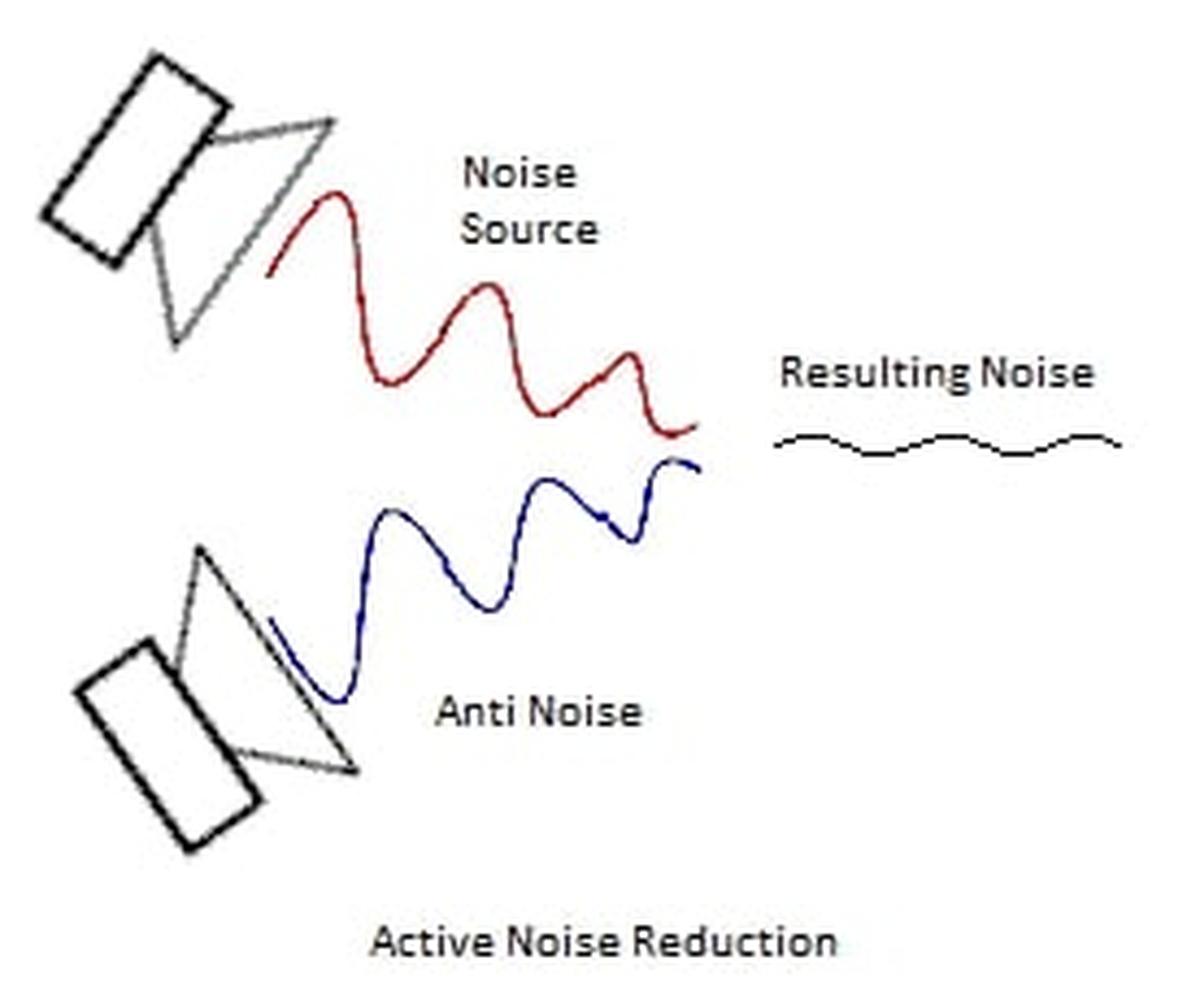
Sound engineers are always looking to make sound more ambitious. It didn’t take them too long to master the art of cancelling noise. In 1934, German inventor Paul Lueg discovered that we could control unwanted sounds. That is, if a sound wave is unwanted, it could be muted by the introduction of an opposing sound wave of the same frequency which cancels that wave.
Sound engineers are always looking to make sound more ambitious.
| Photo Credit:
Unsplash Images
Soon it would gain popularity. Noise cancellation is also referred to as Active Noise Cancellation (ANC). You might have often seen the acronym in headphone ads. By the 1950s, the active noise cancellation method was properly researched and getting implemented. Shortly thereafter, ANC became the state of the art, crucially commercialised by headset companies.
Key components
There are three major components that make noise cancellation work. They are:
1. Microphones
These do the job of detecting target sounds from the atmosphere.
2. Processor (processing system)
Once the sounds are captured, the processor will analyse the sound. Frequency, magnitude, etc. are calculated and another sound is generated in the opposite phase (inverse wave form).
3. Speakers
They send out this “anti-sound” which will then interact with the original sound (noise).
Active noise reduction.
| Photo Credit:
Wikimedia Commons
Destructive Interference
This is a paradox. Destructive Intereference is the driving force behind the noise cancellation science. When sound waves interfere with one another, they create areas of interference patterns, namely destructive and constructive.
Interference
is a fundamental property of all waves. For interference to happen, you need at least two waves.
Destructive interference is when sound waves interact and the resultant volume is decreased. Hence a paradox.
Take a look at the two sine waves shown below. What do you notice?
Two sine waves.
| Photo Credit:
Wikimedia Commons
They are waves of the same frequency but the crest of one wave is in opposition to the trough of the other wave. Now imagine these two together, overlapping each other. Then we get a situation where one wave is up while the other is down hence cancelling each other out. This circles us back to noise cancellation.
ANC vs PNC
In headphones, ANC and PNC work together to bring you the best experience while listening to audio through it. We know what ANC is now but what is PNC?
PNC is Passive Noise Cancellation. Unlike active noise cancellation where a new soundwave is generated to cancel out the noise, PNCs physically block noise and prevent it from reaching our ears. That classic black ear cushion fitted into the headphone for best comfort? A great example of PNC!
FILE PHOTO: Chipmaker Marvell Technology said it will buy semiconductor startup Celestial AI in a cash-and-stock deal worth $3.25 billion.
| Photo Credit: KSL
Chipmaker Marvell Technology said on Tuesday it will buy semiconductor startup Celestial AI in a cash-and-stock deal worth $3.25 billion, as it looks to upgrade its networking products amid intensifying competition from bigger rivals Broadcom and Nvidia.
Marvell’s shares were down 6% in extended trading.
The generative AI boom has sped up chipmakers’ development process, as they rush to design the fastest, most energy-efficient equipment for advanced data centers.
Under the terms of the deal, Celestial AI will receive $1
billion in cash and 27.2 million shares of Marvell common stock,
having a value of $2.25 billion.
FILE PHOTO: Anthropic said it has acquired Bun, which helps developers run and manage codes more effectively, as the Claude maker looks to boost the speed and stability of its coding agent.
| Photo Credit: Reuters
Artificial intelligence startup Anthropic said on Tuesday it has acquired Bun, which helps developers run and manage codes more effectively, as the Claude maker looks to boost the speed and stability of its coding agent.
Bun is expected to help Anthropic scale its code-generation tool Claude Code, which reached an annualized revenue run rate of $1 billion since its launch earlier this year. Anthropic had already been using Bun for several months.
Claude Code, generally available since May, has been adopted by large enterprises including Netflix, Spotify and Salesforce.
“Bun will be instrumental in helping us build the infrastructure for the next generation of software,” Anthropic said.
Founded by Jarred Sumner in 2021, Bun serves as an all-in-one software toolkit, combining code runtime, package management, bundling and testing.
The deal, financial terms of which were not known, marks a significant move by Anthropic into developer tooling and follows rapid expansions fueled by major backers.
Last month, Microsoft and Nvidia announced plans to invest up to $15 billion in Anthropic, in the latest AI-driven tie-up that also includes a $30 billion commitment by the Claude maker to use Microsoft’s cloud services.
Founded in 2021 by former OpenAI staff, Anthropic was recently valued at $183 billion and has become a major rival to OpenAI, driven by the strong adoption of its services by enterprise customers.




Email