Home Blog Page 49

Consejos contradictorios sobre las vacunas contra covid podrían afectar las tasas de vacunación, que ya son bajas

0

Más de tres cuartas partes de los adultos en Estados Unidos no se vacunaron contra covid la temporada pasada y expertos en salud advierten que esa cifra podría aumentar este año debido a las nuevas recomendaciones del gobierno federal.

Al principio, la vacuna contra covid fue popular. En los primeros meses de 2022, alrededor del 75% de los estadounidenses había recibido al menos una dosis de las primeras versiones de la vacuna, según datos de los Centros para el Control y Prevención de Enfermedades (CDC).

Durante la temporada 2024-2025, en cambio, solo cerca del 23% de los adultos se vacunó contra covid, muy por debajo del 47% que recibió la vacuna contra la gripe.

Las tasas de vacunación contra la gripe, el sarampión y el tétanos también están bajando.

Sin embargo, el covid sigue siendo un riesgo grave y potencialmente mortal. El  año pasado fue la causa principal de muerte registrada en aproximadamente 31.400 certificados de defunción. En comparación, la gripe causó alrededor de 6.500 muertes y la neumonía —una complicación común de la gripe— provocó otras 41.600, según los CDC.

Mientras millones de personas deciden si vacunarse o no esta temporada, investigadores de salud pública temen que las tasas de vacunación caigan aún más, especialmente entre latinos, afroamericanos y personas menores de 30 años, quienes tienen tasas más bajas de inmunización y corren más riesgo de sufrir complicaciones como el covid de largo plazo.

Bajo la administración Trump y con el secretario de Salud y Servicios Humanos Robert F. Kennedy Jr., el gobierno federal restringió sus recomendaciones sobre la vacuna contra el covid, lo que ha generado un mosaico de reglas para el acceso a vacunas en farmacias. En los estados gobernados por republicanos, muchas veces existen más barreras para recibir una dosis.

“Hay mucha desinformación circulando sobre el covid”, dijo Alein Haro-Ramos, profesora asistente de salud, sociedad y comportamiento en la University of California-Irvine. “La desconfianza hacia la vacuna va a aumentar”.

En agosto, la Administración de Drogas y Alimentos (FDA) limitó la aprobación de las vacunas contra covid a personas de 65 años o más y a adultos y niños con al menos una condición médica subyacente que los ponga en alto riesgo de sufrir complicaciones graves.

Un mes después, el Comité Asesor sobre Prácticas de Inmunización de los CDC votó por recomendar una “decisión clínica compartida”, dando marcha atrás respecto de la indicación general de vacunar a todos los adultos. El comité aconsejó a los médicos que explicaran a los adultos menores de 65 años y a los niños que los beneficios de la vacuna son mayores para las personas con afecciones médicas preexistentes.

Esta orientación ha sido rechazada por expertos en enfermedades infecciosas, quienes sostienen que la mayoría de los adultos y niños debería recibir tanto la vacuna contra la gripe como la del covid, ya que ambas son seguras, efectivas y previenen enfermedades graves.

Varias organizaciones médicas independientes, como la American Academy of Family Physicians y la American Academy of Pediatrics, han reiterado su apoyo a una adopción amplia de la vacuna contra el covid.

Más de una veintena de estados han tomado medidas para garantizar que la mayoría de las personas pueda vacunarse contra el covid en farmacias sin necesidad de receta médica, y muchos de ellos basan sus políticas en las recomendaciones de organizaciones científicas.

Además, en muchos de estos estados las aseguradoras están obligadas a cubrir las vacunas sin costo, según un análisis de KFF. En otros estados, en su mayoría gobernados por republicanos, las farmacias podrían requerir receta para aplicar la vacuna.

Entre las razones más comunes para rechazar la vacuna contra el covid están el miedo a los efectos secundarios, preocupaciones sobre consecuencias a largo plazo, dudas sobre su eficacia y desconfianza hacia las farmacéuticas y las autoridades, según una revisión de múltiples estudios publicada en 2024 en la revista Vaccines.

Los datos de los CDC muestran que la desconfianza hacia la vacuna contra el covid durante la temporada 2024-2025 fue mayor entre latinos, afroamericanos, hombres, personas sin seguro médico y personas que viven en estados de tendencia republicana.

Los adultos latinos mostraron una disposición significativamente menor a vacunarse que la mayoría de los otros grupos raciales y étnicos: la tasa de vacunación rondó el 15%.

En parte, esta situación  podría deberse a la edad: una gran proporción de la población latina es joven. Pero las políticas públicas también podrían influir. Por ejemplo, el primer gobierno de Trump vinculó Medicaid a la regla de “carga pública”, una norma que permitía negar la residencia o una visa a inmigrantes que dependieran de programas financiados con fondos públicos. Algunos latinos podrían seguir temiendo inscribirse en servicios sociales, incluso después de que la administración Biden revocó esa norma.

Haro-Ramos fue coautora de un estudio, publicado en 2024, que encontró que muchos latinos dudaban en vacunarse por miedo a que eso afectara su situación migratoria, y que haber sufrido discriminación en el sistema de salud —como negación o retrasos en la atención— aumentaba esa desconfianza.

“¿Confías en el sistema de salud en general? ¿Quieres dar tu información: tu nombre, tu dirección?”, preguntó Haro-Ramos. “La confianza es clave”.

Según Haro-Ramos, el problema probablemente ha empeorado desde que se publicó su estudio. Este verano, la administración Trump reveló que entregaría a Immigration and Customs Enforcement (ICE) los datos personales de las personas inscritas en Medicaid. Muchos latinos están cancelando citas médicas para evitar posibles encuentros con agentes migratorios.

“La gente está evitando salir de sus casas a toda costa”, afirmó.

Janani Rajbhandari-Thapa, profesora asociada en la University of Georgia, College of Public Health, fue coautora recientemente de un estudio sobre la vacunación contra el covid entre casi 1.500 afroamericanos, que viven en el sur de Georgia. El estudio determinó que, al buscar recomendaciones sobre si vacunarse, los participantes tendían a prestar más atención a sus proveedores de salud que a líderes religiosos o compañeros de trabajo.

Más del 90% de los participantes había recibido al menos una dosis de la vacuna, pero quienes no se habían vacunado eran más propensos a creer en afirmaciones falsas, como que la vacuna causa abortos espontáneos, que permanece mucho tiempo en el cuerpo o incluso que contiene un microchip.

“Son los médicos quienes pueden explicar que esas ideas sobre la vacuna son mitos”, afirmó Rajbhandari-Thapa.

Aunque las tasas de hospitalización y muerte por covid han bajado considerablemente desde los peores momentos de la pandemia, las complicaciones fatales siguen siendo más comunes entre personas mayores. El año pasado, aproximadamente el 89% de las muertes por covid en EE.UU. fueron entre personas de 65 años o más, en comparación con el 81% de las muertes por gripe y neumonía.

A medida que la pandemia queda atrás, muchos jóvenes han desarrollado una sensación de invulnerabilidad. Solo el 11% de los estadounidenses entre 18 y 29 años se vacunó durante el período 2024-2025, la tasa más baja entre los grupos de edad adulta. Eso contrasta con el 70% de adultos jóvenes que habían recibido al menos una dosis de la vacuna inicial contra el covid hacia noviembre de 2023.

Aunque muchas personas se contagian de covid incluso después de vacunarse, porque la protección contra la infección disminuye rápidamente, algunas malinterpretan el objetivo de la vacuna, explicó Otto Yang, especialista en enfermedades infecciosas de UCLA Health.

“Piensan: ‘Bueno, me dio covid a pesar de la vacuna, así que no funcionó’”, dijo Yang. “Y lo que no ven es que la vacuna evitó que se enfermaran de gravedad, que es lo más importante”.

Yang agregó que la vacuna también puede ayudar a prevenir el covid prolongado, un problema que puede afectar a personas de cualquier edad. Un estudio reciente de la Northwestern University halló que los adultos jóvenes sufren síntomas más intensos de covid prolongado que los adultos mayores.

En última instancia, dijo Yang, no tiene sentido aplicarse la vacuna contra la gripe y no la del covid, ya que ambas son seguras, efectivas y previenen enfermedades graves. Está claro, añadió, que las personas con sistemas inmunológicos comprometidos y aquellas en mayor riesgo deberían vacunarse contra el covid. La decisión “es un poco menos clara” para los demás, “pero probablemente la mayoría de los adultos debería vacunarse, al igual que se recomienda con la vacuna contra la gripe, así como para la mayoría de los niños”.

Phillip Reese es especialista en periodismo de datos y profesor asociado de periodismo en la Universidad Estatal de California en Sacramento.

Source link

OpenAI’s ChatGPT rolls out shopping research feature to find products directly

0

FILE PHOTO: OpenAI has introduced a new feature on ChatGPT called “shopping research,” which allows users to just describe what they want.
| Photo Credit: Reuters

OpenAI has introduced a new feature on ChatGPT called “shopping research,” which allows users to just describe what they want. The update is being rolled out for all ChatGPT users on free, Pro, Plus and Go plans. 

“Instead of sifting through dozens of sites, you can just describe what you’re looking for—‘Find the quietest cordless stick vacuum for a small apartment,’ ‘Help me choose between these three bikes,’ or ‘I need a gift for my four year old niece who loves art’—and shopping research builds a thoughtful guide to help you decide,” a blog posted by OpenAI noted. 

The chatbot could ask the user for additional queries around the price they’re looking at or specific use-case or features they want.

Users will also be able to research what the differences are between products and what drawbacks or trade-offs they have, but ChatGPT will require a few minutes to answer these types of questions with more depth. 

However, the company added that “shopping research might make mistakes about product details like price and availability, and we encourage you to visit the merchant site for the most accurate details.”

The blog stated that the chatbot performs especially well in “detail-heavy categories like electronics, beauty, home and garden, kitchen and appliances, and sports and outdoor.”

OpenAI also said that shopping research users will be able to purchase with Instant Checkout eventually. The feature was introduced in September for users to make direct purchases from eligible merchants through ChatGPT. 

Shopping research has been pushed out timely as the holiday season approaches. 

Source link

Trump signs executive order for AI project called Genesis Mission to boost scientific discoveries

0

Trump is increasingly counting on the tech sector and the development of AI to power the U.S. economy, made clear last week as he hosted Saudi Arabia’s Crown Prince Mohammed bin Salman [File]
| Photo Credit: REUTERS

U.S. President Donald Trump is directing the federal government to combine efforts with tech companies and universities to convert government data into scientific discoveries, acting on his push to make artificial intelligence the engine of the nation’s economic future.

Trump unveiled the “Genesis Mission” as part of an executive order he signed Monday that directs the Department of Energy and national labs to build a digital platform to concentrate the nation’s scientific data in one place.

It solicits private sector and university partners to use their AI capability to help the government solve engineering, energy and national security problems, including streamlining the nation’s electric grid, according to White House officials who spoke to reporters on condition of anonymity to describe the order before it was signed. Officials made no specific mention of seeking medical advances as part of the project.

“The Genesis Mission will bring together our Nation’s research and development resources – combining the efforts of brilliant American scientists, including those at our national laboratories, with pioneering American businesses; world-renowned universities; and existing research infrastructure, data repositories, production plants, and national security sites – to achieve dramatic acceleration in AI development and utilization,” the executive order says.

The administration portrayed the effort as the government’s most ambitious marshaling of federal scientific resources since the Apollo space missions of the late 1960s and early 1970s, even as it had cut billions of dollars in federal funding for scientific research and thousands of scientists had lost their jobs and funding.

Trump is increasingly counting on the tech sector and the development of AI to power the U.S. economy, made clear last week as he hosted Saudi Arabia’s Crown Prince Mohammed bin Salman. The monarch has committed to investing $1 trillion, largely from the Arab nation’s oil and natural gas reserves, to pivot his nation into becoming an AI data hub.

For the U.S.’s part, funding was appropriated to the Energy Department as part of the massive tax-break and spending bill signed into law by Trump in July, White House officials said.

As AI raises concerns that its heavy use of electricity may be contributing to higher utility rates in the nearer term, which is a political risk for Trump, administration officials argued that rates will come down as the technology develops. They said the increased demand will build capacity in existing transmission lines and bring down costs per unit of electricity.

Data centres needed to fuel AI accounted for about 1.5% of the world’s electricity consumption last year, and those facilities’ energy consumption is predicted to more than double by 2030, according to the International Energy Agency. That increase could lead to burning more fossil fuels such as coal and natural gas, which release greenhouse gases that contribute to warming temperatures, sea level rise and extreme weather.

The project will rely on national labs’ supercomputers but will also use supercomputing capacity being developed in the private sector. The project’s use of public data including national security information along with private sector supercomputers prompted officials to issue assurances that there would be controls to respect protected information.

Source link

Hidden Thyroid Problem in Pregnancy Linked to Autism

0

Researchers found that mothers with untreated or persistent thyroid hormone imbalance across pregnancy face a higher chance of having children diagnosed with autism. The study also revealed that longer periods of imbalance led to higher autism rates in offspring. The results emphasize the importance of frequent thyroid monitoring. Thyroid Imbalance in Pregnancy Linked to Higher […]

Source link

Amazon pushes in-house AI coding tool Kiro over competitors’, memo shows

0

FILE PHOTO: Amazon suggested its engineers eschew AI code generation tools from third-party companies in favor of its own, according to an internal memo.
| Photo Credit: Reuters

Amazon suggested its engineers eschew AI code generation tools from third-party companies in favor of its own, a move to bolster its proprietary Kiro service, which it released in July, according to an internal memo viewed by Reuters.

In the memo, posted to Amazon’s internal news site, the company said, “While we continue to support existing tools in use today, we do not plan to support additional third party, AI development tools.”

“As part of our builder community, you all play a critical role shaping these products and we use your feedback to aggressively improve them,” according to the memo.

The guidance would seem to preclude Amazon employees from using other popular software coding tools like OpenAI’s Codex, Anthropic’s Claude Code, and those from startup Cursor. That is despite Amazon having invested about $8 billion into Anthropic and reaching a seven-year $38 billion deal with OpenAI to sell it cloud-computing services.

Amazon has been fighting a reputation that it is trailing competitors in development of AI tools as rivals like OpenAI and Google speed ahead. Kiro is Amazon’s homegrown AI tool for code generation, the technique for creating websites and apps using just plain English commands. It relies in large part on versions of coding tools from Anthropic, but not specifically Claude Code.

“To make these experiences truly exceptional, we need your help,” according to the memo, which was signed by Peter DeSantis, senior vice president of AWS utility computing, and Dave Treadwell, senior vice president of eCommerce Foundation. “We’re making Kiro our recommended AI-native development tool for Amazon.”

The internal guidance comes on the heels of Amazon widening Kiro’s availability last week to a worldwide audience along with some new features.

Spokespeople for Anthropic, OpenAI and Cursor did not immediately respond to requests for comment. An Amazon spokesperson confirmed the memo. Codex, Cursor and Claude Code have become popular ways for engineers to quickly spin up new services. Cursor, for instance, was valued at nearly $30 billion after completing a funding round earlier this month.

In October, Amazon revised its internal guidance for OpenAI’s Codex to “Do Not Use” following a roughly six month assessment, according to a memo reviewed by Reuters. And Claude Code was briefly designated as “Do Not Use,” before that was reversed following a reporter inquiry at the time.

Source link

Apple cuts jobs across sales team

0

One of the major targets of the layoffs was a government sales team working with agencies, including the U.S. Defense Department and Justice Department, per the report [File]
| Photo Credit: REUTERS

Apple said on Monday it is cutting jobs across its sales teams to strengthen its customer engagement efforts, noting that only a small number of roles will be impacted by the layoffs.

An Apple spokesperson told Reuters that the company is continuing to hire and the affected employees can apply for new roles.

The impacted employees include account managers serving major businesses, schools and government agencies, according to Bloomberg News, which had reported the news earlier in the day.

Staff who operate Apple’s briefing centers for institutional meetings and product demonstrations for prospective customers were also affected, Bloomberg said.

One of the major targets of the layoffs was a government sales team working with agencies, including the U.S. Defense Department and Justice Department, per the report.

The team had already been facing tough conditions after the 43-day government shutdown and cutbacks imposed by the Department of Government Efficiency, or DOGE, Bloomberg added.

In the past few weeks, companies including Verizon, Synopsys and IBM have announced job cuts.

Source link

Anthropic bolsters AI model Claude’s coding, agentic abilities with Opus 4.5

0

FILE PHOTO: Anthropic unveiled an upgraded Opus model, boosting Claude’s ability to write detailed code, create sophisticated agents and streamline enterprise workflows through spreadsheet and financial analysis.
| Photo Credit: Reuters

Artificial intelligence startup Anthropic unveiled an upgraded Opus model on Monday, boosting Claude’s ability to write detailed code, create sophisticated agents and streamline enterprise workflows through spreadsheet and financial analysis.

The new model comes as Amazon and Alphabet-backed Anthropic races against OpenAI and other rivals to develop cutting-edge large language models aimed at achieving capabilities that could surpass human intelligence.

Opus 4.5 ranks among the most powerful models in the Claude family, offering deep reasoning and memory, coding and a versatile performance across a range of computer applications, including financial tasks such as modeling and forecasting.

Its agents autonomously refine their own capabilities and store insights from past work to apply at a later date, Anthropic said.

Source link

More People Are Caring for Dying Loved Ones at Home. A New Orleans Nonprofit Is Showing Them How.

0

Liz Dunnebacke isn’t dying, but for a recent end-of-life care workshop in New Orleans, she pretended to be.

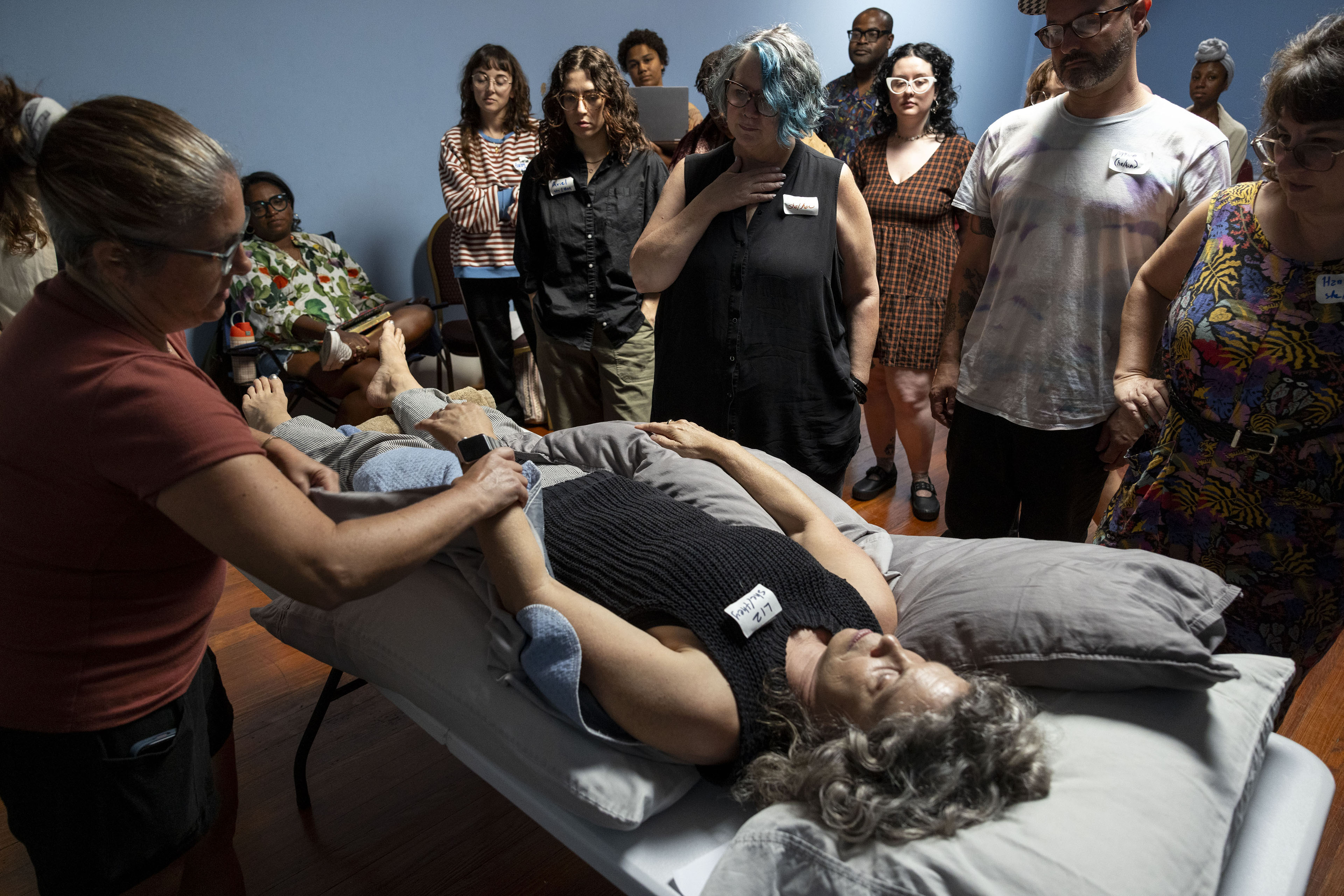
Dunnebacke lay still atop a folding table that was dressed as a bed, complaining that her legs hurt. Registered nurse Ana Kanellos, rolling up two small white towels, demonstrated how to elevate her ankles to ease the pain.

“ Mom’s legs are always swollen? Raise ’em up,” Kanellos said.

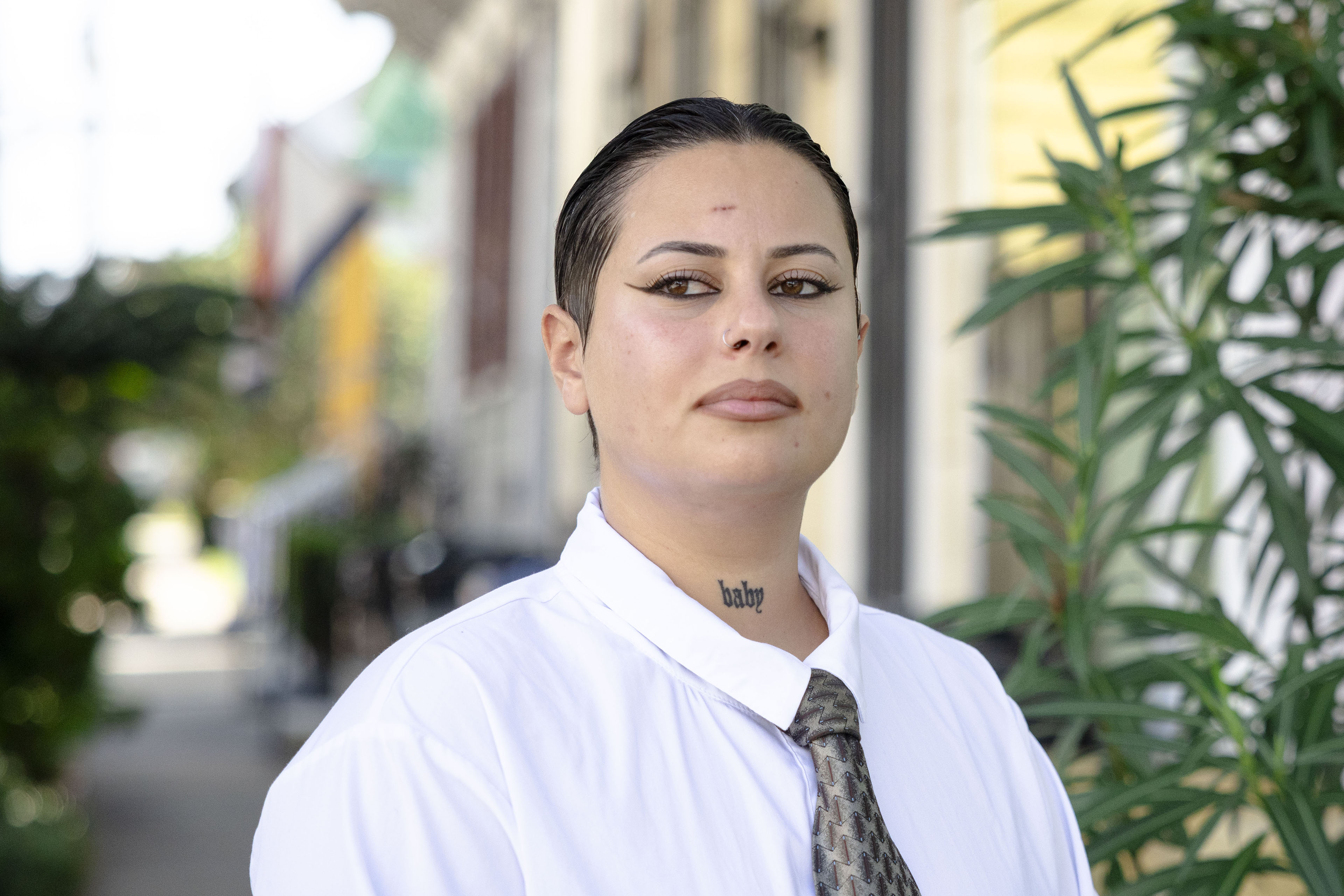
About 20 New Orleans residents listened intently, eager to learn more about how to care for loved ones at home when they’re nearing the end of their lives. Attendee Alix Vargas said she used to be terrified of dying. But about three years ago, a close cousin’s death led her to attend group writing workshops, helping her embrace her grief and conquer her fear.

“ I’m feeling very called towards this work,” she said. “It’s definitely knowledge that I wanted to obtain and expand my mind in that way. And this is also something that we’re all going to encounter in our lives.”

The workshop made her think about a neighbor whose mother has dementia.

“ I was immediately thinking, ‘OK, there’s someone in my immediate orbit that is experiencing this,’” Vargas recalled. ‘“Here’s a practical way to put the mutual aid in use.’”

Demand for home health care, including at-home hospice care, has skyrocketed since the onset of the covid pandemic, as has the number of family caregivers. An estimated 63 million people in the U.S. — nearly a quarter of all American adults — provided care over the previous year to another person with a medical condition or disability, usually another adult, according to a 2024 survey by AARP and the National Alliance for Caregiving. In the past 10 years, about 20 million more people have served as caregivers.

Nurse Ana Kanellos, a volunteer, demonstrates home caregiving techniques during Wake’s September workshop at the Healing Center in New Orleans. Wake is a nonprofit organization providing education and resources for death care.(Christiana Botic/Verite News and CatchLight Local/Report for America)
A portrait of a woman wearing a white dress shirt and tie.
“ I’m feeling very called towards this work,” says Alix Vargas, who participated in Wake’s Community Deathcare Provider Training.(Christiana Botic/Verite News and CatchLight Local/Report for America)

With nearly 1 in 5 Americans expected to be 65 or older by 2030, health care experts predict the demand for at-home caregivers will continue to rise. Online resources for end-of-life care are widely available, but hands-on training to prepare people to become caregivers is not, and it can be expensive. Yet untrained family members-turned-caregivers are taking on nursing and medical tasks.

Donald Trump promised more support for caregivers during his 2024 campaign, including a pledge to create new tax credits for those caring for family members. He endorsed a bill reintroduced in Congress this year that would allow family caregivers to receive tax credits of up to $5,000, but the legislation hasn’t moved forward.

Meanwhile, the Medicaid cuts expected from Republicans’ One Big Beautiful Bill Act, which President Trump signed in July, could prompt states looking to offset their added expenses to reconsider participating in optional state Medicaid programs, such as the one that helps pay for at-home hospice care. That would threaten to make dying at home even more unaffordable for low-income families, said advocates and researchers.

Advocates like Osha Towers are trying to help caregivers navigate the uncertainty. Towers leads LGBTQ+ engagement at Compassion & Choices, a national organization that focuses on improving end-of-life care, preparation, and education.

“It is certainly very scary, but what we know we can do right now is be able to just show up for all individuals to make sure that they know what they need to be prepared for,” Towers said.

In New Orleans, a nonprofit called Wake, which focuses on supporting family caregivers providing end-of-life and death care, is one of the organizations trying to help fill the knowledge gap. Wake put on the free, three-day September workshop where Dunnebacke, the group’s founder, pretended to be a dying patient. Such workshops are aimed at preparing attendees for what to expect when loved ones are dying and how to care for them, even without costly professional help. Full-time at-home care is rare.

“You don’t have to have any special training to do this work,” Dunnebacke said. “You just need some skills and some supports to make that happen.”

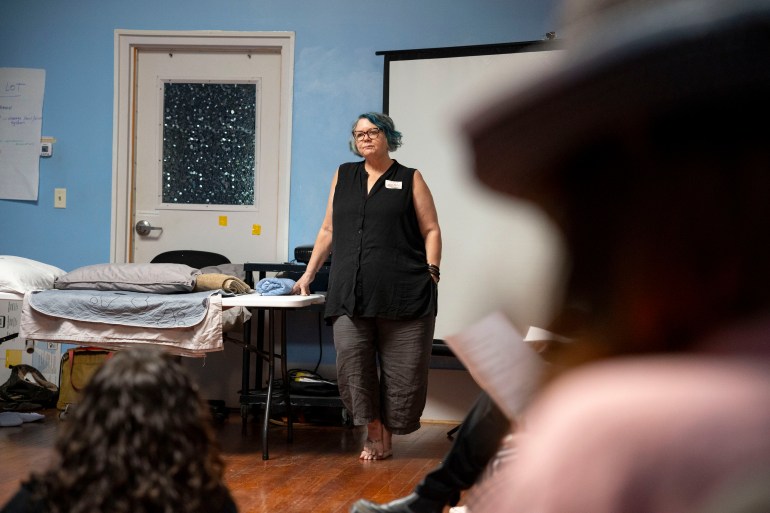
A woman stands in front of a group of people as she answers their questions.
Laurie Dietrich, programs manager for Wake, answers questions about the dying process and home caregiving during the nonprofit’s September workshop. (Christiana Botic/Verite News and CatchLight Local/Report for America)

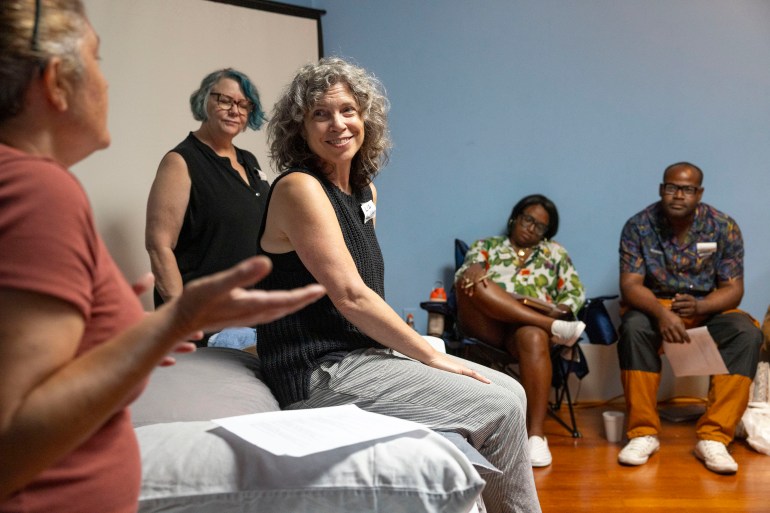
A woman sits on a table during an aid demonstration. She smiles as she looks at another woman who is speaking.
Dunnebacke (center), Wake’s founder, helps lead the death care training session at the Healing Center. (Christiana Botic/Verite News and CatchLight Local/Report for America)

In some ways, the evolution of end-of-life care in the U.S. over the past century has come full circle. It was only starting in the 1960s that people shifted from dying at home to dying in hospitals, nursing homes, and hospice facilities.

Such institutions can provide immediate advanced medical support and palliative care for patients, but they often lack the human connection that home care provides, said Laurie Dietrich, Wake’s programs manager.

Now, more people want to die in their homes, among family, but with the support and technology that comes with modern medical facilities.

In the past decade, death doulas — who support the nonmedical and emotional needs of the dying and their loved ones — have grown in popularity to help guide people through the dying process, helping to fill that gap. Douglas Simpson, executive director of the International End of Life Doula Association, said his organization recognizes the lack of resources for death care, so it is training doulas to be community educators. He hopes doulas can be especially useful in rural communities and lead conversations about dying.

“Making people more open, more comfortable about talking about death and considering their mortality,” Simpson said.

Death doula training varies depending on the organizer, but Simpson’s group focuses on teaching attendees about the dying process, how to maintain the autonomy of the dying person, and how to be aware of how they show up to a job and take care of themselves while caring for others.

Some people who attended Wake’s workshop had also attended some form of death doula training in the past. After Nicole Washington’s mother was killed in 2023, she considered becoming a death doula. But she thought the doula training, which can cost $800 to $3,000, was clinical and impersonal, as opposed to Wake’s community-based approach.

“I feel very energized, very uplifted,” Washington said. “It’s also really nice to be in a space with people who are familiar with death and grief.”

Ochsner Health’s Susan Nelson, who has worked as a geriatrician for 25 years, said there is a need for more specialized programs to train and prepare caregivers, like Wake’s.

“Learning caregiving skills is probably, unfortunately, more trial by fire,” Nelson said.

Compassion & Choices is another organization trying to educate caregivers. Towers said the group’s training ranges from advanced planning to acting as a health care proxy to caring for the dying.

“We’ve gone to a place in our country where we’re so removed from end-of-life care in a way that we didn’t used to be,” Towers said.

She said the movement to care for people at home and give them community support has roots in the AIDS epidemic, when some doctors refused to care for AIDS patients. Friends, especially in the lesbian community, started coordinating food delivery, visits, bedside vigils, and even touch circles, where patients could receive comforting forms of touch such as hand-holding to ease pain and feelings of isolation.

“I like to look at it as a blueprint for what we can get back to doing now, which is again just prioritizing community care,” Towers said.

Nurse and volunteer Ana Kanellos (left) demonstrates home caregiving techniques on Liz Dunnebacke, who lays on a table in front of her. A group of people stand around them, watching the demonstration.
Kanellos (left) demonstrates home caregiving techniques on Dunnebacke. “You don’t have to have any special training to do this work,” Dunnebacke says. “You just need some skills and some supports to make that happen.”(Christiana Botic/Verite News and CatchLight Local/Report for America)

This article was produced in collaboration with Verite News. Verite News reporter Christiana Botic contributed to this report.

Source link

Google, Accel partner to back Indian AI startups

0

FILE PHOTO: Google and VC firm Accel will partner to fund atleast 10 early-stage Indian AI startups, marking the tech giant’s first such funding partnership.
| Photo Credit: Reuters

Alphabet’s Google and venture capital firm Accel will partner to fund atleast 10 early-stage Indian AI startups, marking the U.S. technology giant’s first such funding partnership, top executives at the companies said on Thursday.

The move comes as several U.S. tech firms like Microsoft, Amazon and OpenAI make a beeline for the world’s most populous nation, seen as a critical growth market where nearly a billion users access the internet.

Under the partnership, Google’s AI Futures Fund and Accel will co-invest up to $2 million in each startup, Prayank Swaroop, partner at Accel, told Reuters in an interview, with the investments focussed on the wide areas of entertainment, creativity, work and coding.

The announcement comes after Google in October said it would invest $15 billion over five years to set up an AI data centre in the southern Indian state of Andhra Pradesh, its biggest-ever investment in the country.

Its AI Futures Fund, launched six months ago, has funded over 30 companies, including Indian webtoon startup Toonsutra and U.S.-based legal-tech firm Harvey. Google has also teamed up with India’s largest telecom operator Reliance Jio to provide free access to Gemini AI for 505 million users.

“We firmly believe that the founders in India, they are going to be playing a leading role in defining that next era of global technology,” Jonathan Silber, co-founder and director of Google’s AI Futures Fund, said.

“…we think that it’s critical to invest in the early stage. Particularly in key markets like India, so that we can be at the forefront of investing in the next generation of AI leaders.”

India’s AI market is projected to reach $17 billion by 2027, according to IT industry body Nasscom and consulting firm BCG.

Global AI spend is seen at nearly $1.5 trillion in 2025, and will exceed $2 trillion in 2026, as per market research firm Gartner.

Source link

Not Serious Enough To Turn on the Siren, Toddler’s 39-Mile Ambulance Ride Still Cost Over $9,000

0

Elisabeth Yoder’s son, Darragh, was 15 months old in August when he developed what at first looked to his parents like hand, foot, and mouth disease. The common viral infection generally clears up in less than a week, but Darragh’s condition worsened over several days. His skin turned bright red. Blisters gave way to skin peeling off his face.

An online search of his symptoms suggested he had staphylococcal scalded skin syndrome, a serious bacterial infection. Yoder drove the toddler from their home in the small town of Mechanicsburg, Ohio, to the Mercy Health hospital in nearby Urbana.

Staff in the emergency room there quickly confirmed that Darragh had scalded skin syndrome and said he needed to be taken by a private company’s ambulance to Dayton Children’s, a hospital about 40 miles away.

“I asked them: ‘Can I take him? Can I drive him?’” Yoder said. “And they were like, ‘Oh, absolutely not.’”

So, Yoder and her son got into the ambulance, with Darragh strapped in his car seat. The ambulance driver didn’t turn on the siren or drive particularly fast, Yoder said. The trip took about 40 minutes, she said. “It was fairly straightforward transportation from Point A to Point B.”

Yoder had heard that ambulance rides can be pricey. But she didn’t know how much her son’s ride would cost.

Darragh was hospitalized for three days and recovered from the illness.

Then the bill came.

The Medical Procedure

During the ride, the ambulance crew monitored Darragh’s vitals and an intravenous line, inserted at the hospital, carrying fluids and antibiotics, but he received no other medical treatment, Yoder said.

The Final Bill

$9,250, which included a “base rate” charge of $6,600 for a “specialty care transport” and a mileage fee of $2,340, calculated at $60 for each of the ride’s 39 miles. It also included $250 for use of an intravenous infusion pump and $60 for monitoring Darragh’s blood oxygen.

The Problem: No Insurance, Few Protections

The children’s hospital charged only about $3,000 more for the toddler’s three-day stay than the ambulance company charged for the ride, Yoder said.

Darragh’s family doesn’t have health insurance, leaving them on the hook for the full charges. Their income is a bit too high for them to qualify for Medicaid, the public health program that covers low-income residents, or for the Ohio Children’s Health Insurance Program, which covers moderate-income kids.

The Yoders belong to a Christian health care sharing ministry, with members paying into a fund that helps reimburse them for medical bills.

Unlike health insurance, such arrangements do not offer members negotiated rates with ambulance companies or other medical providers. And there are no state or federal billing protections that would help an uninsured patient in Ohio with a ground ambulance bill.

Darragh’s family doesn’t have health insurance, leaving them on the hook for the full charges. Their income is a bit too high for them to qualify for Medicaid or for the Ohio Children’s Health Insurance Program.(Maddie McGarvey for KFF Health News)

The federal No Surprises Act protects those with insurance from large bills for air ambulance transportation provided outside their insurers’ network agreements. But ground ambulance services aren’t covered by the law — and even if they were, that wouldn’t have helped the Yoders, since they didn’t have insurance.

Patricia Kelmar, the senior director of health care campaigns for PIRG, a national advocacy group, said ambulance charges vary widely. She said she’s seen per-mile charges ranging from less than $30 to more than $80, as well as base rates that differ dramatically.

Some patients, such as those with traumatic injuries, need ambulances with highly trained staff and advanced medical equipment, Kelmar said, so it makes sense that those rides would be more expensive. But patients rarely are told what the ride will cost until they receive a bill.

Jennifer Robinson, a spokesperson for Mercy Health, said she couldn’t comment on a specific patient’s case but said the staff follows established medical standards. “When a patient requires a higher level of treatment, ambulance transfer between facilities is best practice to ensure appropriate care,” she said in an email to KFF Health News.

Kimberly Godden, a vice president for the ambulance company, Superior Ambulance Service, said a doctor at the first hospital requested a high-level transport for the patient, requiring specially trained staff.

“Our priority is always to ensure patients receive the highest-quality care when they need it most, and we respond to every call regardless of a patient’s ability to pay,” Godden said in an email. “Superior had the team and resources available to quickly and safely move the patient to the higher level of care they needed within the time frame set by the ordering physician.”

Godden said the company would offer a “charity care” rate to Yoder if the family qualified for it.

The Resolution

Yoder said she repeatedly discussed the bill with ambulance company representatives, including the option for charity care. They told Yoder the best deal they could offer was to reduce the total by about 40%, to $5,600, if the family paid it in a lump sum, she said.

After months of discussion, the family wound up agreeing to that deal, Yoder said. They put the charge on a new credit card, which gave them 17 months to pay it off with no interest.

They have agreed to payment plans with the two hospitals, which offered charity care discounts that dropped the bills to a total of about $6,800.

The Yoders expect the sharing ministry to reimburse them for about 75% of the payments they’re making to the hospitals and the ambulance service.

The Takeaway

Patients and their families should feel comfortable asking hospital staffers whether a recommended ambulance company is in their insurance network and how much the ride to another location will cost, said Kelmar, a national expert on such bills. “Shouldn’t the hospital know that?” she said. “I don’t think it’s that heavy of a lift.”

Kelmar said she doesn’t want to discourage people from taking an ambulance if a doctor says it’s necessary. Once consumers receive a bill for the service, she said, they often can negotiate the price down. It can help to look up what the ambulance service accepts as payment from government programs. Those rates are often much lower than the full-price charges patients see on a bill.

If the family had been covered by Ohio’s Medicaid program, the ambulance service would have been paid much less than it charged the Yoders. The public health program pays ambulance services a $413 base rate for “specialty care transports,” plus $5.05 per mile. Those rates would have added up to $609.95 for the transportation part of Darragh’s ambulance ride.

Yoder said she wishes she had driven Darragh straight to the children’s hospital. If she had skipped the local ER, she said, they would have arrived at the bigger hospital sooner and she would have saved thousands of dollars.

But she didn’t feel as if she had a choice about putting her son in the ambulance, she said. The doctor told her it was necessary, and the hospital staff had already inserted an intravenous line. “I wasn’t going to pull out his IV line and just leave,” she said.

Yoder said she remains uninsured because she hasn’t seen any private insurance options that suit her family’s circumstances. No matter who pays the ambulance bill, she thinks the charges were much too high. She understands that patients can often negotiate discounts, she said, “but you shouldn’t have to work so hard for it.”

Elisabeth Yoder nuzzling her son's cheek.
Yoder with her son, Darragh.(Maddie McGarvey for KFF Health News)

Bill of the Month is a crowdsourced investigation by KFF Health News and The Washington Post’s Well+Being that dissects and explains medical bills. Since 2018, this series has helped many patients and readers get their medical bills reduced, and it has been cited in statehouses, at the U.S. Capitol, and at the White House. Do you have a confusing or outrageous medical bill you want to share? Tell us about it!


Source link