Under ₹25,000, the smartphone market is crowded, to say the least. Every brand promises a flagship-like experience at a mid-range price. To stand out, a phone has to offer something that feels genuinely special. The Redmi Note 15, starting at ₹22,999, opens with a premium design and an impressive screen. On paper, it ticks most of the right boxes. But beyond the surface, does it deliver where it truly matters—especially when rivals like the OnePlus CE 5, Nothing Phone 3a Lite, and Realme P3 Ultra are fighting for the same users? Where does the Redmi Note 15 really stand in this space?
Design
The Redmi Note 15 immediately feels more expensive than its price suggests. My review unit is in Mist Purple, and it carries a soft sheen with a subtle wave-like pattern that shifts under the light. It does not scream for attention, yet it stands apart. The phone is slim at just 7.4mm and weighs only 178 grams, which makes it feel light and well-balanced in the hand. The curved edges and smooth finish make it easy to grip, and it slides into a pocket without resistance. This is a phone designed to be carried all day long without fatigue.
The back uses a refined composite finish that resists fingerprints better than expected. It does not feel plasticky, and the frame blends well into the rear panel. The buttons sit on the right and offer a firm, tactile click. The USB-C port, speaker grille, and SIM tray are neatly aligned at the bottom. There is also an IR blaster on top; a small but useful addition that Redmi continues to offer. On the front, the display dominates the face with slim bezels and a clean, centred punch-hole camera. The 92% screen-to-body ratio gives it a modern, open look that rivals more expensive phones. Redmi has also added IP65 and IP66 splash and dust resistance, which is rare in this segment.
Display
The 6.77-inch AMOLED display is one of the Redmi Note 15’s strongest assets. It offers a Full HD+ resolution of 2392×1080, a 120 Hz refresh rate, and a peak brightness of 3,200 nits. In action, this translates to a screen that remains readable under harsh sunlight and feels fluid during everyday interactions. Scrolling through feeds, reading long articles, or watching videos feels effortless. The 12-bit colour depth and DCI-P3 gamut give images depth without oversaturation. The 3840 Hz PWM dimming and TÜV certifications make it easier on the eyes during night use.
Compared to its rivals, the Redmi’s panel stands tall. The OnePlus CE 5 offers a clean AMOLED experience but does not reach the same brightness levels. The Nothing Phone 3a Lite’s display is vibrant, yet its bezels feel slightly thicker. The Realme P3 Ultra competes closely in refresh rate and colour, but Redmi’s brightness advantage is noticeable outdoors. For users, this means a screen that feels dependable no matter the conditions, whether you are streaming, gaming, or just checking messages in the sun.
OS and AI
The Redmi Note 15 runs on Xiaomi HyperOS 2, layered over Android 15. It feels more refined than previous iterations, with smoother transitions and better visual coherence. The interface is clean, and most pre-installed apps can be removed. Smart features like contextual suggestions, adaptive performance tuning, and improved privacy controls from Android 15 make the experience feel modern and forward-looking. The system learns usage patterns and optimises background tasks, which helps in maintaining consistency across long sessions.
Compared to OxygenOS on the OnePlus CE 5, HyperOS still feels a bit busier. OnePlus offers a more minimal aesthetic. Nothing OS on the Phone 3a Lite focuses on visual flair and widgets. Realme UI on the P3 Ultra is functional but less polished. HyperOS sits in between. It is feature-rich without becoming overwhelming. AI here works quietly, refining performance and camera output without altering the character of the device.
Performance
At the heart of the Redmi Note 15 is the Qualcomm Snapdragon 6 Gen 3, built on a 4nm process. It is paired with LPDDR4X RAM and UFS 2.2 storage. My review unit has 8 GB RAM and 256 GB storage. For daily use, the phone feels consistently smooth. Apps open quickly, multitasking is reliable, and animations remain fluid even after hours of use.
Benchmark numbers tell a similar story. The phone scores 1015 in single-core and 2933 in multi-core on Geekbench, with a GPU score of 2093. These are not flagship numbers, but they are strong for this segment. They reflect a device tuned for efficiency rather than raw power. Casual games run effortlessly, and even heavier titles remain playable with medium to high settings.
The Adreno GPU handles graphics well, keeping frame drops minimal. Thermal management is controlled. The phone warms slightly during long gaming sessions, but it never becomes uncomfortable. This balance makes it suitable for both work and play.
When placed beside the OnePlus CE 5, the Redmi trades some peak performance for better thermal stability. The Nothing Phone 3a Lite feels responsive, but it does not sustain performance as consistently. The Realme P3 Ultra offers similar smoothness but leans more towards aggressive tuning, which can impact battery life over time. The Redmi Note 15 feels like the most balanced of the four.
Camera
The camera setup includes a 108 MP main sensor with an f/1.7 aperture and an 8 MP ultrawide lens. On the front sits a 20 MP camera. In this price range, expectations are tempered. The Redmi Note 15 still manages to impress.
Redmi Note 15 camera sample
| Photo Credit:
Haider Ali Khan
Daylight shots from the main camera come out looking clean and natural. Colours are true to life. The phone avoids the temptation to oversaturate. Details are preserved well, even if they do not reach flagship sharpness. That restraint works in its favour. Images look the way your eyes perceive them.
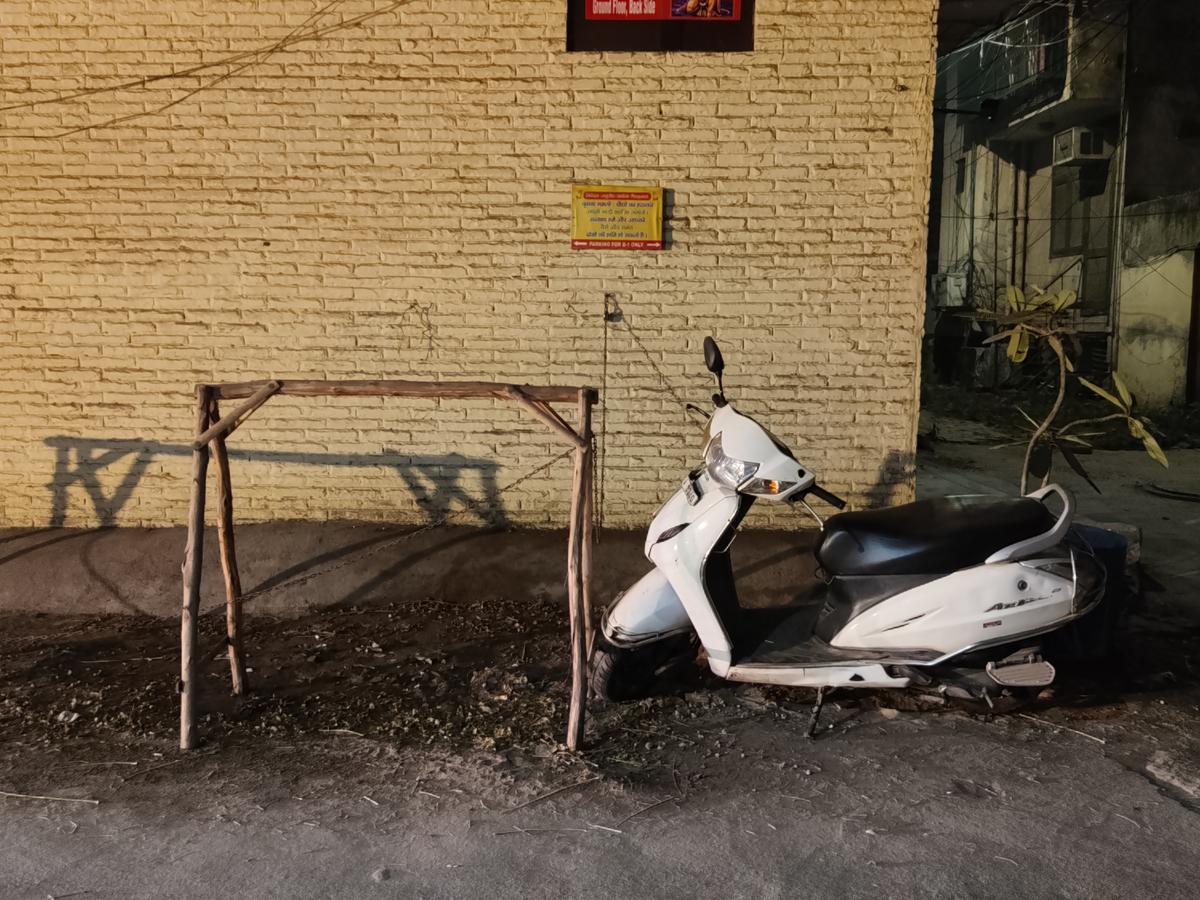
Redmi Note 15 camera sample
| Photo Credit:
Haider Ali Khan
Processing is subtle. AI refines edges and balances exposure without altering the mood of the scene. Skies remain skies. Skin tones remain believable. This approach gives photos a grounded feel. Night photography is competent. Low-light shots retain enough detail and reflect real-world lighting. Shadows are not crushed, and highlights are controlled. It does not turn night into day, but it captures what is there. Portrait mode handles edge detection well. Background blur feels natural. Subjects stand out without appearing cut out. This makes casual portraits share-worthy without effort.

Redmi Note 15 camera sample
| Photo Credit:
Haider Ali Khan
The 20 MP front camera delivers pleasing selfies. Skin tones are accurate. Details are soft but flattering. Video from both cameras is stable at 1080p, and 4K recording on the rear camera adds flexibility. Against the OnePlus CE 5, the Redmi offers more natural colours. The Nothing Phone (3a) Lite focuses on contrast. The Realme P3 Ultra pushes vibrancy. Redmi stays honest.
Battery
A 5,520 mAh battery powers the Redmi Note 15. It easily lasted a full day and often stretched into the second. Moderate users can expect a day and a half. Streaming, browsing, and photography do not drain it aggressively. Charging is handled by a 45W adapter. It is not the fastest in this class, but it is reliable. A quick top-up gives you enough power for hours. The balance between capacity and speed suits daily routines without stress.
Verdict
So, where does the Redmi Note 15 stand? It answers the opening question with quiet confidence. It may not dominate a single headline feature, but it delivers a complete, balanced experience. The design feels premium. The display is among the best in its class. Performance is smooth and consistent. The camera stays honest and dependable.
It lacks the minimal charm of the OnePlus CE 5 and the bold personality of the Nothing Phone 3a Lite. It does not chase extremes like the Realme P3 Ultra. Instead, it focuses on getting everything right. For buyers who want a phone that feels refined and reliable, the Redmi Note 15 is a strong choice. Alternatives like the Lava Agni 4 and iQOO Neo 10R offer their own strengths, but the Redmi stands out as the most well-rounded companion in this crowded segment.
Published – January 19, 2026 01:35 pm IST