Emerging research suggests that weight loss in midlife may affect the brain differently than in young adulthood. Obesity remains one of the most significant health challenges worldwide, and losing weight is often encouraged to lower the risks linked to the condition. Growing research, however, suggests that weight loss during midlife may not provide the same […]
Let’s have a detailed breakup of specifications the OnePlus 15 and Realme GT 8 Pro offer [File]
| Photo Credit: Special Arrangement
Two Qualcomm Snapdragon 8 Elite Gen 5 powered premium and flagship smartphones have landed already in India: the OnePlus 15 and Realme GT 8 Pro; the third one, iQOO 15, will launch on November 26.
Realme GT 8 Pro manages to score heavily on display by stretching the peak brightness till 7,000 nits. OnePlus 15 goes big on refresh rate and battery.
Let’s have a detailed breakup of the specifications the OnePlus 15 and Realme GT 8 Pro offer:
FILE PHOTO: U.S. chipmaker Marvell Technology plans to boost hiring and research spending in India to tap surging global demand for AI infrastructure.
| Photo Credit: KSL
U.S. chipmaker Marvell Technology plans to boost hiring and research spending in India to tap surging global demand for AI infrastructure, its India head told Reuters.
The company aims to grow its 1,700-strong workforce in India by 15% annually over the next three years, Navin Bishnoi said in an interview on Wednesday, but refrained from giving details of the expanded research and development budget.
Bengaluru serves as Marvell’s India headquarters, while its Hyderabad centre focuses on security solutions for data centers. It has a team specialising in embedded development for networking and storage in Pune.
India contributes a small portion of Marvell’s revenue, but Bishnoi expects that to grow as local data center capacity expands and data protection laws tighten.
“India is now probably the third largest in data center footprint,” Bishnoi said, adding that Marvell is in talks with hyperscalers, or large-scale cloud services providers, and local companies to expand its client base.
As a fabless company that designs advanced chips for AI and cloud infrastructure, Marvell does not manufacture chips but it is in discussions with local assembly and testing firms to align with their manufacturing plans.
These companies, known as outsourced semiconductor assembly and test (OSAT) providers, handle chip packaging and testing after fabrication.
While India is unlikely to become one of Marvell’s top revenue markets in the next five years, he sees long-term potential.
“Ten years down the line, yes,” Bishnoi said.
Marvell’s expansion aligns with Prime Minister Narendra Modi’s efforts to make semiconductor manufacturing central to India’s economic strategy, reducing import dependence and elevating its role in global electronics.
India does not have a large-scale chip fabrication plant yet, but several projects and OSAT facilities are underway under a $10 billion government incentive programme.
For nearly three years, Eric Tennant endured chemotherapy infusions, rounds of radiation, biopsies, and hospitalizations that left him weak and depleted.
“It’s good to be home,” he said after one hospital stay in early June, “yet I’m tired and ready to get on with things.”
In 2023, Tennant, of Bridgeport, West Virginia, was diagnosed with cholangiocarcinoma, a rare cancer of the bile ducts that had spread throughout his body.
None of the initial treatments prescribed by his doctors had eradicated the cancer. But a glimmer of hope came in early 2025, when Tennant was recommended for histotripsy, a relatively new procedure that would use ultrasound waves to target, and potentially destroy, the largest tumor in his body — in his liver.
“My dad was a little nervous because it was something new, but it definitely gave us some hope that he would be around a little bit longer,” said Tennant’s daughter, Amiya.
There was just one hitch: His insurer wouldn’t pay for it.
Becky Tennant thinks her husband might have lived longer if their health insurer had not repeatedly denied a new treatment recommended by his doctor early this year. “It may not have changed the outcome,” she says, “but they took that away from us to know.” (Rebecca Tennant)
For months, Eric Tennant’s health insurer refused to cover a cancer treatment recommended by his doctor, claiming the procedure was “not medically necessary,” a common reason used by insurers to deny care. (A portion of this photo is digitally blurred to protect patient privacy.) (NBC News)
It’s infeasible to count the people harmed by this overwhelmingly unpopular practice, which, by delaying or denying care, helps drive health insurers’ profits. No government agency or private group tracks such data.
That said, KFF Health News has heard from hundreds of patients in recent years who claim that they or someone in their family has been harmed by prior authorization. More than 1 in 4 physicians surveyed by the American Medical Association in December said that prior authorization had led to a serious adverse event for a patient in their care. And 8% responded that prior authorization led to a disability, birth defect, or death.
In June, the Trump administration announced a pledge, signed by dozens of private insurers, to streamline prior authorization, which often requires patients or their medical teams to ask insurers for permission before proceeding with many types of care. It remains unclear when patients can expect to see improvement.
The commitments “depend on the full cooperation of the private insurance sector” and will “take time to achieve their full effect,” said Andrew Nixon, a spokesperson for the Department of Health and Human Services. But the pledge exists, he said, “to prevent tragic deaths like Eric’s from occurring at the hands of an inefficient system.”
Subscribe to KFF Health News’ free weekly newsletter, “The Week in Brief.”
Chris Bond, a spokesperson for AHIP, a health insurance industry trade group, said he could not speak to any specific insurer’s prior authorization policies. Broadly, though, he said prior authorization “acts as a guardrail” to make sure medicines and treatments are not used inappropriately.
At the same time, he said, insurers recognize that patients can be frustrated when their doctor-recommended care is denied. That’s why “there is a dedicated effort across the industry to make the process more straightforward, faster, and simpler for patients and providers,” Bond said.
In the meantime, the process continues to take its toll on people like Eric Tennant, whose grave diagnoses often require expensive health care services.
“Eric is gone,” his widow, Becky, said. “He’s not coming back.”
Eric and Becky Tennant rest in Eric’s hospice bed with their dog, Molly. Eric died at home of cancer on Sept. 17.(Amiya Tennant)
Tennant was a safety instructor for the West Virginia Office of Miners’ Health Safety and Training and insured by the state’s Public Employees Insurance Agency, which contracts with UnitedHealthcare to administer benefits for state employees, their spouses, and dependents.
In February and March, UnitedHealthcare, the Public Employees Insurance Agency, and an outside reviewer issued a series of denials that concluded Eric’s benefits would not cover histotripsy, claiming the treatment was not medically necessary. Becky Tennant estimated the procedure would cost the family about $50,000 out-of-pocket.
Although the treatment wasn’t guaranteed to work, it was worth a shot, the Tennants thought, so they considered withdrawing money from their retirement savings. But then, in May, after KFF Health News and NBC News posed a series of questions to UnitedHealthcare and the Public Employees Insurance Agency about Eric’s case, the agency reversed course. PEIA decided to cover his treatment.
Notably, the agency contacted KFF Health News about the approval hours before it notified the Tennant family of the decision.
But the approval came too late. Eric was hospitalized in late May and prescribed medication that prevented him from undergoing histotripsy at that time. His family held out hope that his health would improve and he would qualify for the procedure that summer.
In July, they took a family vacation to Marco Island, Florida. It would be their last. Two days after they returned home, a scan revealed Eric’s cancer had continued to spread. Histotripsy was out of the question.
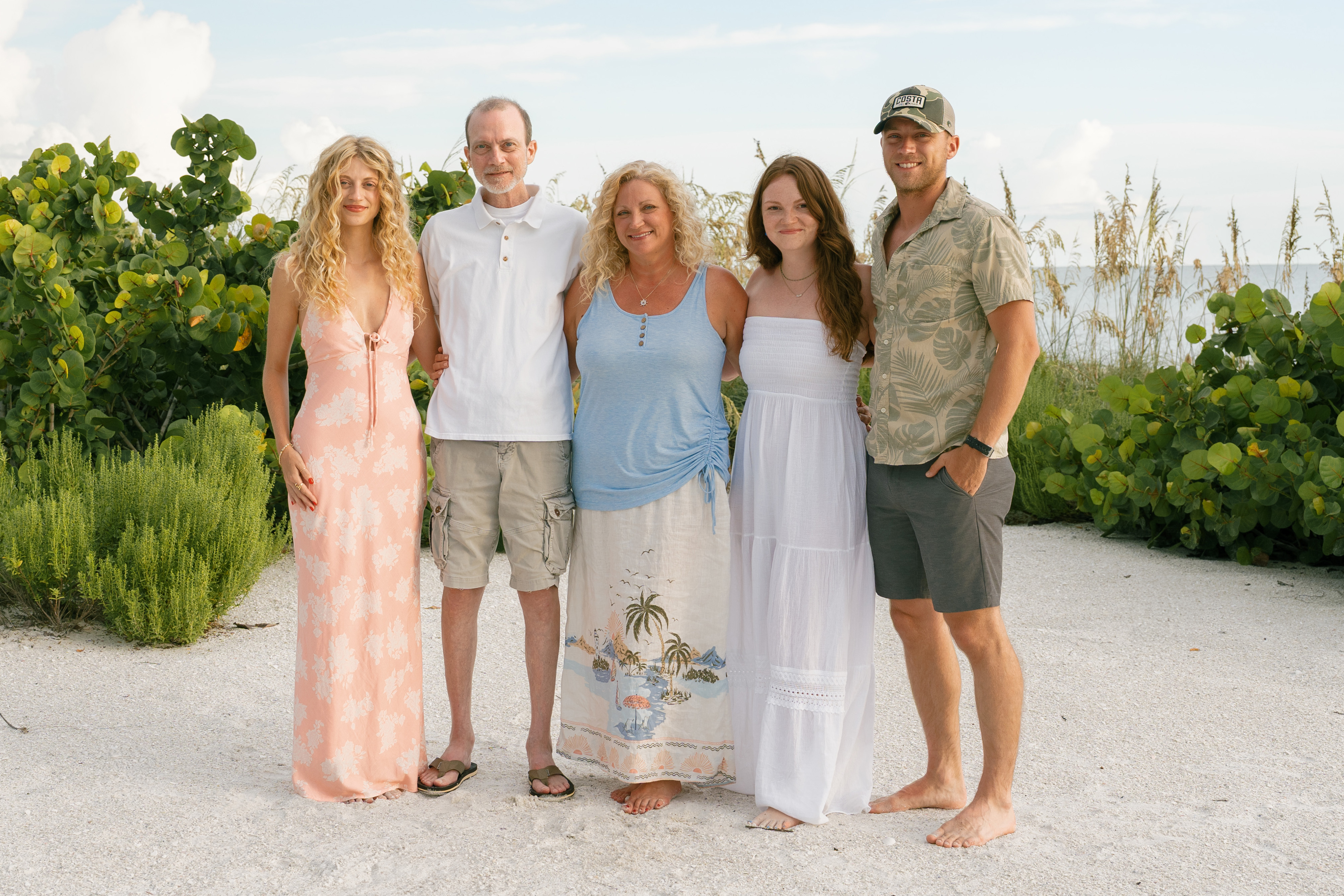
In July, Eric Tennant took one last vacation with his family to Marco Island, Florida: (from left) his daughter, Amiya; wife, Becky; daughter-in-law, Jaimee; and son, Arryn.(Jaimee Tennant)
“I’m sad for what we will miss out on,” Becky said. “I’m sad at the unfairness of it.”
She said if Eric had been able to undergo histotripsy in February, as originally recommended by his doctor, it might have destroyed the tumor in his liver that ultimately killed him.
“We’ll never know. That’s the thing. Any lawyer for the insurance will say, ‘Well, you don’t know it would have helped.’ No. You took that chance away from us,” she said.
In October, Samantha Knapp, a spokesperson for the West Virginia Department of Administration, told KFF Health News that the Public Employees Insurance Agency has not changed its policies related to prior authorization for histotripsy and continues to follow UnitedHealthcare’s guidelines.
UnitedHealthcare declined to answer questions for this article.
On Sept. 17, in a hospice bed set up in their dining room, Eric was surrounded by his family and their dogs as he died. Becky held his hand as his heart rate began to drop.
“He wasn’t afraid to die, but he didn’t want to die,” she said. “And you could tell the last day that he was fighting it big time.”
At the very end, she whispered in his ear: “You know I love you. You have been the best husband and the best dad, and you’ve always taken such good care of us,” Becky recalled.
And then, she said, he gasped. His eyebrows seemed to shoot up in wonder. During his last moment alive, she said, he smiled.
“The look on his face was pure, total amazement,” she said. “I still can’t believe he’s not here.”
In their week on Marco Island, the family played card games and lounged by the water. “He slept a lot. He was very, very tired,” Eric’s daughter, Amiya, recalls.(Jaimee Tennant)
Do you have an experience with prior authorization you’d like to share? Click here to tell KFF Health News your story.
FILE PHOTO: Foxconn Chairman Young Liu said the company now had the capability to manufacture 1,000 AI racks per week, and it expected that rate to increase next year.
| Photo Credit: Reuters
Foxconn Chairman Young Liu said on Friday the company now had the capability to manufacture 1,000 artificial intelligence racks per week, and it expected that rate to increase next year.
Liu made the comments at the contract electronics manufacturer’s tech day, which was attended by Foxconn’s partners and clients including Nvidia and OpenAI. Foxconn’s founder, Terry Gou, also made an appearance.
Foxconn, Apple’s top iPhone assembler, has been expanding beyond electronics into electric vehicles and AI data centres. It is now Nvidia’s main maker of AI racks, which are server racks tailored for AI workloads that house chips, cables and other equipment.
This has made the company a big beneficiary of the data centre boom, as cloud computing firms spend billions of dollars to expand their AI infrastructure and research capacity. Foxconn offered a bullish outlook on AI-related demand last week, saying it would be a big driver of 2026 growth.
Liu told Reuters in an interview published earlier on Friday that Foxconn would invest $2 billion to $3 billion a year in AI.
At the tech day event, Liu also said the company’s EV volumes were just at about the level where automakers could outsource more production to Foxconn, and it planned to show off vehicles that it had designed for the Japanese market.
The company was now working on quantum computing, he added.
In a separate speech, Neo Yao, CEO of Foxconn unit Visionbay.ai, said it planned to deploy a 27-megawatt data centre containing Nvidia’s most advanced GB300 chips in the first half of 2026. He said it would be the largest advanced GPU cluster in Taiwan and Asia’s first GB300 AI data centre.
X provided an option for users to choose to show their continent or geographical region of residence, rather than their specific country [File]
| Photo Credit: REUTERS
While not visible for all users on Friday, some X users could navigate to an account’s bio and select the date it had joined Twitter in order to see where the account was based.
X head of product Nikita Bier posted on October 14 that the move was aimed at helping users verify content.
“When you read content on X, you should be able to verify its authenticity. This is critical to getting a pulse on important issues happening in the world. As part of that, we’re experimenting with displaying new information on profiles, including which country an account is based, among other details. Starting next week, we will surface this on a handful of profiles of X team members to get feedback,” Bier posted.
The new update let some users see where and when the X account was created, its verification status, where it was based, the number of username changes, and through which country’s app store it was connected.
Supporters of the move felt that country-based labels would make it easier to identify accounts spreading misinformation, interfering in foreign affairs, farming engagement in unethical ways, or impersonating a user from another part of the world.
Critics of the move have raised concerns about the privacy of users who may want to keep their locations personal.
X also provided an option for users to choose to show their continent or geographical region of residence, rather than their specific country.
TuneMyMusic noted on its website that it supports Spotify, TIDAL, Apple Music, YouTube, Amazon Music, Deezer, and other platforms [File]
| Photo Credit: REUTERS
The move addresses a common hurdle that often stops users from switching between music streaming services: the often complicated process of transferring meticulously curated playlists, musical collections, or favourite tracks.
TuneMyMusic noted on its website that it supports Spotify, TIDAL, Apple Music, YouTube, Amazon Music, Deezer, and other platforms, allowing users to move to the platform of their choice.
Through the Spotify mobile app, users can choose the “Import your music” setting and connect to TuneMyMusic in order to get their playlists from another music streaming platform.
“First things first: getting your playlists onto Spotify. Our latest TuneMyMusic integration, available on mobile and rolling out globally over the coming days, makes it incredibly simple to transfer playlists from other streaming services straight into your Spotify library so you don’t have to start from scratch. No lost favorites, just an easy, built-in way to bring your music home,” said Spotify in a blog post on November 20.
Nano Banana Pro builds on its advanced reasoning and real-world knowledge to generate context-rich, accurate images rather than just decorative visuals
| Photo Credit: Special Arrangement
Google DeepMind has unveiled Nano Banana Pro, a powerful new image generation and editing model based on Gemini 3 Pro that lets creators, professionals, and developers to turn ideas into high-fidelity visuals, mockups, infographics, and multi-language designs with unprecedented control and clarity.
It excels at rendering legible text directly within the image across multiple languages, making it ideal for international content, brand mockups, and educational diagrams.
The model supports up to 14 input elements in compositions, ensuring consistency across multiple characters or design inputs, and enables localized editing, lighting adjustment, camera-angle transformation, and flexible aspect ratios in high definition up to 4K.
Users can access Nano Banana Pro through the Gemini app where free-tier users get limited quotas and subscribers to Google AI Plus, Pro and Ultra receive higher usage allowances.
It is also rolling out to creators and professionals via Google Ads, Google Workspace, Google AI Studio, and the Gemini API for enterprise and developer use.
To ensure transparency and authenticity, Google is embedding imperceptible digital watermarks in images created by its AI tools using SynthID technology, and users can verify in the Gemini app whether an image was AI-generated.
With Nano Banana Pro, Google is offering a next-generation creative engine that blends innovation and control, making high-quality image creation accessible across consumer, professional, and developer platforms.
A logo of Google is seen on its office building.
| Photo Credit: Reuters
Google will confront the U.S. Government’s latest attempt to topple its internet empire in federal court on Friday (November 21, 2025) as a judge considers how to prevent the abusive tactics that culminated in parts of its digital ad network being branded as an illegal monopoly.
The courtroom showdown in Alexandria, Virginia, will pit lawyers from Google and the U.S. Department of Justice against each other in closing proceedings focused on the complex technology that distributes millions of digital ads across the internet each day.
After a lengthy trial last year, U.S. District Judge Leonie Brinkema ruled in April that pieces of Google’s ad technology had been rigged in a way that made it an illegal monopoly. That set up another 11-day trial earlier this fall to help Brinkema determine how to remedy its anti-competitive practices.
Friday’s (November 21) closing arguments will give both Google and the Justice Department a final chance to sway Brinkema before she issues a ruling that probably won’t come until early next year.
The Justice Department wants Brinkema to force Google to sell some of the ad technology that it has spent nearly 20 years assembling, contending a breakup is the only way to rein in a company that the agency’s lawyers condemned as a “recidivist monopolist” in filings leading up to Friday’s (November 21) hearing.
The condemnation refers not only to Google’s practices in digital advertising but also to the illegal monopoly that it unleashed through its dominant search engine. Federal prosecutors also sought a breakup in the search monopoly case, but the judge handling that issue rejected a proposal that would have required Google to sell its popular Chrome web browser.
Slap on the wrist
Although Google is still being ordered to make reforms that it’s resisting, the outcome in the search monopoly case has been widely seen as a proverbial slap on the wrist. The belief that Google got off easy in the search case is the main reason the market value of its parent company Alphabet surged by about $950 billion, or 37%, to nearly $3.5 trillion since U.S. District Judge Amit Mehta’s decision came out in early September.
That setback hasn’t discouraged the Justice Department from arguing for a breakup of an ad tech system that handles 55 million requests per second, according to estimates provided by Google in court filings.
The huge volume of digital ads priced and distributed through Google’s technology is one of the main reasons that the company’s lawyers contend it would be too risky to force a dismantling of the intricate system.
“This is technology that absolutely has to keep working for consumers,” Google argues in documents leading up to Friday’s (November 21) hearing. The company’s lawyers blasted the Justice Department’s proposal as a package of “legally unprecedented and unsupported divestitures.”
Besides arguing that its own proposed changes will bring more price transparency and foster more competition, Google is also citing market upheaval triggered by artificial intelligence as another reason for the judge to proceed cautiously with her decision.
In his decision in the search monopoly case, Judge Mehta reasoned that AI was already posing more competition to Google.
But the Justice Department urged the judge to focus on the testimony from a litany of trial witnesses who outlined why Google shouldn’t be trusted to change its devious behavior.
The witnesses “explained how Google can manipulate computer algorithms that are the engine of its monopolies in ways too difficult to detect,” the Justice Department argued in court papers.
Optimism over AI has sent tech company valuations sky-high, leading to fears of a bubble and fuelling recent stock market volatility [File]
| Photo Credit: REUTERS
Foxconn has seen profits soar as it shifts focus from low-margin iPhone assembly to artificial intelligence servers that are now in huge demand as firms plough hundreds of billions of dollars into the technology.
Optimism over AI has sent tech company valuations sky-high, leading to fears of a bubble and fuelling recent stock market volatility.
“Demand for critical components in AI infrastructure is already far outpacing supply, and we expect that will only continue,” OpenAI head Sam Altman said Friday by video link at a Foxconn event in Taipei.
The companies will collaborate on hardware to be manufactured at Foxconn’s US facilities.
“While this initial agreement does not include purchase commitments or financial obligations, OpenAI will have early access to evaluate these systems and an option to purchase them,” an OpenAI statement said.
By some estimates, OpenAI has signed approximately $1 trillion worth of infrastructure deals in 2025, including a $300 billion Oracle deal and a $500 billion Stargate project with Oracle and Japan’s SoftBank.
Foxconn and Intrinsic, a subsidiary of Google’s parent Alphabet, also announced Friday a deal to develop and deploy “intelligent robotics solutions across Foxconn facilities in the US”. No headline figure was given.
Foxconn, also known as Hon Hai, is the world’s biggest contract electronics manufacturer but is branching out into electric vehicles as well as AI.
Bloomberg Intelligence analyst Steven Tseng said the Taiwanese company has been expanding capacity in the United States as a major supplier of AI servers and related networking gear.
A formal partnership with OpenAI is “a strong validation that Foxconn is now firmly among the leaders in AI infrastructure build-out”, he told AFP.
The risk of a potential invasion of democratic Taiwan by China means many AI server companies prefer production in the United States, despite higher costs, Tseng said.
“Still, Hon Hai’s shipment scale, vertical integration, and experience in server business should help it manage the margin impact effectively.”