Home Blog Page 67

“Most Effective Therapy to Date” – New Treatment Wipes Out Bladder Cancer in 82% of Patients

0

A slow drug-release system has proven highly effective in treating certain bladder cancer patients whose tumors were previously unresponsive to therapy. A new targeted drug delivery system known as TAR-200 has shown remarkable results in a phase 2 clinical trial involving patients with high-risk non-muscle-invasive bladder cancer that had not responded to previous therapies. In […]

Source link

AI song generator Udio offers brief window for downloads after Universal settlement upsets users

0

Artificial intelligence song generation platform Udio said it would give its frustrated users 48 hours starting Monday to download their songs before the company shifts to a new business model to comply with a legal settlement.

The short reprieve comes after Udio on Wednesday said it had settled copyright infringement claims brought by Universal Music, a label with artists including Taylor Swift, Olivia Rodrigo, Drake and Kendrick Lamar.

AI companies are now fighting so many copyright lawsuits that a tech industry lobby group, the Chamber of Progress, last week called on U.S. President Donald Trump to sign an executive order directing federal attorneys “to intervene in legal cases” to defend the industry’s practice of building generative AI tools by feeding them on copyrighted works.

Citing more than 50 pending federal cases, the group asked for help stopping court fights leading to “potentially company-killing penalties” that threaten AI innovation. But artists have warned that AI tools built on their works also threaten their livelihoods.

In the biggest settlement so far, AI company Anthropic agreed to pay $1.5 billion — or $3,000 per book — to settle claims from authors who alleged the company illegally pirated nearly half a million of their works to train its chatbot.

Udio and Universal didn’t disclose the financial terms of their new music licensing agreements. They also said they will team up on a new streaming platform.

As part of the agreement, Udio immediately stopped allowing people to download songs they’ve created, which sparked a backlash and apparent exodus among paying users.

“We know the pain it causes to you,” Udio later said in a post on Reddit’s Udio forum, where users were venting about feeling betrayed by the platform’s surprise move and complained that it limited what they could do with their music.

Udio said it still must stop downloads as it transitions to a new streaming platform next year. But over the weekend, it said it will give people 48 hours starting at 11 a.m. Eastern time Monday to keep their “past creations.”

“Udio is a small company operating in an incredibly complex and evolving space, and we believe that partnering directly with artists and songwriters is the way forward,” said Udio’s post.

The settlement deal was the music industry’s first since Universal, along with Sony Music Entertainment and Warner Records, sued Udio and another AI song generator, Suno, last year over copyright infringement.

Udio and Suno pioneered AI song generation technology, which can spit out new songs based on prompts typed into a chatbot-style text box. Users, who don’t need musical talent, can merely request a tune in the style of, for example, classic rock, 1980s synth-pop or West Coast rap.

Record labels have accused the platforms of exploiting the recorded works of artists without compensating them.

In its lawsuit filed against Udio last year, Universal sought to show how specific AI-generated songs made on Udio closely resembled Universal-owned classics like Frank Sinatra’s “My Way,” The Temptations’ “My Girl,” ABBA’s “Dancing Queen” and holiday favorites like “Rockin’ Around the Christmas Tree” and “Jingle Bell Rock.”

A musician-led group, the Artist Rights Alliance, said Friday that the Universal-Udio settlement represents a positive step in creating a “legitimate AI marketplace” but raised questions about whether independent artists, session musicians and songwriters will be sufficiently protected from AI practices that present an “existential threat” to their careers.

“Licensing is the only version of AI’s future that doesn’t result in the mass destruction of art and culture,” the group said. “But this promise must be available to all music creators, not just to major corporate copyright holders.”

Published – November 03, 2025 09:02 am IST

Source link

Nexperia’s Dutch headquarters says it welcomes announcements lifting block on shipping chips

0

Nexperia said its focus is now on ensuring the stability of supply to customers [File]
| Photo Credit: REUTERS

Nexperia BV, the Dutch chipmaker, said on Sunday it welcomed recent statements by the U.S. and Chinese governments removing barriers to the company shipping its chips, but it declined to comment on statements made by its Chinese subsidiary that it will accelerate steps towards becoming independent.

Nexperia said its focus is now on ensuring the stability of supply to customers. The Dutch government said separately it is continuing talks with the Chinese and other governments, and industry, on a “constructive way forward” for Nexperia.

A fight over control of Nexperia, which makes large volumes of basic chips used in cars, has led to shortages and alarmed automakers around the globe.

Source link

The “Freshman 15” Isn’t a Myth: Scientists Reveal Why It’s So Common

0

Research from George Mason University reveals how college students’ eating environments influence their food intake. “Don’t sign up for eight AM classes. Learn to get along with your roommate. Remember to wash your bedding.” New college students hear plenty of tips as they get ready for campus life, yet one warning remains especially common: watch […]

Source link

Filmmaker Anand Gandhi and game designer Zain Memon on building Maya, a new sci-fi universe

0

In the early hours of a day in October in a North Goa mansion, the lights are out throughout the property — except for an office at the far end with a long table, where a team of young designers and coders is burning the midnight oil to build a media franchise spanning board games, novels, video games, films… everything that can be constructed around a fictional world.

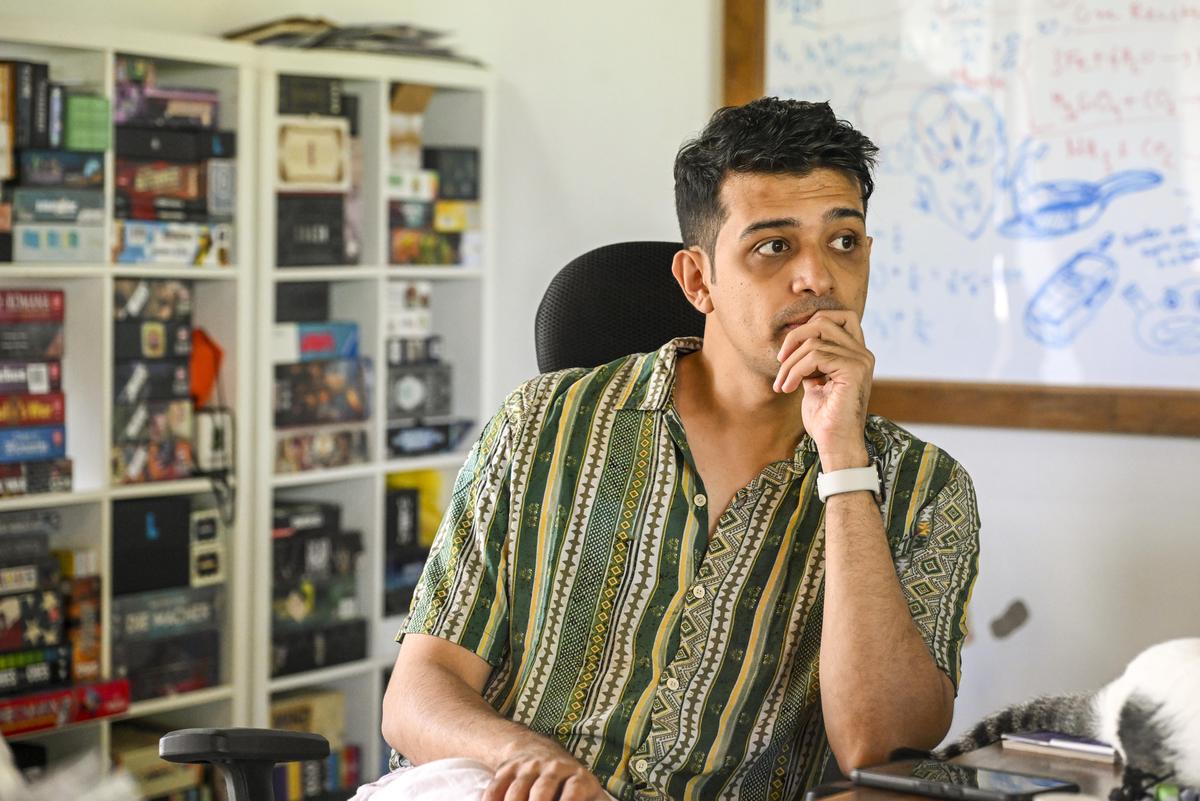
This is the nerve centre of Maya, a “narrative universe” being crafted by Anand Gandhi, the independent filmmaker behind the philosophical Ship of Theseus, which premiered at the 2012 Toronto International Film Festival, and the 2018 horror fantasy Tumbbad. For this project, Gandhi, 45, has teamed up with his longtime collaborator Zain Memon, 35, who led the development of Shasn, a political strategy board game that has found both mainstream success and a dedicated following among board-game aficionados.

Inside the sci-fi universe of Maya

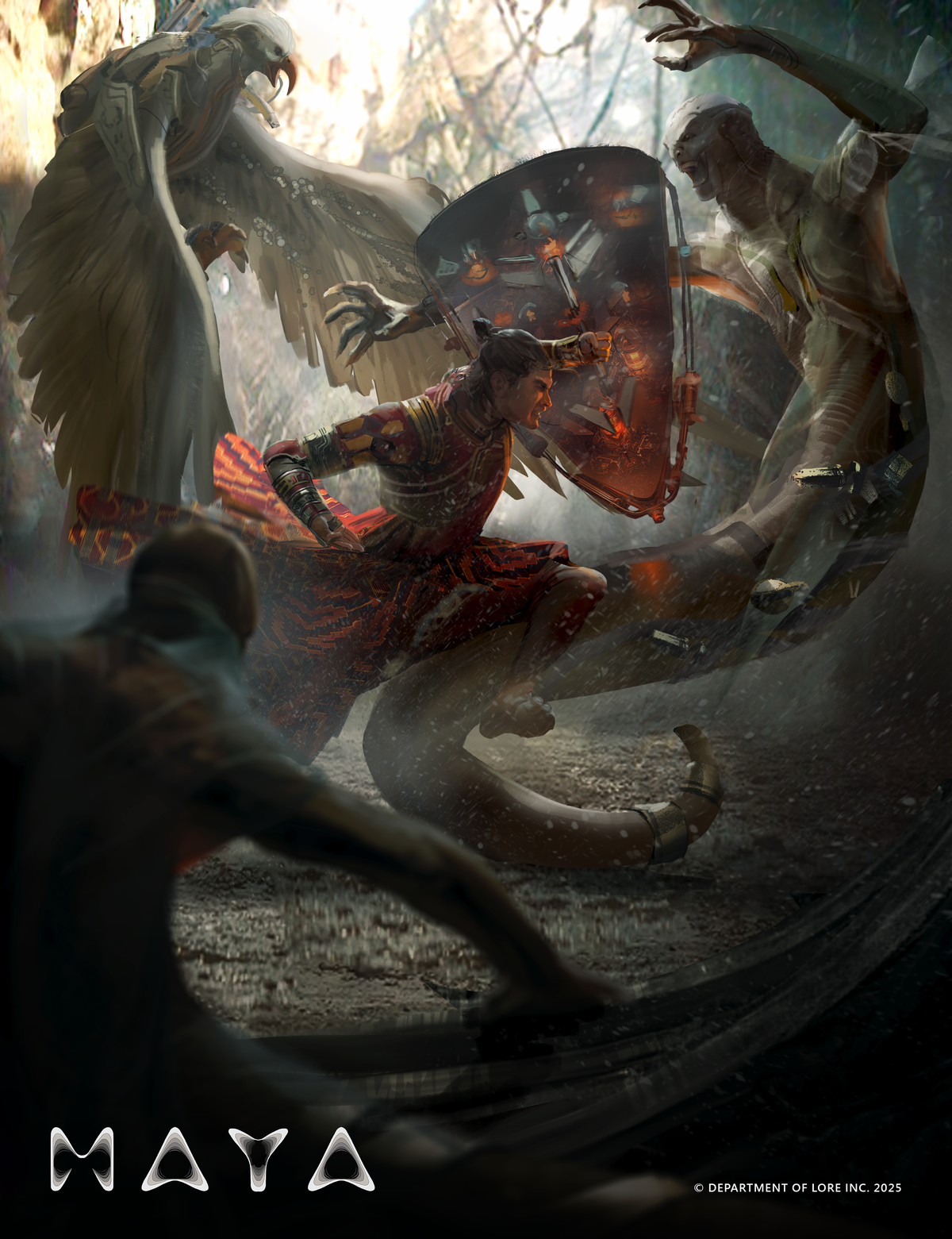
Maya is set on the planet of Neh, a universe with seven species in constant tension, ruled by a near-omniscient class of “divine” beings that draw their power from the control of a planetary network of trees that can read their minds, simulate futures, and give the ruling class a panoramic view of the world. For most beings on this planet, not tethering to the tree for extended periods is akin to borderline treason.

Filmmaker Anand Gandhi

The setting is a playground for the philosophies Memon and Gandhi have toyed with in their other works: the nature of political power in Shasn, the whole and its parts in Ship of Theseus, and now everything from surveillance capitalism to AI in Maya. What is the best medium for fables on these burning questions? Maya’s answer, it seems, is all of the above.

Game designer Zain Memon

Game designer Zain Memon
| Photo Credit:
Emmanual Yogini

Unique architecture

Franchises on the scale of Star WarsHarry Potter or Marvel have eluded India so far. But that is not to say that the country does not have the talent for it. In fact, cities like Mumbai and Bengaluru have a large industry dedicated to post-production and visual effects. But that alone does not lead to a lasting cultural legacy, nor does it yield the substantial funding that actual ownership over a transmedia franchise can entail.

The work that Department of Lore, the holding firm for Maya, has done so far, far exceeds what might be expected of a franchise that hasn’t fully released its first entry. “We spent four years on the lore,” Memon says from his office, next to a table with prototypes of game pieces for Yuyutsu, the Maya universe’s first board game. From generations of in-universe history to a Sanskrit-inspired series of terms (included in the first book as a pages-long appendix), the world has been prepared well in advance.

A creative from the ‘Maya’ universe.

A creative from the ‘Maya’ universe.

And the funding has followed. Gandhi and Memon initiated a slick crowdfunding campaign, promising early backers a numbered edition of the first book, and other rewards. Against a $10,000 target, Maya raised over $400,000. The marketing has been intentionally geared to a global audience from the get go, with an audiobook narrated by Australian actor Hugo Weaving (Agent Smith in The Matrix), and with much of the initial contributions coming from outside India.

“We even had to rethink the architecture,” Memon says, as the in-universe species (the svaankas) need their own aesthetic. The duo partnered with an architecture college, to have students design dwellings for each svaanka. One of those designs has already won a prize, earning the franchise its first accolade.

A creative from the ‘Maya’ universe.

A creative from the ‘Maya’ universe.

Why so many formats at the same time? Why not start with one and then work on others if the demand calls for it? “We have to realise that monoculture is dead,” Memon says. Earlier, a family would gather around a TV, but now everyone at home is consuming their own media. Maya, he says, is poised to give everyone an “entry point” into this world.

A cultural monument

“The community has been so warm, so welcoming,” Gandhi says in a video call from New York, after spending weeks at various conventions promoting Maya. “We started with Worldcon in Seattle, L.A. Comic Con, and then we had New York Comic Con which really brought the Kickstarter campaign to an end.”

For him, Maya has been a chance to address heavy philosophical concepts, something that the first book, Maya: Seed Takes Root, which releases next February, is brimming with. “For us, it’s not only a commercial question,” he insists, but “a question of deploying the ideas, concepts, and insights that we have in the language of fable and metaphor, expressed in experiences that come in passive and interactive frameworks.”

The first novel, ‘Maya: Seed Takes Root’.

The first novel, ‘Maya: Seed Takes Root’.

The idea is “not only to speculate and simulate” the future, he says, but to “prototype it and model it so that we can build it”. It is no accident, therefore, that Seed Takes Root uses its characters to explore parallels to everything, from race, caste, and immigration to issues like surveillance and AI. The creatures may be winged, serpentine and alien, but as with all fables, the message is designed for earthly consumption and reflection.

Gandhi hopes Maya will be a “vast cultural monument that will live and breathe in films and games and graphic novels and pretty much every expression we have invented”.

A creative from the ‘Maya’ universe.

A creative from the ‘Maya’ universe.

In purely commercial terms, what Maya may be on the cusp of — a franchise built in India for the world — is novel enough. But, Gandhi says, this is just a means to an end. “The truth is that we are not a media franchise at all, in the way that media franchises are usually understood,” he says. “We are not a cash grab studio. We are trying to create a framework, a narrative framework that becomes an ideology sandbox,” he says. Memon adds that there are plans to open up the world of Maya to external writers through API, or an application programming interface, a term usually limited to programmers making different pieces of code work together.

Overall, Maya will, Gandhi hopes, swim against the tide of Western cultural domination in both popular culture and classical philosophy. “Our generation is the one that has the resources and the wherewithal to show up at the table,” he says.

aroon.deep@thehindu.co.in

Source link

Popular Diabetes Drug Metformin May Cancel Out Exercise Benefits, Study Warns

0

Rutgers researchers have discovered that a popular diabetes drug may reduce the health benefits people expect from it. A commonly prescribed medication for diabetes might actually be working against one of the best-known ways to prevent the disease: exercise. That finding comes from a Rutgers-led study published in The Journal of Clinical Endocrinology & Metabolism, […]

Source link

China’s Xi pushes for global AI body at APEC in counter to U.S.

0

Chinese President Xi Jinping took centrestage at a meeting of APEC leaders to push a proposal for a global body to govern AI.
| Photo Credit: AP

Chinese President Xi Jinping took centrestage at a meeting of APEC leaders on Saturday to push a proposal for a global body to govern artificial intelligence and position China as an alternative to the United States on trade cooperation.

The comments were the first by the Chinese leader on an initiative Beijing unveiled this year, while the United States has rejected efforts to regulate AI in international bodies.

Xi said a World Artificial Intelligence Cooperation Organization could set governance rules and boost cooperation, making AI a “public good for the international community”.

In remarks published by the official news agency Xinhua, Xi added, “Artificial intelligence is of great significance for future development and should be made for the benefit of people in all countries and regions.”

Chinese officials have said the organisation could be based in the commercial hub of Shanghai.

U.S. President Donald Trump did not attend the APEC leaders’ summit in the South Korean city of Gyeongju, flying back to Washington directly after a meeting with Xi.

The two leaders’ talks yielded a one-year deal to partially roll back trade and technology controls that had spiked tension between the world’s two biggest economies.

In Trump’s absence, analysts had expected Xi to use the APEC meeting to promote China as champion for its own brand of multilateral cooperation on trade and economic development.

While advanced chips made by California-based Nvidia are central to the AI boom, China-based developer DeepSeek has rolled out lower-cost models taken up by Beijing in a push for what it calls “algorithmic sovereignty”.

Xi also urged APEC to promote the “free circulation” of green technologies, a cluster of industries from batteries to solar panels that China dominates.

APEC members approved a joint declaration and pacts on AI and the challenge of ageing populations at the meeting.

China will host the 2026 APEC summit in Shenzhen, a major hub for manufacturing, from robotics to electric car production.

Xi said the city of nearly 18 million had been a fishing village until it boomed as one of China’s first special economic zones in the 1980s.

APEC is a consultative forum of 21 nations representing half of global trade.

Source link

More than half of Indian enterprises faced ransomware attacks: survey

0

Representational image only. File

More than half of Indian enterprises faced ransomware attacks in the past year, with more than 7 in 10 (71%) reporting a surge in AI-driven phishing or deepfake attempts, making India one of the most targeted and AI-exposed markets globally according to findings of a Global Ransomware Survey conducted by OpenText, which is into secure information management for AI.

As per the findings, Indian organisations are stepping up their cybersecurity posture, with cloud security (68%), network protection (60%), and backup technologies (58%) emerging as top priorities for 2026, indicating a proactive approach to securing hybrid and AI-powered environments.

“Ransomware incidents continue to be widespread,” the survey finds out. The survey was conducted with nearly 1,800 security practitioners and business leaders across seven countries, including more than 200 from India.

“In India, nearly 70% of affected organisations admitted to paying a ransom to regain access to their data, marking one of the highest rates globally. However, despite these persistent threats, 98.6% of Indian respondents expressed confidence in their organisation’s ability to recover, underscoring a widening gap between perceived resilience and actual exposure,” OpenText said in a statement.

The report also underscores the expanding role of AI in both cyberattacks and defence. “Over 71% of Indian organisations observed an increase in phishing or ransomware attempts linked to AI, while 66% encountered deepfake-style impersonation attacks such as voice and video spoofing,” the firm said.

“This surge in AI-enabled threats comes as an overwhelming majority of organisations (95%) allow employees to use generative AI tools, yet just over half have a formal AI-use or data privacy policy in place,” it added. 

“Organisations are right to be confident in their progress in security posture, but they can’t afford to be complacent,” said Muhi Majzoub, executive vice-president, Security Products, OpenText. 

“AI fuels productivity while also heightening risk through insufficient governance and its expanding use in attacks. Managing information securely and intelligently is essential to building resilience in organisations of any size,” he added.

“The findings point to a widening AI confidence gap as enterprises are quick to embrace AI for productivity and innovation but slower to implement governance frameworks that ensure compliance, privacy, and security,” the firm said. 

“Among Indian organisations hit by ransomware, only about 12% were able to fully recover their encrypted or stolen data, indicating that preparedness often falters in practice,” it said.

As per the findings ransomware incidents in India are also becoming more complex, with attacks frequently entering through third-party service providers or software supply chains.

Nearly two-third of surveyed organisations reported being impacted by a vendor or managed services partner breach in the past year. In response, 91% now conduct formal cybersecurity assessments of software suppliers, and 83% outsource parts of their security operations to managed service providers.

“Yet, even as these measures strengthen organisational defenses, heavy dependence on third-party ecosystems continues to expose businesses to cascading risks, especially in sectors such as technology, financial services, and manufacturing,” OpenText said.

Source link

Waymo faces flak after robotaxi kills California cat: Report

0

This is not the first time an animal has been killed by an autonomous vehicle [File]
| Photo Credit: REUTERS

Waymo is facing flak after one of its robotaxis ran over a California cat named KitKat in late October, reported The San Francisco Standard, with Waymo acknowledging there was an incident involving a cat.

Alphabet’s self-driving unit Waymo confirmed to the outlet that a small cat ran under its vehicle as it was pulling away.

However, an anonymous complaint alleged that the Waymo vehicle did not slow down or try to avoid the cat. It also raised doubts about Waymo vehicles’ ability to detect animals in the dark.

Waymo confirmed an incident and said it would make a donation to an animal rights organisation, per The San Francisco Standard.

KitKat, a grey striped cat with pale green eyes who wore a bell around his neck, was an informal “mascot” loved by shoppers and locals alike. A roadside memorial has since been put together for him, with flowers, photos, and KitKat chocolates.

“We’re heartbroken to share that our beloved store cat, KitKat, has passed away. He brought warmth, smiles, and comfort to everyone who walked through our doors. Thank you to all who loved him as much as we did. The store won’t be the same without his little paws padding around,” posted the Randa’s Market on Instagram last week, along with a photo of KitKat.

This is not the first time an animal has been killed by an autonomous vehicle. A Waymo robotaxi in the autonomous mode killed a dog in California in 2023, reported tech outlet Tech Crunch.

On X (formerly Twitter), Elon Musk appeared to reference the incident and defend autonomous vehicles when he posted, “True, many pets will be saved by autonomy” on October 31. He was re-tweeting a post claiming that over five million cats were hit by cars every year in the U.S.

Source link

Apple achieved highest value growth during Q3 2025 in India

0

Apple achieved highest value growth during Q3 2025 in India
| Photo Credit: REUTERS

Apple achieved highest value growth of 28% during the Q3 2025 in India with consistent demand for iPhone 15 and 16 series, while the newly launched iPhone 17 series witnessing strong momentum with demand outpacing that of its predecessor, noted Counterpoint Research.

Simultaneously, Apple also entered into the top five smartphone brands by volume in Q3 2025 with a 9% share. The research firm also said that India has become the third-largest iPhone market.

Samsung followed closely with 23% value share, driven by its premium Galaxy S series, AI-led mid-tier A series, and offers on its high-end A-series models. The latest Galaxy Z Fold series also saw record sales, strengthening Samsung’s leadership in the foldable smartphone segment.”

Vivo remained the top brand by volume with a 20% share during the third quarter.

(For top technology news of the day, subscribe to our tech newsletter Today’s Cache)

Overall, India’s smartphone market grew 5% YoY by volume and 18% YoY by value in Q3 2025, highest-ever quarterly value, due to strong festive sell-in and sustained premium demand.

According to Counterpoint, the premium segment (30,000 plus) recorded the fastest YoY growth in shipment terms at 29% YoY, driven by robust demand for Apple and Samsung flagships.

iQOO became the fastest-growing brand in Q3 in terms of volume with 54% YoY growth. Motorola’s shipments grew 53% YoY driven by strong demand for the G and Edge series.

Lava was the fastest-growing brand in the below 10,000 price band with 135% YoY shipment growth. It was also the second fastest-growing brand in the sub-15,000 band.

MediaTek led India’s smartphone chipset market with a 46% shipment share, followed by Qualcomm with a 29% share.

itel drove the feature phone market with a 38% shipment share, followed by Lava with a 27% share.

During the quarter, online channels reached a 45% share of shipments, driven by festive season sell-in, while offline channels continued to lead with 55%.

Source link